
How Much Does Window Tint Removal Cost in South Jersey?
How much does window tint removal cost in South Jersey? At Dope Tintings, full sedan and coupe tint removal starts at $149.99, while SUVs and trucks start at $174.99. Learn why old, bubbling, purple or brittle tint can cost more to remove and why an in-person inspection matters.
How Much Does Window Tint Removal Cost in South Jersey?
Window tint removal in South Jersey can start around $149.99 for the sides and rear of many coupes and sedans, while full removal on SUVs and trucks can start around $174.99. At Dope Tintings in Pennsauken, NJ, one door-window removal starts at $34.99, and windshield or rear-window removal starts at $74.99. The final price depends heavily on the condition of the existing film and adhesive.**
That last part is extremely important.
Window tint removal isn't priced simply by counting windows.
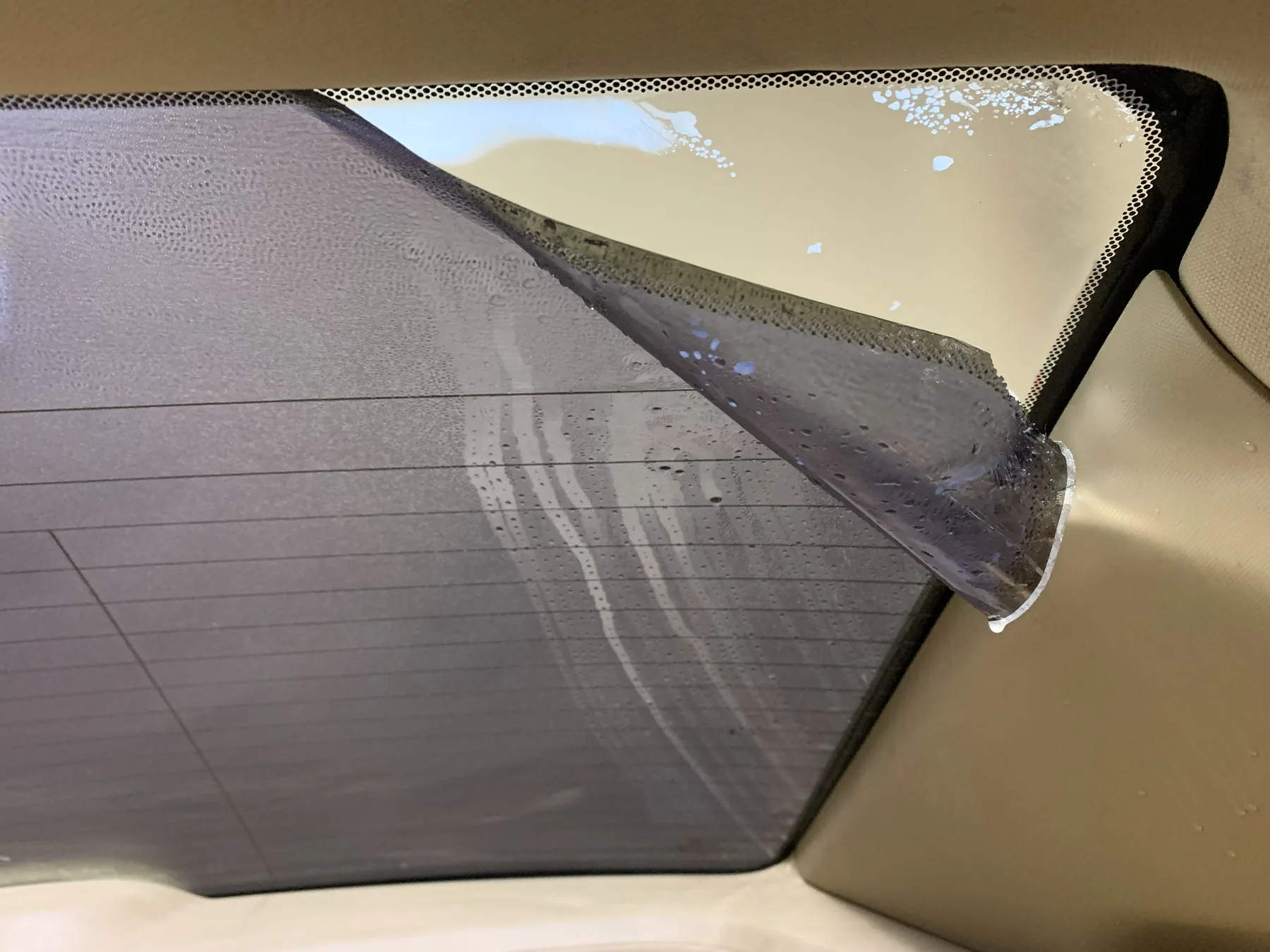
A vehicle with relatively healthy two-year-old film can be completely different from a vehicle with 10-year-old tint that has:
- Turned purple or brown
- Faded almost clear
- Started bubbling
- Become brittle
- Begun peeling
- Separated into layers
- Baked adhesive onto the glass
After more than 20 years in the automotive window tint industry, we've learned that one of the hardest things to predict is how old window film will behave once we actually begin removing it.
That's why Dope Tintings requires an in-person inspection before giving a firm quote for a full-vehicle tint removal.
Pictures don't tell the entire story.
And sometimes, neither does the customer's description.
How Much Does Window Tint Removal Cost in South Jersey?
At Dope Tintings in Pennsauken, NJ, our current window tint removal prices start at:
| Window Tint Removal Service | Starting Price |
|---|---|
| One door window | $34.99+ |
| Full front windshield | $74.99+ |
| Rear window | $74.99+ |
| Coupe/sedan sides + rear | $149.99+ |
| SUV/truck full removal | $174.99+ |
These are starting prices.
The actual price depends on what happens when we evaluate and begin working with the existing film.
A straightforward removal may stay near the starting price.
A badly deteriorated tint job can require several additional hours of labor and cost considerably more.
Why Is $149.99 Only a Starting Price for Full Tint Removal?
Because no two tint removals are exactly the same.
A customer may tell us:
"The tint isn't that bad."
Then the vehicle arrives and we discover:
- Bubbling film
- Severe fading
- Brittle film
- Multiple layers
- Deteriorated adhesive
- Film separating from its adhesive
- Rear glass requiring additional care
We've experienced this ourselves.
In the past, we've quoted customers over the phone based on their description of the tint.
Then the vehicle arrived and the condition was completely different from what had been described.
Because we had already quoted the price, we honored it.
But the amount of labor required was substantially greater.
That's why our current policy for full-vehicle tint removal is simple:
We need to see the vehicle in person before giving a firm removal price.
Can I Send Pictures of My Tint for a Removal Quote?
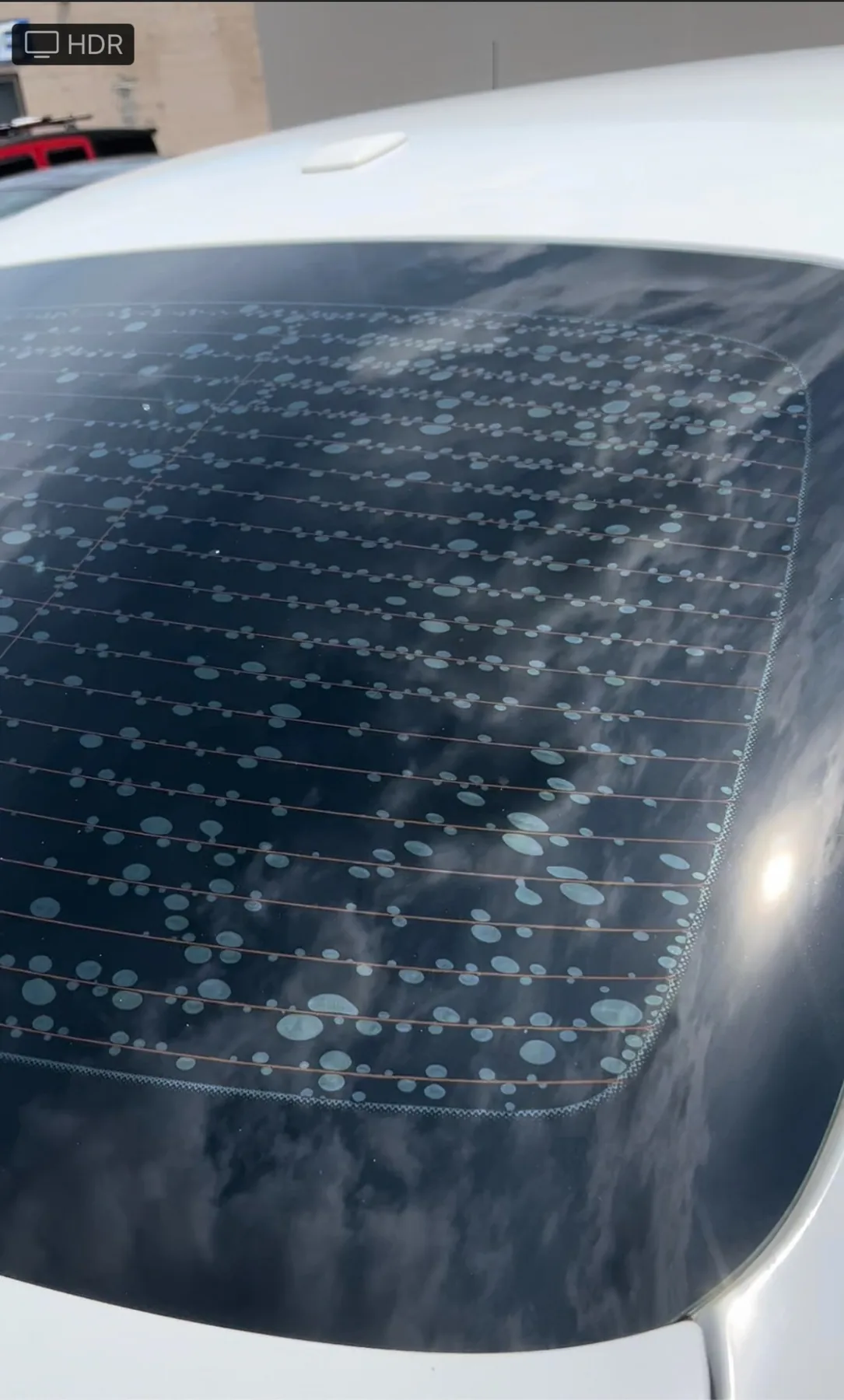
Pictures can show us certain things, but we don't rely on photos alone to give a firm full-vehicle tint-removal price.
A photograph may show:
- Bubbling
- Purple tint
- Peeling
- Obvious deterioration
But it cannot reliably tell us how the adhesive will release from the glass.
It also doesn't tell us whether the film will:
- Come off in one piece
- Break into strips
- Flake into tiny pieces
- Separate into layers
- Leave most of its adhesive behind
We need to physically evaluate the film.
An experienced installer can often learn much more by seeing and feeling the condition of the film than by looking at a picture on a phone.
What Kind of Tint Removal Qualifies for the $149.99 Starting Price?
A coupe or sedan with film that is still in relatively good physical condition is more likely to remain close to our $149.99 starting price.
For example, the film may have been installed a few years ago and the customer simply wants it removed.
If it:
- Isn't bubbling
- Isn't severely faded
- Isn't turning purple or brown
- Isn't brittle
- Isn't separating into layers
- Still has reasonable visibility through it
the removal may be relatively straightforward.
We sometimes refer to this as a relatively "fresh" removal even if the film has been on the vehicle for a couple of years.
The important factor isn't simply age.
Condition matters more than the number on the calendar.
How Much Does It Cost to Remove Tint From One Window?
At Dope Tintings, removal from one normal door window starts at $34.99.
Again, condition matters.
If the film releases normally, the job may remain close to that starting price.
If the film is badly deteriorated or leaves excessive adhesive behind, additional labor may increase the cost.
How Much Does It Cost to Remove Tint From Two Front Windows?
Because our normal door-window removal starts at $34.99 per window, two straightforward front-door removals would generally begin around $69.98.
That doesn't guarantee every two-window removal will cost exactly $69.98.
If the existing film is deteriorated, brittle, layered or heavily bonded to the glass, the price can increase.
We recommend letting us inspect the windows before assuming the starting price will be the final price.
How Much Does Windshield Tint Removal Cost?
At Dope Tintings, full windshield tint removal currently starts at $74.99.
Windshield removal can vary depending on:
- Film condition
- Adhesive
- Film age
- Deterioration
- Vehicle design
- Accessibility
A windshield with healthy film that releases properly is very different from one where the film has been baking onto the glass for years.
If you're planning to have the windshield re-tinted afterward, you can also read our How Much Does It Cost to Tint a Car Windshield? guide.
How Much Does Rear Window Tint Removal Cost?
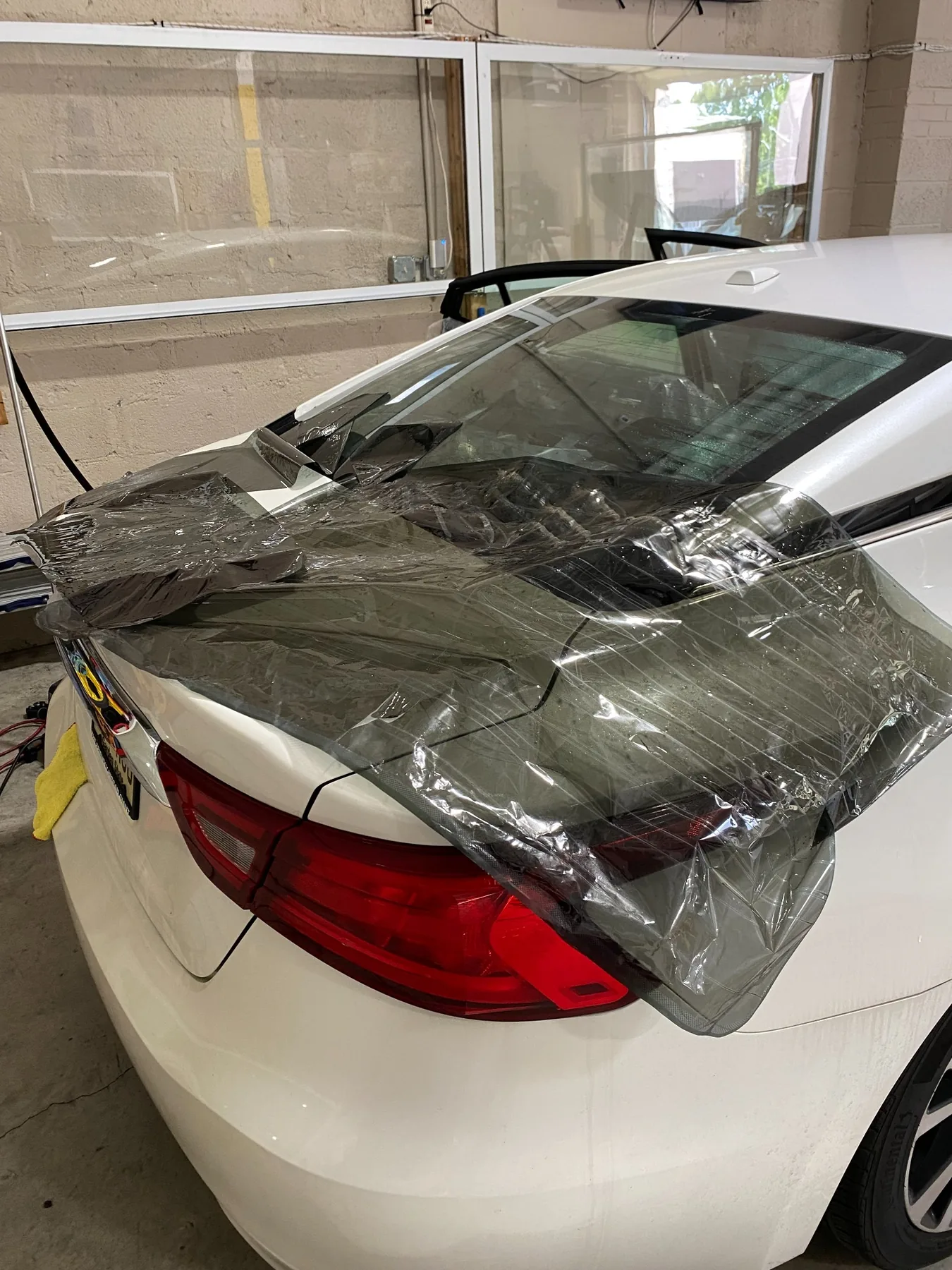
At Dope Tintings, rear-window tint removal currently starts at $74.99.
But the rear window is one of the areas where removal can become considerably more complicated.
Why?
Defroster lines.
On appropriate side glass or windshield glass, an experienced professional may be able to use a proper glass scraper or razor as part of the adhesive-removal process.
We cannot approach rear defroster glass the same way.
A razor can damage the defroster grid.
That can turn a tint-removal job into a damaged rear window.
That's why rear-window removal deserves additional care.
Why Can Rear Window Tint Removal Cost More?
The rear window can become the problem window during a removal.
Imagine old film that has:
- Bubbled
- Turned purple
- Become brittle
- Separated into layers
- Bonded heavily to the defroster grid
Now imagine trying to remove it without damaging those delicate conductive lines.
That can require considerably more time.
Depending on the condition, we may use techniques involving controlled heat or steam rather than aggressively scraping the glass.
The goal isn't simply:
"Get the film off."
The goal is:
"Get the film off while protecting the vehicle."
Can Removing Window Tint Damage Rear Defroster Lines?
Yes, rear defroster lines can be damaged during an improper tint removal.
This is especially important for customers considering DIY removal.
The rear defroster grid is attached to the glass.
Aggressive scraping or improperly pulling heavily bonded film can potentially damage those lines.
We've seen vehicles where customers attempted their own removal and left damaged defroster material behind.
We've even seen pieces of defroster lines on the rear deck or seat after someone used a razor on the back glass.
That's one reason we recommend being extremely cautious with rear-window tint removal.
We'll cover rear-defroster removal risk in much greater detail in a separate guide.
Why Does Old Window Tint Cost More to Remove?
Old tint can cost more because the film and adhesive can deteriorate over time.
Instead of coming off cleanly, old film may:
- Break apart
- Flake
- Peel in tiny pieces
- Separate into multiple layers
- Leave adhesive behind
- Become heavily bonded to the glass
The sun and heat can bake deteriorated film and adhesive onto the glass over many years.
At that point, you're not simply removing a sheet of window film.
You're removing film plus years of deteriorated adhesive and material.
That's labor.
And labor is what drives the price up.
Does Purple Window Tint Cost More to Remove?
It can.
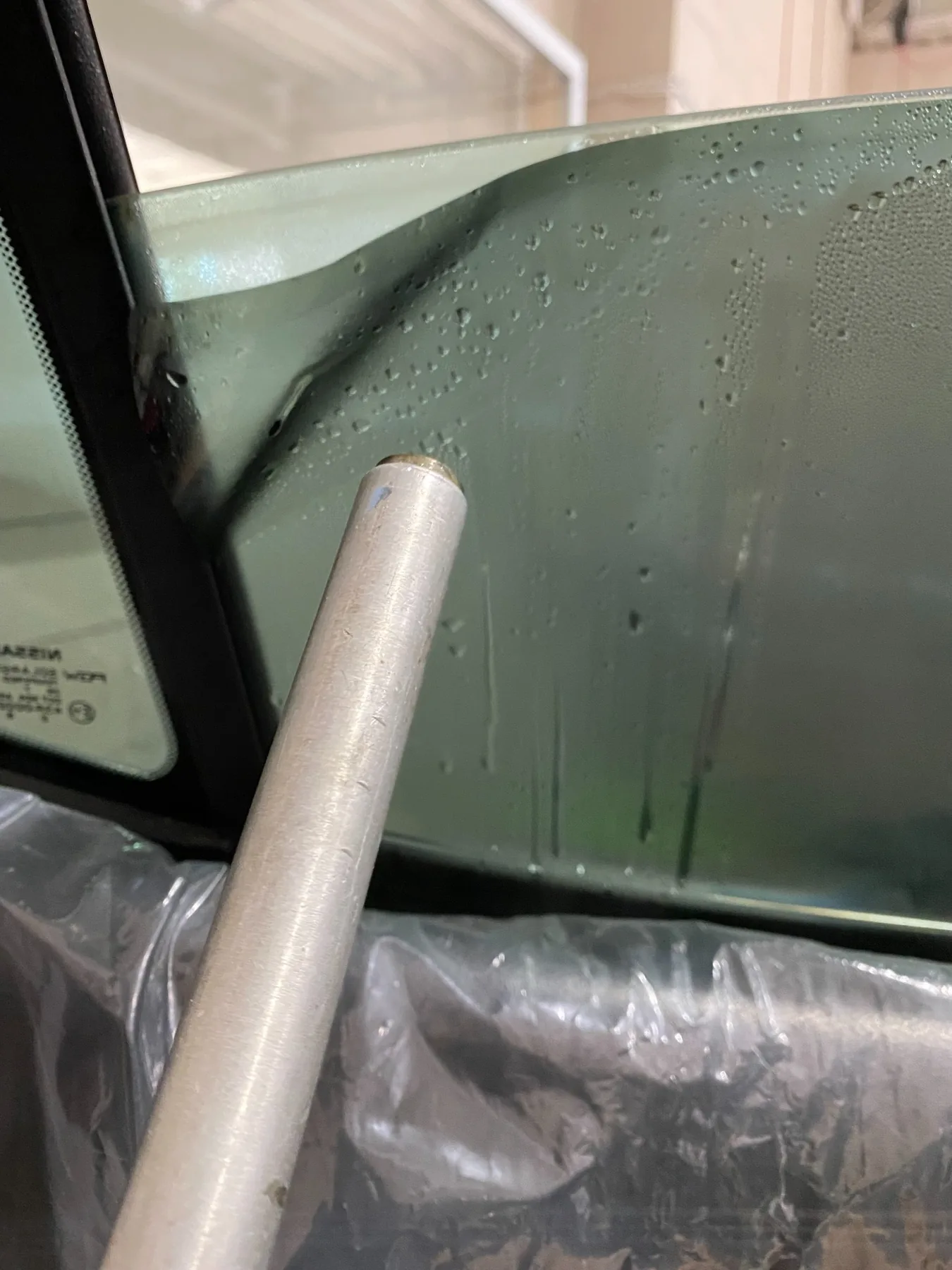
Purple or brown discoloration can be a sign that an older film has deteriorated.
We've also seen old dark film fade until it becomes surprisingly light or almost clear.
The color alone doesn't tell us exactly how difficult the removal will be.
But when film has visibly deteriorated, we're paying close attention to how the film and adhesive have aged.
That's another reason an in-person inspection matters.
Does Bubbling Window Tint Cost More to Remove?
It can.
Bubbling tint is often a sign that the film or adhesive system has deteriorated.
The problem isn't simply the appearance of the bubbles.
The bigger question is:
What is going to happen when we start removing the film?
Will it release?
Will the adhesive stay behind?
Will it separate into layers?
Will it break into hundreds of pieces?
Until we start evaluating the film, we don't always know.
What Happens When Old Tint Comes Off in Pieces?
This is one of the worst removal situations.
Instead of pulling a large sheet of film from the glass, the film may break apart every time you touch it.
Now you're removing:
piece after piece after piece.
That dramatically increases labor.
On appropriate glass, professional scraping techniques may help.
On rear defroster glass, however, the job becomes much more delicate because we need to protect the grid.
We've encountered removals where old film didn't simply come off in pieces.
It came apart in layers.
One layer would release.
Another would remain.
Adhesive would remain underneath.
That can turn what looked like a simple removal into an all-day job.
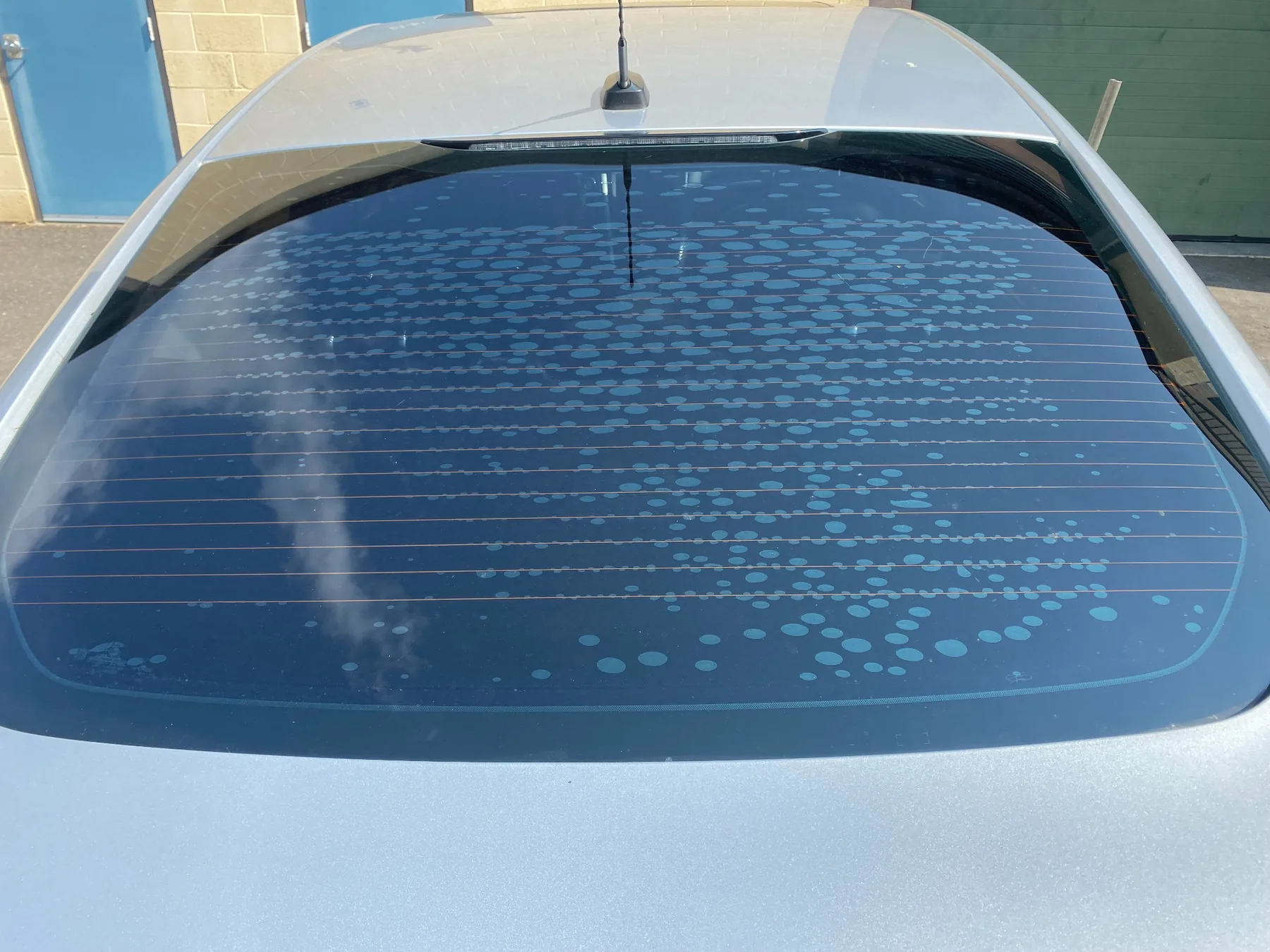
What Happens If the Tint Comes Off but the Glue Stays?
This is where customers discover that peeling the film isn't necessarily the difficult part.
If the film comes off but leaves adhesive covering the glass, that adhesive still needs to be removed before new tint can be professionally installed.
On appropriate non-defroster glass, the process can involve:
- Application solution
- Proper scraping tools
- Repeated cleaning
- Adhesive removal
- Final glass preparation
When removal solution contacts old adhesive, the adhesive can soften and become gel-like or gummy.
Now it needs to be completely cleaned from the glass.
That can take considerably longer than simply pulling the film off.
Can Tint Removal Take Longer Than Installing New Tint?
Absolutely.
We've had tint removals take longer than complete tint installations.
A normal full removal may take approximately 1.5 to 2 hours.
A more difficult removal can take:
- 3 hours
- 4 hours
- 6 hours
- Potentially into the following day
That's one reason some tint shops don't want to perform removal work at all.
There's a large amount of uncertainty.
You don't always know what you're getting into until the job begins.
How Long Does Window Tint Removal Take?
Based on our experience at Dope Tintings:
| Film Condition | Possible Removal Time |
|---|---|
| Straightforward full removal | About 1.5–2 hours |
| Moderate removal | About 2–3+ hours |
| Bad/brittle/layered removal | 4–6+ hours |
| Extreme removal | Can potentially carry into the next day |
These aren't guaranteed times.
They're examples of what we've experienced.
That's why all full-vehicle tint removals at our shop are drop-off jobs.
Why Are Full Tint Removals Drop-Off Only at Dope Tintings?
Because there are too many unknowns.
We don't want to tell someone:
"Wait here. It'll be two hours."
and discover halfway through that the removal is going to take six hours.
With a full removal, we need flexibility.
The customer drops the vehicle off, we begin the work, and we deal with the condition of the film properly rather than rushing because somebody is sitting in the waiting area watching the clock.
Window tint removal is one of those jobs where patience can matter.
A Real Tint Removal That Turned Into a Six-Hour Job
We've personally had a removal that looked challenging but manageable during the initial inspection.
Based on what we could see, we believed we could complete it within a few hours.
Then we started working.
The job turned into approximately six hours of removal labor.
That created several problems.
We had scheduled other installation work based on the time we expected the removal to take.
Now we were committed to the removal.
We ended up having to adjust and cancel other work because the vehicle was taking considerably longer than expected.
We also lost money on the removal itself because we had priced the job based on substantially less labor.
That experience reinforced something we've learned throughout more than 20 years in this industry:
Never assume a tint removal will behave exactly how it looks from the outside.
What's the Worst Type of Window Tint to Remove?
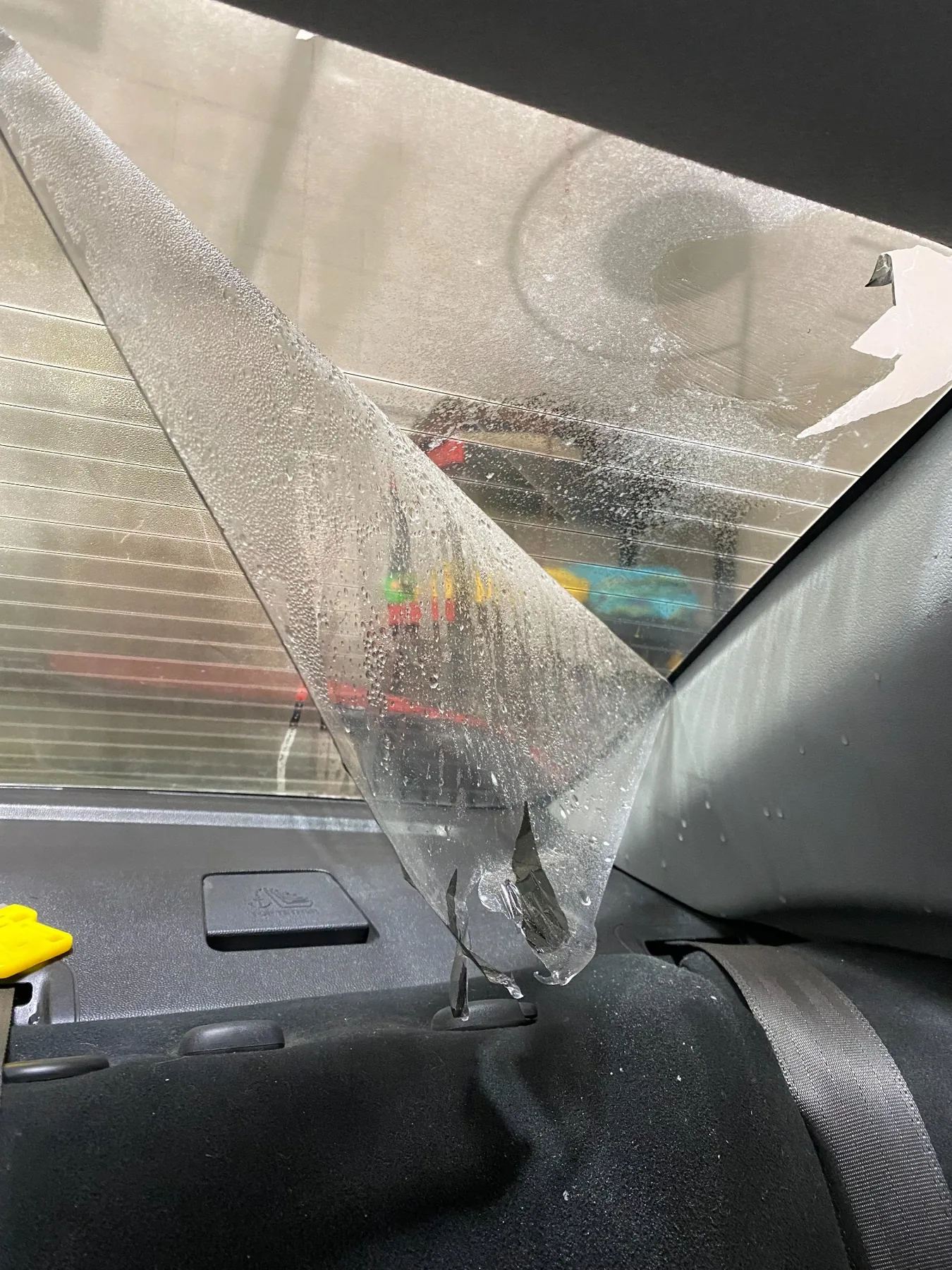
From our experience, one of the worst situations is film that has become brittle and separated into layers.
Instead of one sheet coming off, the film breaks.
Then another layer remains.
Then adhesive remains.
If that happens on a normal door window, it's frustrating and time-consuming.
If it happens on rear glass with defroster lines, it becomes even more challenging.
Those are the removals that can consume hours.
Can I Remove Window Tint Myself to Save Money?
You can.
It's your vehicle.
We understand why customers consider doing it themselves, especially when they hear the cost of professional removal.
But here's what we want you to understand:
Pulling the film off isn't necessarily the hard part.
The adhesive is often the problem.
Professional tint installers develop techniques for trying to remove the film while minimizing how much adhesive remains on the glass.
Sometimes it works extremely well.
Other times the condition of the film means adhesive is going to remain regardless.
But simply grabbing a corner and ripping the film off can create considerably more cleanup afterward.
What Is the Biggest DIY Tint Removal Mistake?
One of the biggest mistakes is:
Peeling the film off and leaving all the adhesive behind.
The customer thinks:
"Great. I removed the tint. Now the shop just needs to put new tint on."
No.
We still have to prepare that glass.
If it's covered in old adhesive, that adhesive has to come off before we install new film.
And depending on what the customer did, they may have made the preparation more difficult than it would have been if we had handled the removal from the beginning.
Will Dope Tintings Charge Me If I Remove the Film but Leave the Glue?
Yes.
Removing the film yourself doesn't automatically eliminate the removal/preparation charge if you've left the glass covered in adhesive.
In fact, depending on the condition, you may end up paying more because the remaining adhesive can require substantially more labor.
We've seen DIY situations where the cleanup became significantly harder because the customer removed only the easy part—the film—and left us with the difficult part.
If you're trying to save money, talk to us before starting the removal.
Sometimes DIY removal can save money.
Sometimes it creates a more expensive job.
Can You Scratch Car Glass Removing Window Tint?
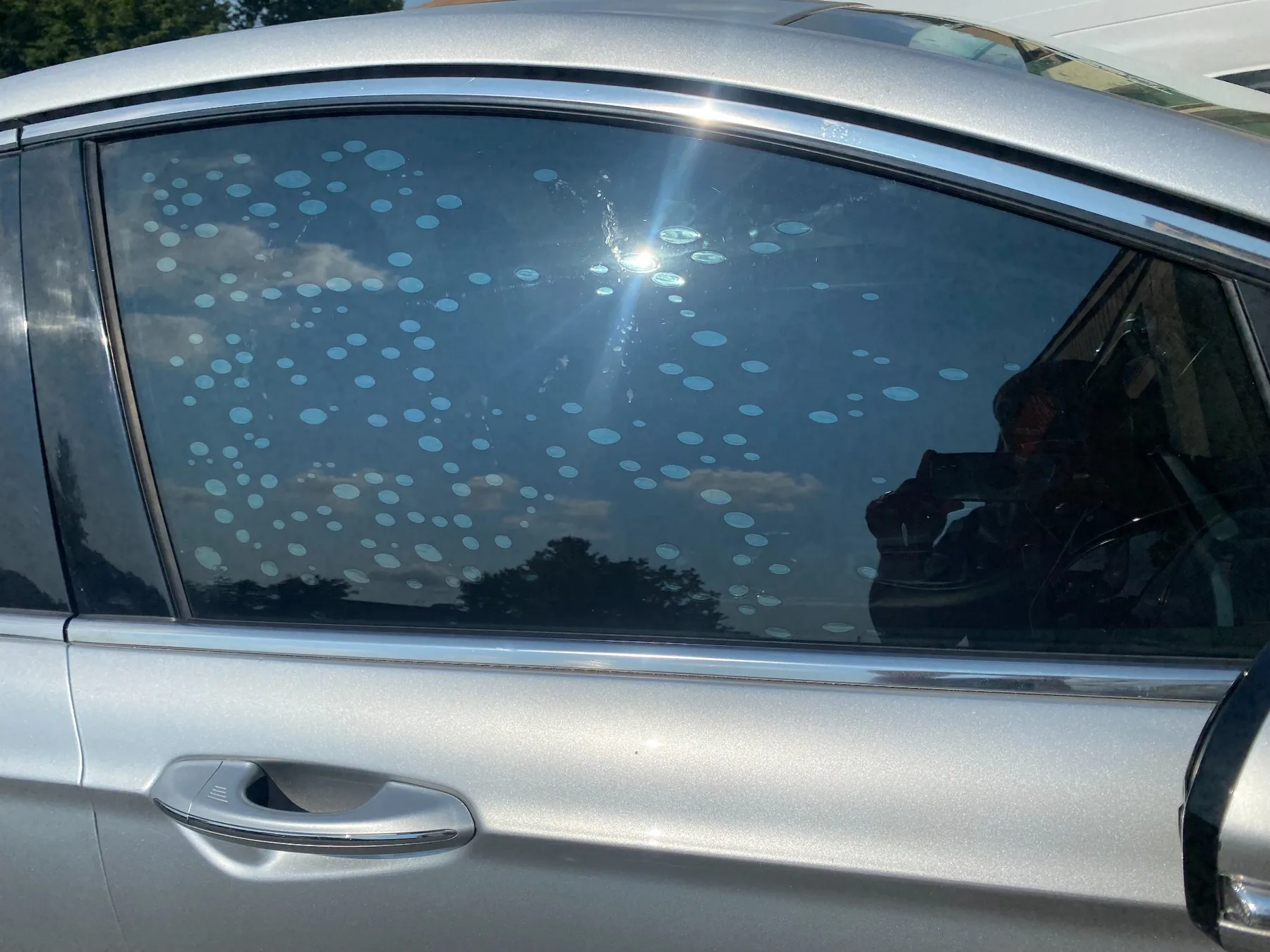
Yes, glass can be scratched if improper tools or techniques are used.
We've seen customers use the wrong scraper or razor and scratch their windows.
Automotive glass has curvature, coatings and different characteristics depending on the vehicle and glass location.
Knowing how to work with the glass matters.
There's another problem too.
A scratch that doesn't look terrible on clear glass can become much more noticeable after new dark tint is installed.
Now the darker background can make that scratch stand out.
So a DIY attempt to save money on removal can leave you with a permanent visual problem after the new film goes on.
Should I Use a Razor to Remove Rear Window Tint?
We strongly recommend against inexperienced customers using a razor on rear glass with defroster lines.
The defroster grid can be damaged.
Once those conductive lines are cut or scraped away, portions of the rear defroster may stop working.
Rear glass needs to be treated differently from appropriate plain automotive glass.
If you're unsure what you're doing, this is one area where saving money can become expensive.
Can a Tint Shop Repair Damaged Rear Defroster Lines?
Dope Tintings does not repair damaged rear defroster lines.
There are repair products and specialty services available elsewhere, but the success of a repair depends on the type and extent of damage.
When the damage is significant, replacement rear glass may ultimately be the more practical solution.
That's another reason we want customers to understand the risk before removing old rear-window film.
Can Old Tint Pull Defroster Lines Off the Glass?
It can happen, particularly when old film is heavily bonded to the rear glass.
This is why we warn customers about risk before certain rear-window removals.
Sometimes the problem isn't someone scraping the defroster with a razor.
The old film itself may have become heavily bonded around the grid.
Aggressively ripping the film away can potentially damage the lines.
Rear-window tint removal requires patience.
Can You Remove Old Tint and Re-Tint the Car the Same Day?
Yes, many vehicles can have the old tint removed and new tint installed the same day.
But the condition of the existing tint determines whether that's realistic.
For a removal + re-tint job, we generally need to inspect the vehicle first.
If we believe the removal is manageable, the customer can drop the vehicle off in the morning.
We remove the existing film, prepare the glass and install the new tint.
The vehicle can then be ready for