What Does Legal Window Tint Look Like on an SUV in Pennsylvania?
See what Pennsylvania-legal SUV window tint looks like using a factory 2025 Jeep Grand Cherokee. Learn PA's 70% front-window rule, factory privacy glass, rear-window limits and what SUV owners should know before adding tint.
What Does Legal Window Tint Look Like on an SUV in Pennsylvania?
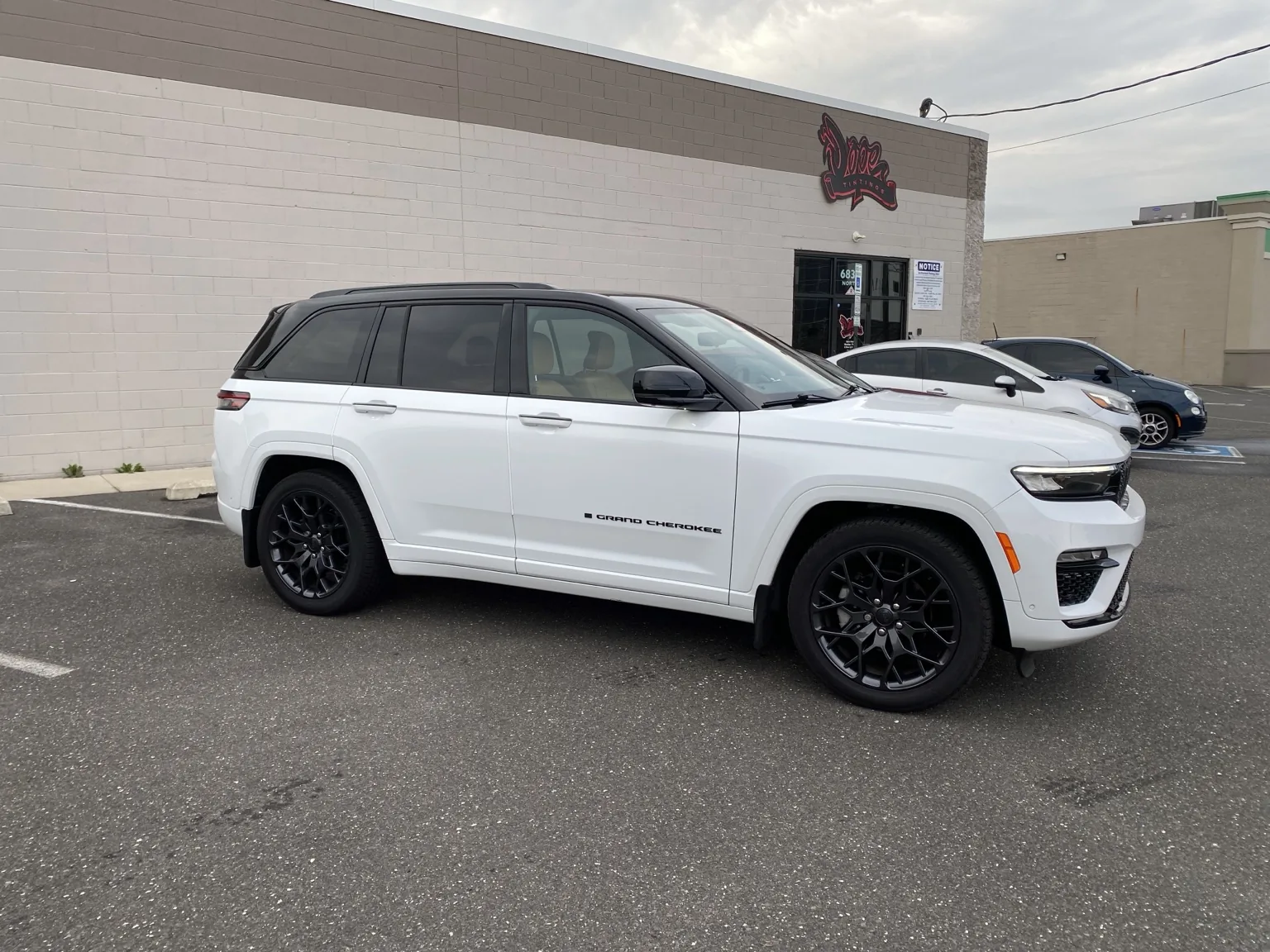
For a Pennsylvania truck or qualifying multi-purpose passenger vehicle, PennDOT requires at least 70% total light transmission through the windshield and front side windows, while listing no minimum light-transmission requirement for the rear side windows or rear window. The factory 2025 Jeep Grand Cherokee shown in this guide is a real-world example of that clear-front/dark-rear appearance: its clear-looking front glass is around the 70% range while its factory rear privacy glass measured approximately 23%.**
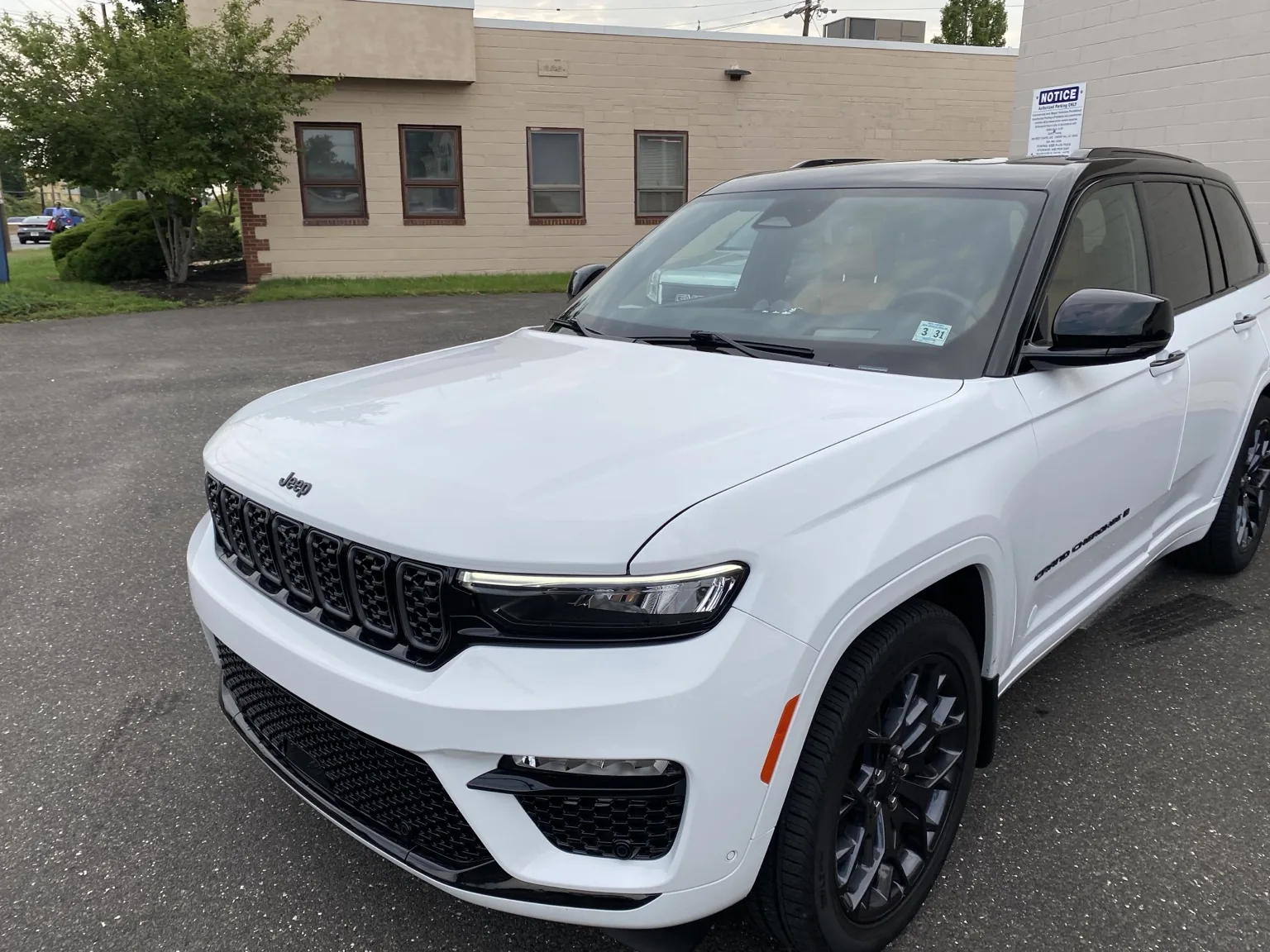
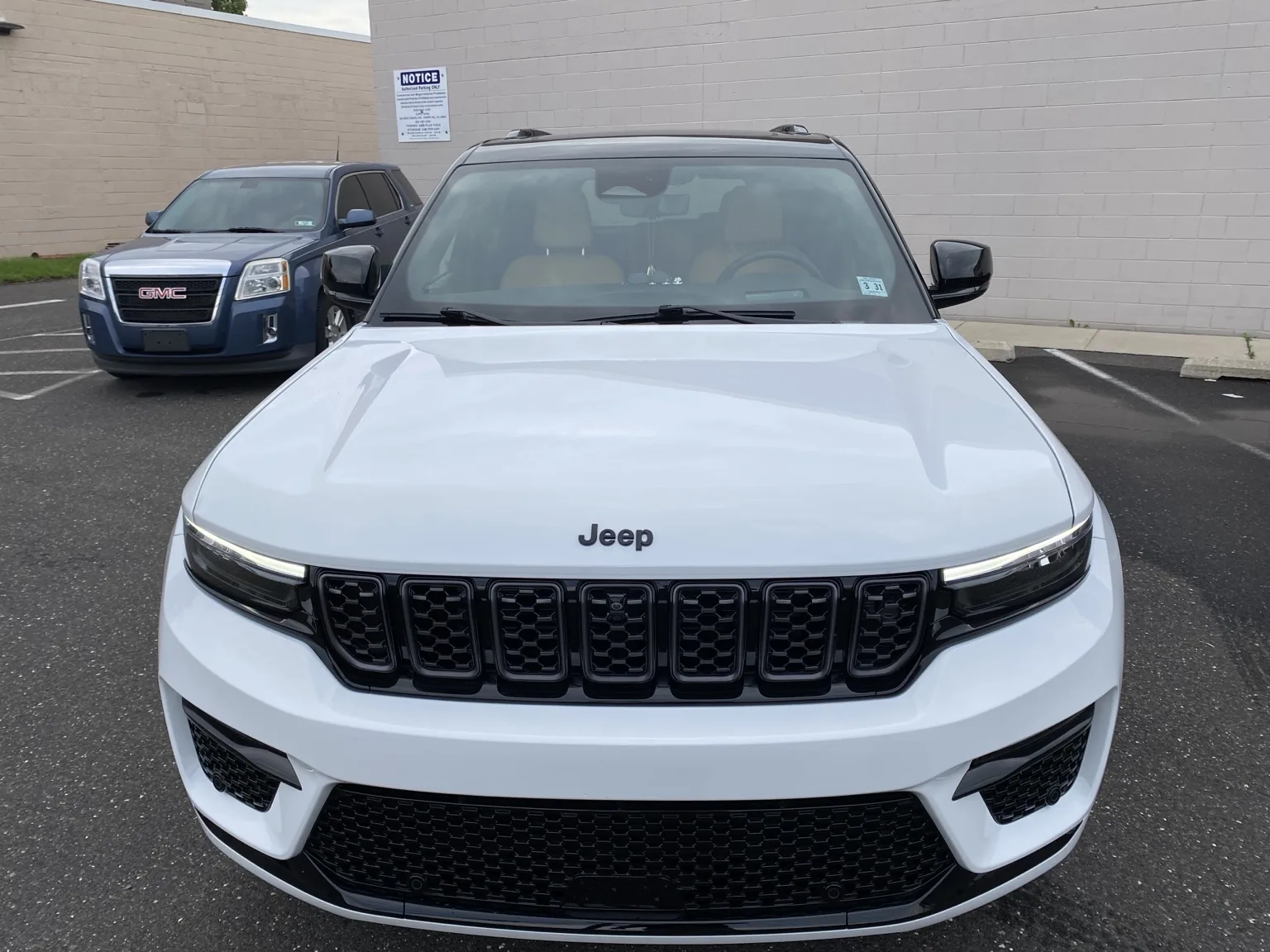
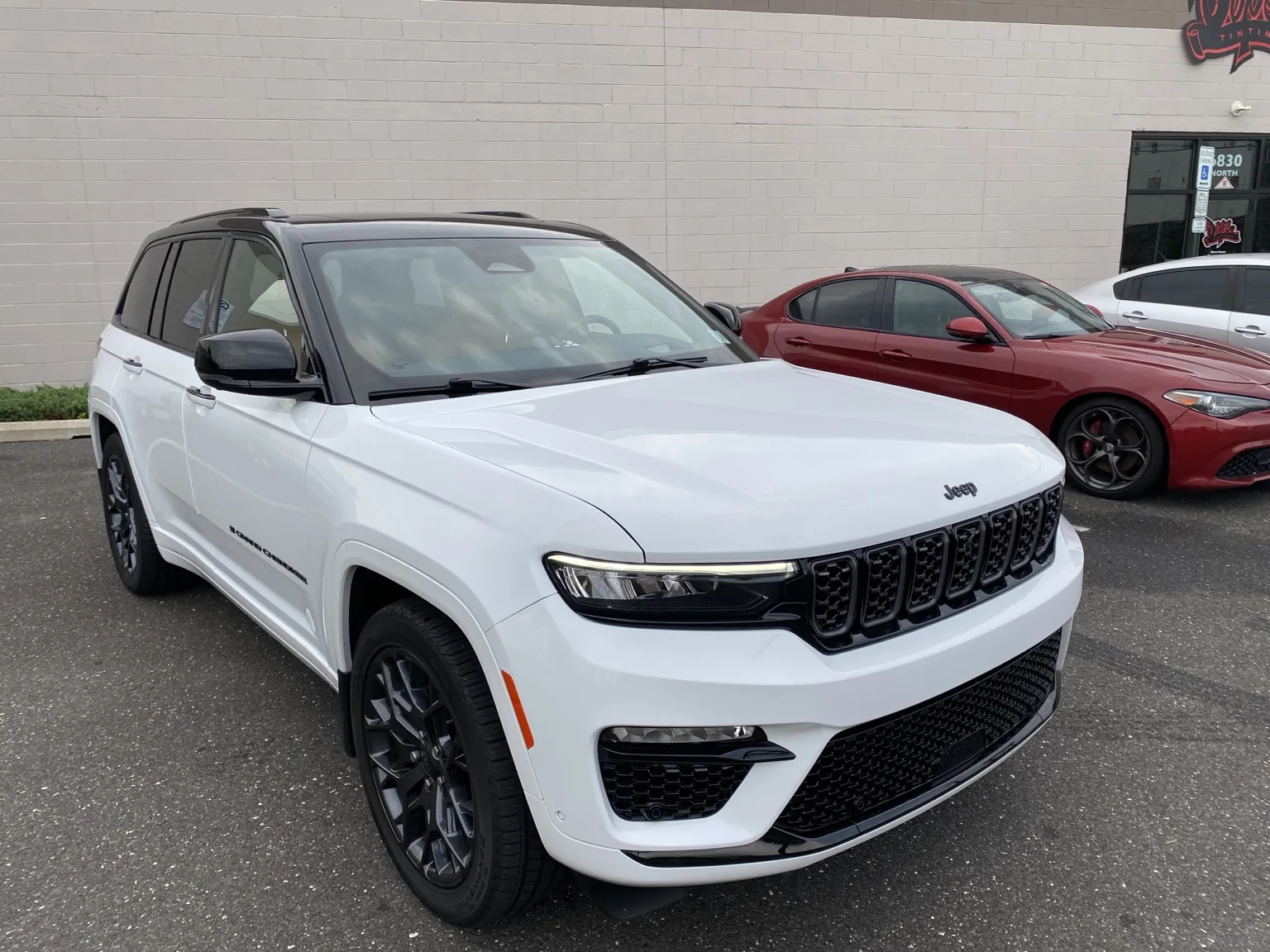
This 2025 Jeep Grand Cherokee is an actual vehicle we're using as a real-world example.
Nothing needed to be tinted to create the appearance shown in these photos.
The Jeep already came from the manufacturer with:
- Clear-looking factory front glass
- Darker factory privacy glass behind the driver
- No aftermarket film required to create that light-front/dark-rear appearance
That makes it an excellent way to show Pennsylvania SUV owners what PennDOT's window-tint requirements can look like in the real world.
What Is Pennsylvania's Window Tint Rule for SUVs?
PennDOT separates passenger cars from trucks and multi-purpose passenger vehicles when discussing window-tint light transmission.
For trucks and qualifying multi-purpose passenger vehicles, PennDOT's current guidance lists:
| Window | Pennsylvania Minimum Light Transmission |
|---|---|
| Windshield | 70% |
| Front side windows | 70% |
| Rear side windows | No requirement |
| Rear window | No requirement |
The important phrase is total minimum light transmission.
PennDOT isn't simply saying:
"Install a film labeled 70%."
It means at least 70% of the light contacting the finished window must pass through it.
That's an important distinction when considering aftermarket film on glass that's already around the 70% range from the factory.
What Does a Pennsylvania-Compliant SUV Look Like?
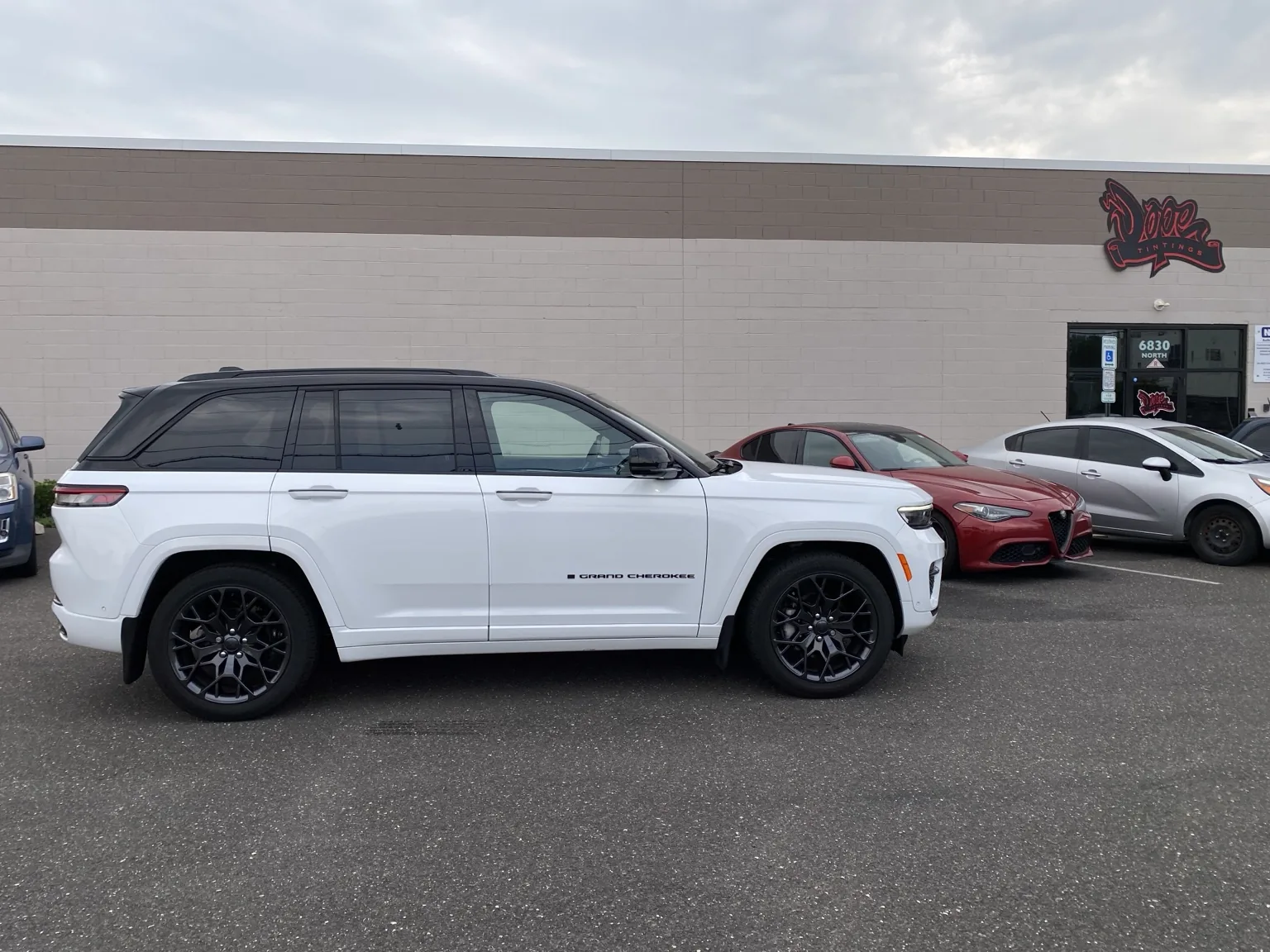
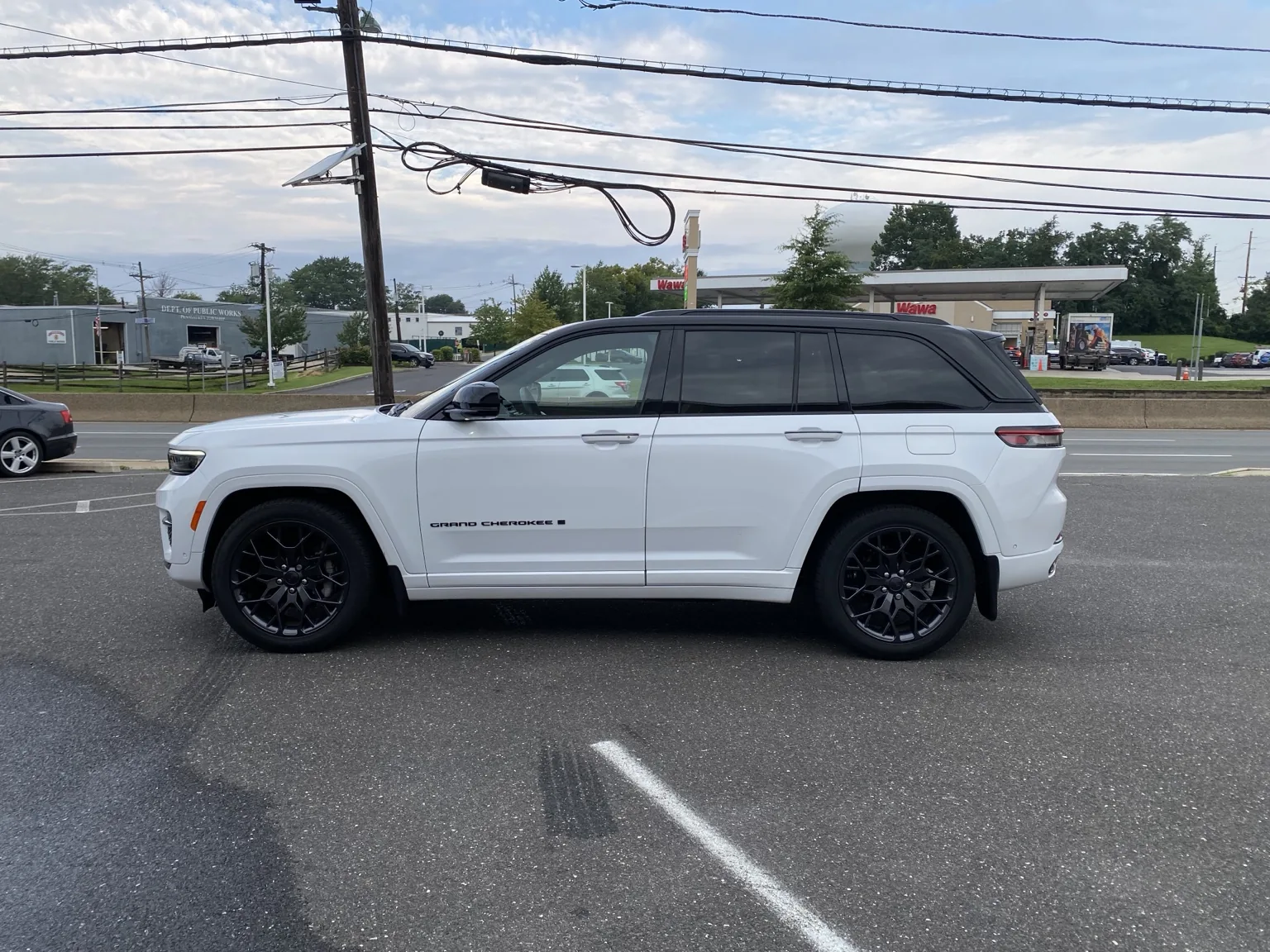
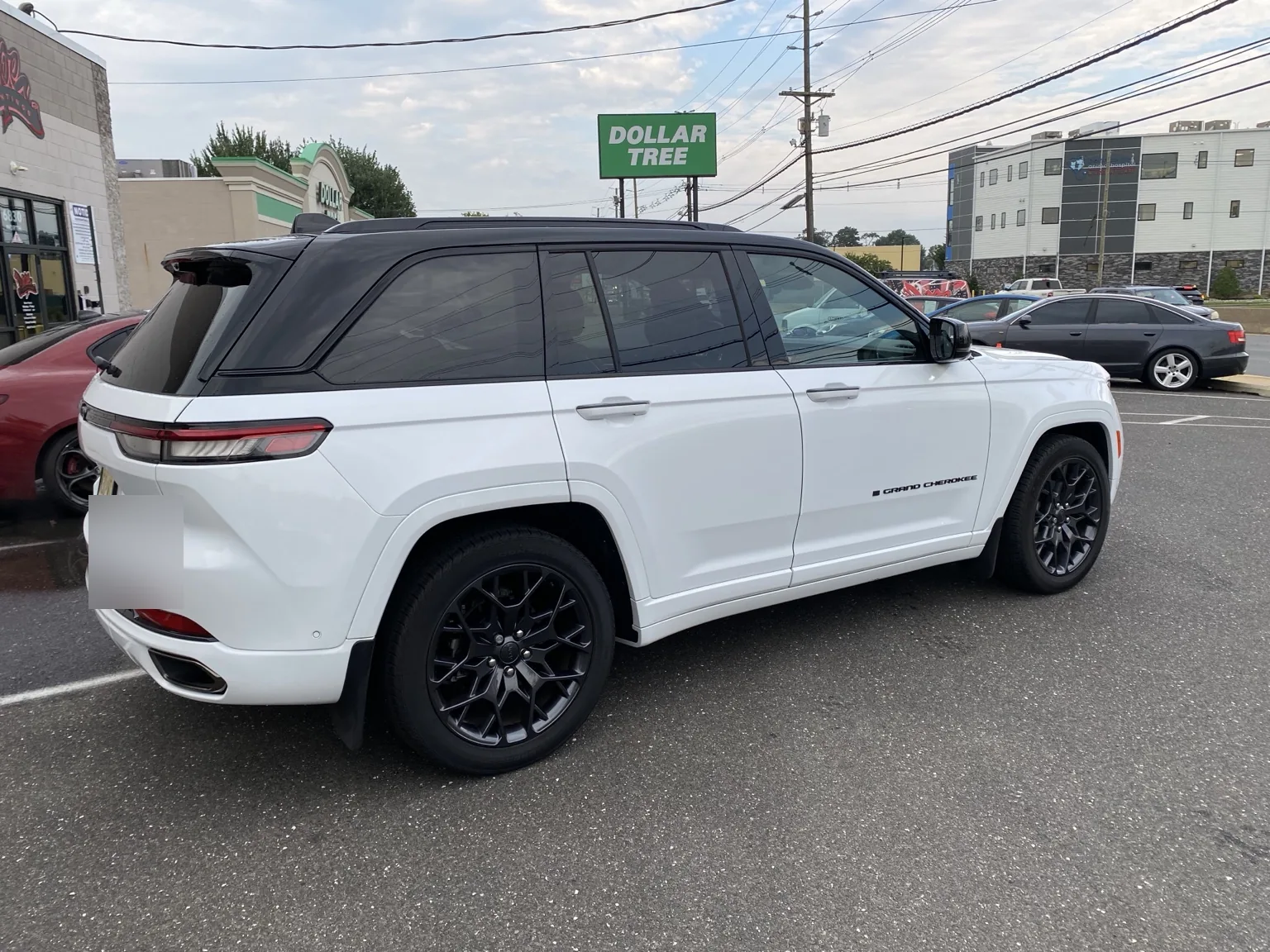
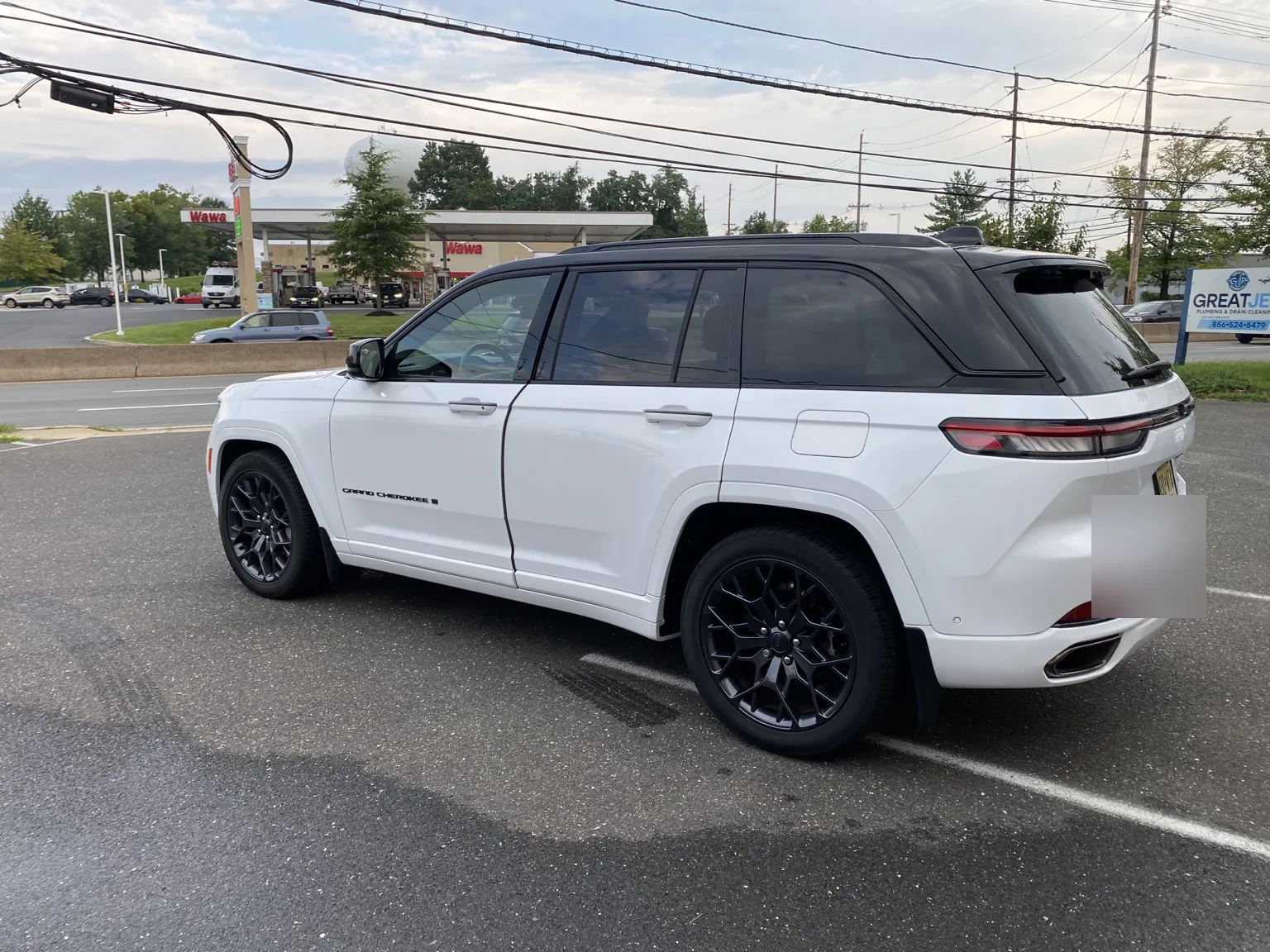
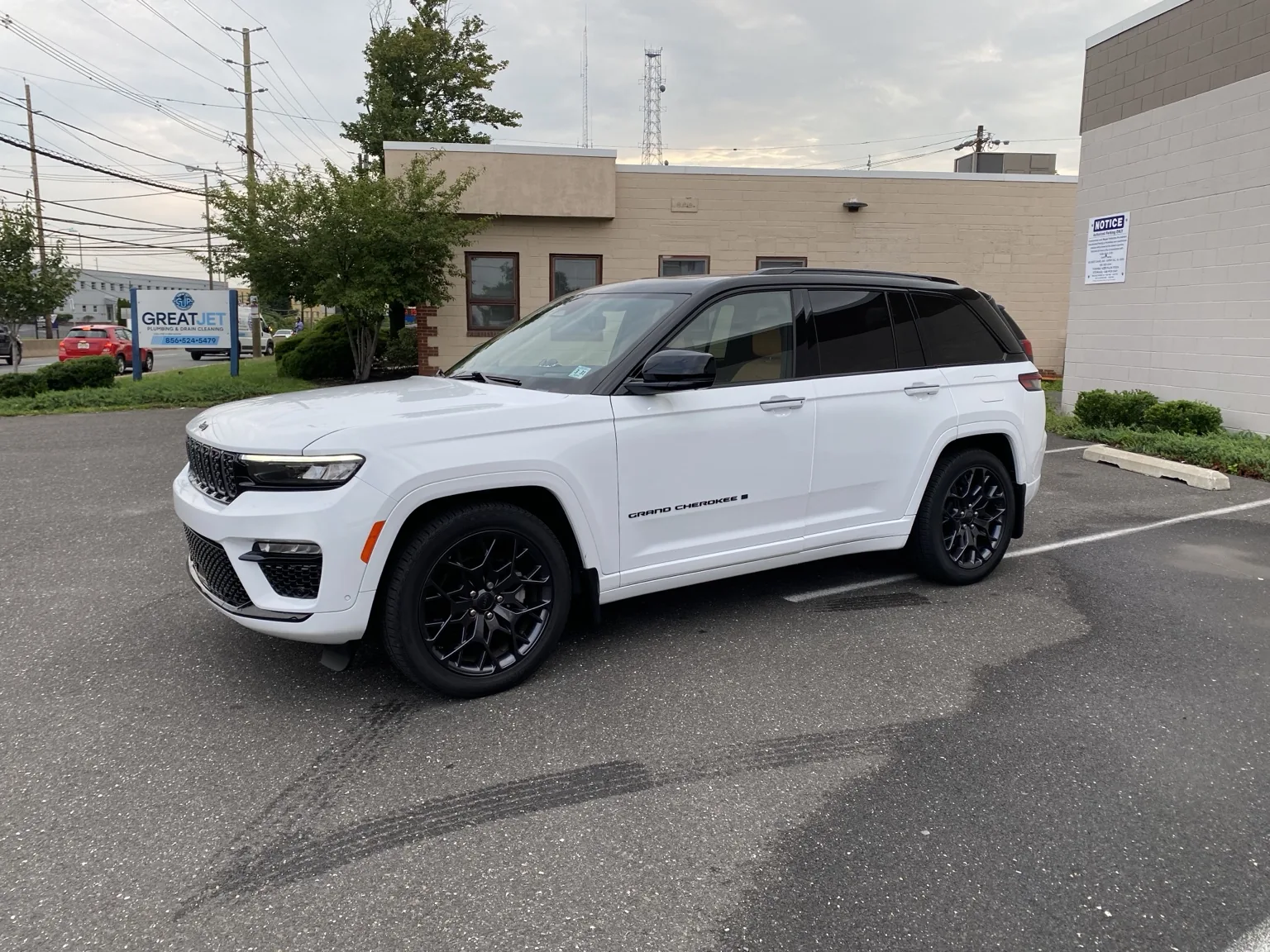
Look at the factory 2025 Jeep Grand Cherokee in these photos.
The front driver and passenger windows look clear.
The glass behind the driver is noticeably darker.
That creates an obvious:
Light front → dark rear
appearance.
For this type of qualifying vehicle, that appearance lines up closely with PennDOT's window-tint chart.
If a Pennsylvania SUV customer comes to Dope Tintings and specifically says:
"I want to follow Pennsylvania's window-tint requirements,"
our basic recommendation is:
Don't darken the front doors below Pennsylvania's required total light transmission.
If the factory front glass is already around that limit, the simplest approach is to leave it alone.
What Did the Factory Glass Measure on This 2025 Jeep Grand Cherokee?
The factory privacy glass behind the driver on this particular Jeep measured approximately 23% VLT with our tint meter.
The rear doors, rear quarter/cargo windows and back glass were all in approximately the same range.
But factory privacy glass isn't always exactly 23%.
We've measured different SUVs and seen variation.
One might be around:
- 22%
- 23%
- 24%
- Somewhere nearby
The vehicle matters.
That's why we meter the actual glass instead of assuming every SUV has exactly 20% factory privacy glass.
What Does the 70% Marking on Factory Front Glass Mean?
Many customers hear 70% and assume that sounds dark.
It's actually the opposite.
VLT means Visible Light Transmission.
The higher the number, the more visible light passes through.
So:
70% = relatively clear-looking
35% = darker
20% = darker still
5% = extremely dark
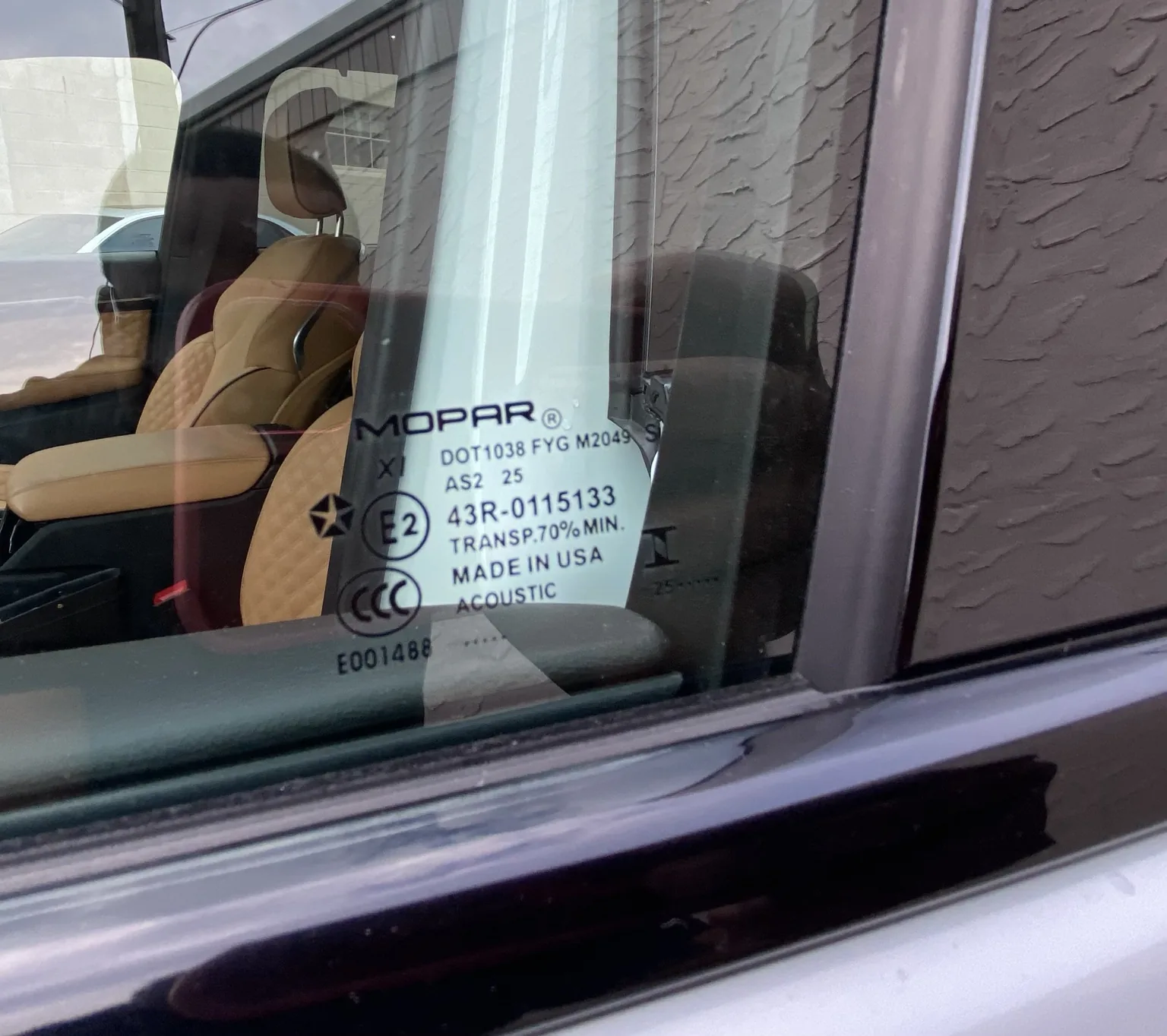
On many vehicles we've worked on, the manufacturer's information etched into the front-door glass includes wording such as 70% minimum.
The Grand Cherokee used in this guide gives us a real example.
One of our photographs shows:
TRANSP. 70% MIN.
etched directly into the factory glass.
If the marking isn't available or a customer wants to see what the glass actually measures, we can also use a tint meter.
Does Factory Front Glass Always Meter Exactly 70%?
Not necessarily.
Tint meters aren't perfect, and automotive glass can vary.
In our experience, clear-looking factory front glass can meter somewhere around the 70–75% range, with occasional readings somewhat outside that range.
That's why the actual measurement matters.
The important Pennsylvania issue is that PennDOT's percentage refers to the total light transmission through the window.
Can You Put 70% Tint Over Factory 70% Glass in Pennsylvania?
You can physically install a very light 70% aftermarket film over factory glass.
And visually, it may still look extremely clear.
But there's an important legal distinction:
70% film over factory glass does not mean the finished window still transmits 70% of visible light.
The factory glass already reduces some light.
Adding another layer reduces the combined transmission further.
In our experience, we would expect a very light film over clear-looking factory glass to meter somewhere below the original factory reading, potentially into the 60% range depending on the actual glass and film.
We haven't measured every possible 70-over-70 combination, so we're not going to invent an exact finished number.
If your number-one priority is meeting Pennsylvania's 70% total-transmission requirement, don't assume a film labeled 70% automatically keeps the finished window at 70%.
Will Police Notice 70% Aftermarket Tint on the Front Doors?
A very light aftermarket film can be difficult to visually distinguish from clear factory glass.
From our experience, an extremely light film may not attract the same attention as something like 5%, 15% or 20%.
But:
Hard to notice and legally compliant are not the same thing.
PennDOT's standard is based on total light transmission.
If your priority is specifically:
"I want to follow Pennsylvania law,"
we recommend making the decision based on the actual total VLT rather than simply whether an officer can visually notice the film.
Can You Tint the Rear Windows Darker on a Pennsylvania SUV?
For trucks and qualifying multi-purpose passenger vehicles, PennDOT lists no minimum light-transmission requirement for the rear side windows or rear window.
That gives owners substantially more flexibility behind the driver.
A customer may decide to leave the factory privacy glass alone.
Or they may add aftermarket film because they want:
- More privacy
- A darker appearance
- Additional UV protection based on the film's specifications
- Better heat rejection
- More protection for children riding in the rear
- Interior protection
- Less visibility of tools or equipment in a work vehicle
You don't have to add film simply because the rear glass is factory-darkened.
It's an option based on what you want the glass to do.
Does Pennsylvania Allow Any Darkness Behind the Driver on an SUV?
PennDOT's current chart lists no minimum light-transmission requirement for the rear side windows and rear window of trucks and qualifying multi-purpose passenger vehicles.
That is different from Pennsylvania's rules for newer passenger cars, which have separate requirements.
This is why vehicle classification matters in Pennsylvania.
Don't assume every vehicle marketed as a crossover, wagon or SUV automatically falls into the same category without considering how PennDOT classifies the vehicle.
PennDOT describes a multi-purpose passenger vehicle for this guidance as one built on a truck chassis or specifically designed for occasional off-road use.
Can Pennsylvania Police Still Stop You for Very Dark Rear Tint?
This is where we separate the statewide rule from real-world enforcement experiences.
Over more than 20 years of dealing with Pennsylvania customers, we've heard different experiences depending on where people drive.
Some customers with clear front windows and very dark rear glass tell us they've had no issues.
Others have told us they were stopped because an officer questioned the darkness or whether the rear glass was factory.
We don't use those individual experiences to rewrite PennDOT's statewide rule.
But we also don't tell customers:
"You'll never be stopped."
An officer can initiate a traffic stop and evaluate what they believe they're seeing.
If you're concerned about enforcement, understand both the statewide requirements and the possibility that an individual roadside interaction may still occur.
Is Tint Enforcement the Same Everywhere in Pennsylvania?
From what customers have reported to us over the years, enforcement experiences can vary.
We've heard different stories from customers driving in:
- Philadelphia
- Highways patrolled by Pennsylvania State Police
- Suburban areas
- Smaller municipalities
That doesn't mean the statewide VLT requirement changes every time you cross into another township.
It means actual enforcement experiences can vary by officer and location.
We wouldn't tell a customer to assume that because they haven't been stopped in one area, they can never be questioned somewhere else.
What Happens If You Add Film Over Factory Privacy Glass?
The finished rear window becomes darker because visible light has to pass through both the factory-darkened glass and the aftermarket film.
For example, on factory privacy glass in approximately the low-20% range, we've seen combinations where:
Approximately 35% aftermarket film can create roughly a 10% finished appearance/readout.
Approximately 15% aftermarket film can create roughly a 5% finished appearance/readout.
Those are approximate real-world examples.
They're not guaranteed mathematical outcomes.
Factory glass varies.
Film VLT varies.
Tint meters vary.
That's why we evaluate the actual vehicle.
Is Factory Privacy Glass the Same as Aftermarket Tint?
No.
Factory privacy glass gets its darker appearance from the glass itself.
It isn't necessarily a sheet of aftermarket film that can simply be peeled off.
That's an important distinction for SUV, pickup and van owners.
A customer may say:
"Take the factory tint off the back."
But if the darkness is manufactured into the glass, there is no aftermarket film there to remove.
Why Add Film If My SUV Already Has Factory Privacy Glass?
You don't necessarily have to.
If you're happy with the appearance and don't need additional performance, you can leave the factory privacy glass alone.
Customers typically add aftermarket film because they want something the factory appearance alone isn't giving them.
That may include:
- More privacy
- UV protection based on the aftermarket film's specifications
- Heat rejection
- Protection for children
- Additional interior protection
- Less visibility of cargo, tools or equipment
That's why we ask what the customer wants to accomplish before recommending a film.
Is Carbon or Ceramic Better for a Pennsylvania SUV?
It depends on your goal.
At Dope Tintings:
Standard film is for customers primarily concerned with basic tint/privacy.
Carbon film is a good step up for customers who want better heat rejection.
Ceramic film is our highest heat-rejection option.
The darkness percentage is a separate decision.
You could have a similar VLT in standard, carbon or ceramic while receiving different heat-rejection performance.
If heat rejection is important, read What Is the Difference Between Carbon and Ceramic Window Tint?.
What Do We Recommend If You Want to Follow Pennsylvania Law?
If a customer comes to us and says:
"My number-one priority is following Pennsylvania's tint requirements,"
we remember that throughout the conversation.
For a qualifying SUV/pickup/MPV with factory front glass already around Pennsylvania's 70% minimum, our simplest recommendation is:
Leave the windshield and front doors in their factory configuration.
Then decide whether you actually need anything behind the driver.
If you're happy with the factory privacy glass:
Leave it alone.
If you want more privacy, UV performance or heat rejection:
We can discuss an appropriate aftermarket film for the rear based on your goals.
We're not here to force a customer into buying film they don't need.
What If I Want Heat Rejection on the Front Glass?
That's where you need to distinguish performance goals from Pennsylvania's ordinary VLT requirement.
A very light aftermarket film may provide UV or heat-rejection benefits while remaining visually clear.
But adding film to factory glass changes the total light transmission.
If your finished front glass falls below Pennsylvania's required total VLT, the fact that the film looks clear doesn't change the meter reading.
PennDOT also provides a medical-exemption process for qualifying situations involving colorless UV-filtering products.
If you believe you qualify medically, use PennDOT's current exemption process rather than assuming any light film is automatically permitted.
Does This Guide Apply to Every SUV and Crossover in Pennsylvania?
Not automatically.
This is one of the biggest differences between Pennsylvania and New Jersey.
Pennsylvania's chart specifically distinguishes passenger cars from trucks and multi-purpose passenger vehicles.
PennDOT defines an MPV for this guidance as a vehicle built on a truck chassis or specifically designed for occasional off-road use.
That means the 2025 Jeep Grand Cherokee is our real-world example, but you should not assume every crossover, station wagon or SUV-shaped vehicle necessarily receives the same classification.
If you're unsure, verify how your specific vehicle is classified before relying on the no-minimum rear-window rule.
Frequently Asked Questions
What does legal window tint look like on an SUV in Pennsylvania?
For a qualifying Pennsylvania truck or multi-purpose passenger vehicle, PennDOT requires 70% minimum total light transmission through the windshield and front side windows while listing no minimum VLT requirement for the rear side windows or rear window. The factory Jeep Grand Cherokee shown here provides a real-world example of that clear-front/dark-rear appearance.
Are SUV front windows allowed to be tinted in Pennsylvania?
PennDOT requires at least 70% total light transmission through the front side windows of trucks and qualifying multi-purpose passenger vehicles. Adding aftermarket film to factory glass can lower the finished total VLT.
Can SUV rear windows be 5% in Pennsylvania?
PennDOT lists no minimum rear-side-window VLT requirement for trucks and qualifying multi-purpose passenger vehicles. Vehicle classification matters, so verify that your particular vehicle falls into the applicable category.
Does Pennsylvania require 70% tint on SUV front windows?
Pennsylvania requires at least 70% total light transmission through the front side windows for the applicable vehicle category. That's different from saying you should install a film labeled 70%.
Can I put 70% ceramic over factory 70% glass?
You can physically install it, but the finished total VLT will be lower than the original factory-glass transmission. Don't assume 70% film over 70% glass equals 70% total VLT.
Is factory privacy glass removable?
No. Factory privacy glass gets its darker appearance from the glass itself and is not necessarily a removable aftermarket film.
Do Pennsylvania tint laws apply differently to sedans and SUVs?
Yes. PennDOT's current chart treats 1998-and-newer passenger cars differently from trucks and qualifying multi-purpose passenger vehicles, particularly for rear side windows and the rear window.
Pennsylvania SUV Window Tint for Philadelphia and Nearby PA Drivers
Dope Tintings is located in Pennsauken, New Jersey, directly across the river from Philadelphia, and we've worked with Pennsylvania customers for more than 20 years.
The 2025 Jeep Grand Cherokee shown in this guide is an actual vehicle used to demonstrate what the factory clear-front/dark-rear configuration looks like.
If you're coming from Pennsylvania, the first thing we want to know is:
What are you trying to accomplish?
If you tell us:
"I want to follow Pennsylvania's tint requirements,"
we're going to keep that goal in mind.
If you tell us:
"I understand the rules, but I want my front windows darker anyway,"
that's a different conversation.
Our job is to explain the difference so you can make an informed decision about your vehicle.
For the New Jersey version of this SUV guide, read What Does Legal Window Tint Look Like on an SUV in New Jersey?.
For film-performance differences, read What Is the Difference Between Carbon and Ceramic Window Tint?.
Dope Tintings 6830 N Crescent Blvd Pennsauken NJ 08110 856-577-4119