Are You Really Getting Ceramic Tint? A South Jersey Buyer’s Guide
Shopping for ceramic window tint in South Jersey? Learn how to verify the film, IR rejection, receipt and warranty before paying premium ceramic prices.
You usually cannot confirm that window tint is Ceramic simply by looking at how dark it appears. Before paying Ceramic prices, ask the tint shop to identify the exact film, explain its heat-rejection specifications, document the product on your receipt and demonstrate its performance with a professional window-film transmission meter.
If you are shopping for ceramic window tint in South Jersey, Dope Tintings in Pennsauken, NJ has installed and meter-tested ceramic film on hundreds of vehicles from Cherry Hill, Camden, Moorestown, Mount Laurel, and throughout Camden and Burlington County.
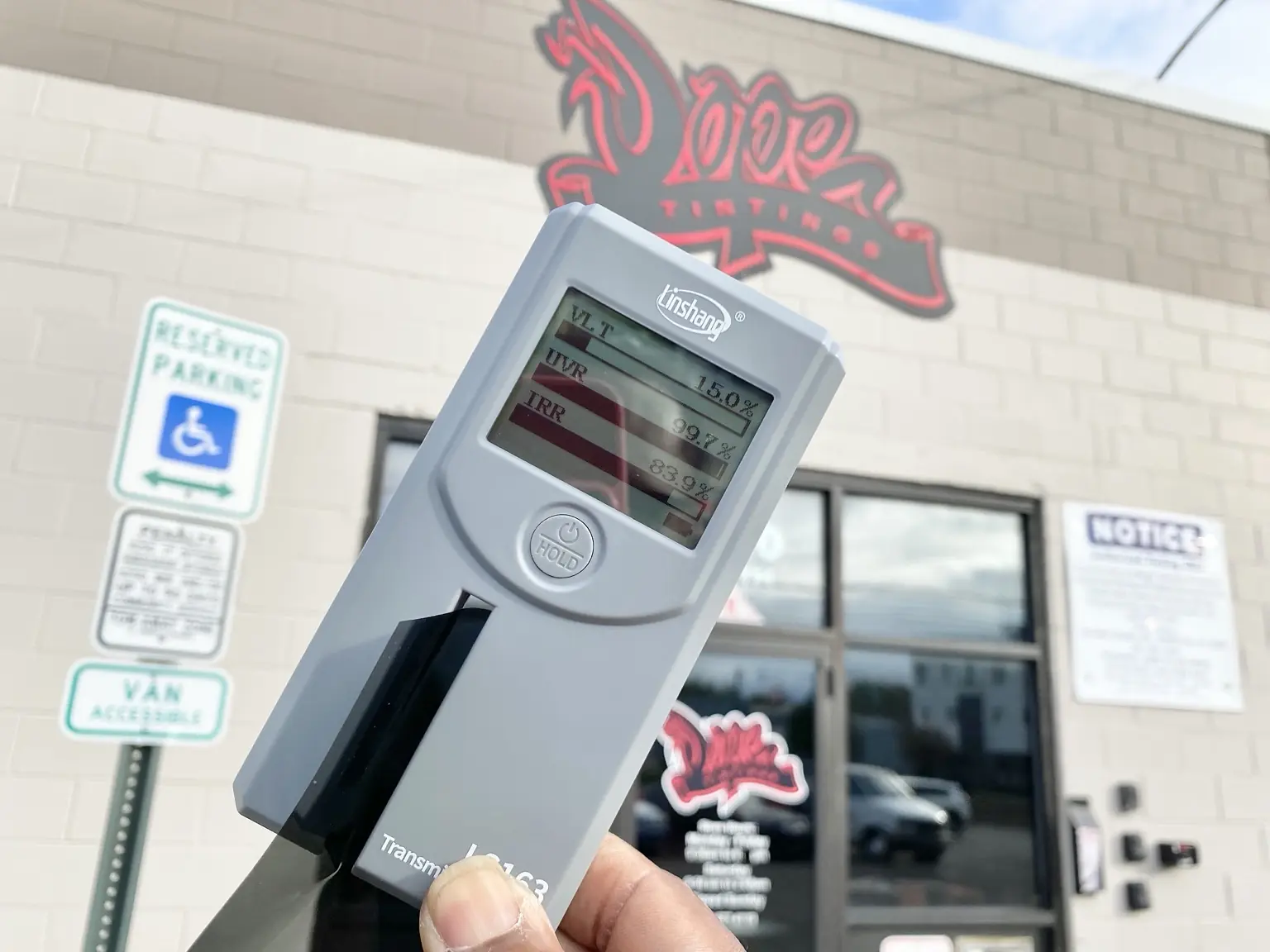
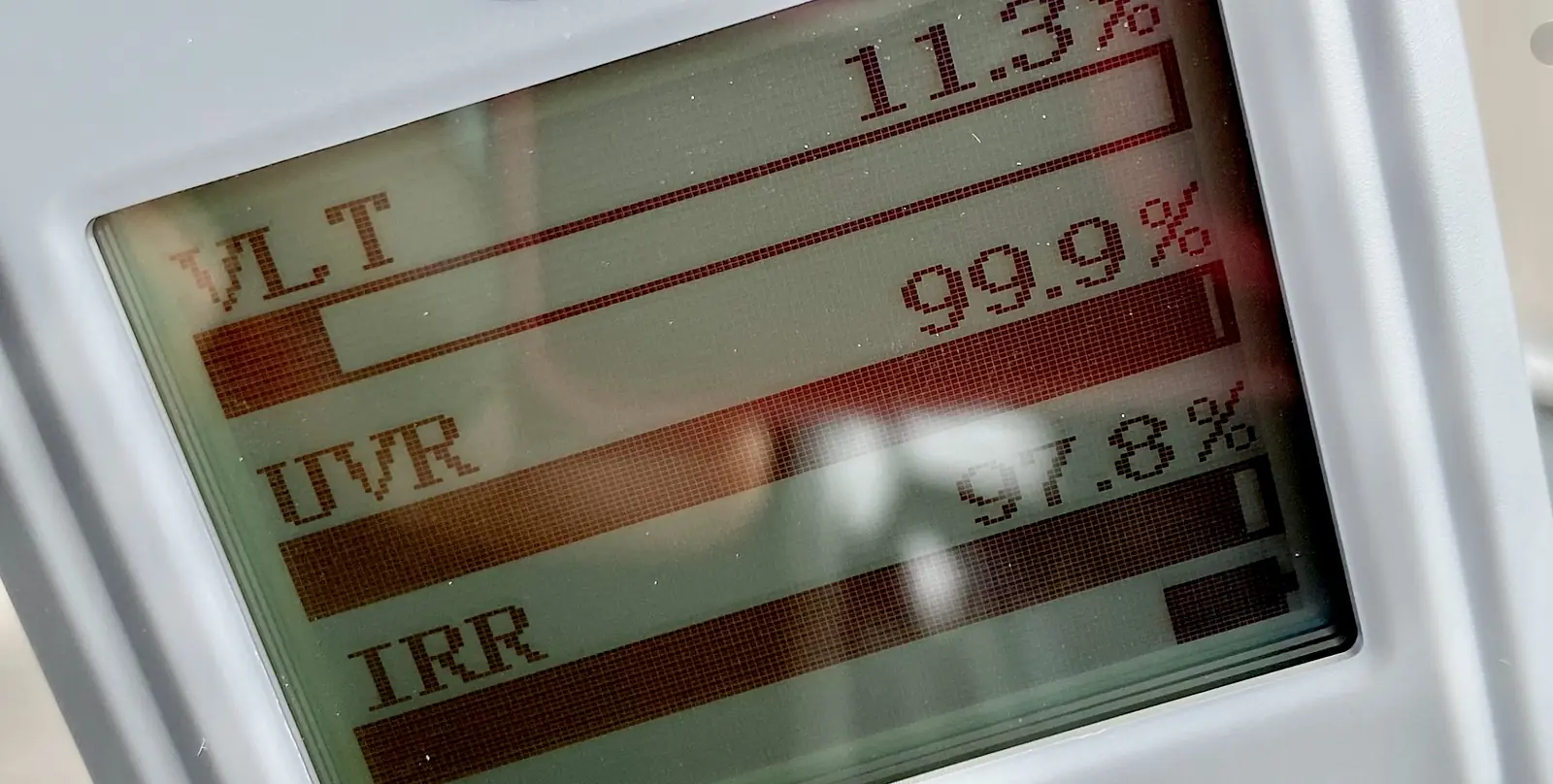
At Dope Tintings in Pennsauken, NJ, we recently tested the 15% nano-ceramic film used on a 2026 BMW X3 M50 xDrive. The film by itself measured 83.9% infrared rejection. After installation on the BMW’s factory glass, the completed window measured 97.8% infrared rejection.
Those readings give South Jersey customers something more valuable than a sales pitch: measurable evidence of the heat-rejection performance they are paying for.
Why Should South Jersey Ceramic-Tint Buyers Be Careful?
Ceramic window tint has become one of the most heavily marketed products in the automotive-tint industry.
That popularity has created a problem. A customer can ask for Ceramic, pay a premium price and leave without any practical way to identify what was actually installed.
Standard, Carbon and Ceramic films can look extremely similar after installation. A customer normally cannot stand outside a vehicle and determine which technology is on the glass.
That creates an opportunity for dishonest or poorly informed shops to install a less expensive film while calling it Ceramic.
If you are comparing window tinting shops in South Jersey, do not make your decision based only on a shop saying:
“This is Ceramic.”
Ask the shop to show you what makes it Ceramic and what heat-rejection performance you are receiving.
What Is Ceramic Window Tint Supposed to Do?
Ceramic window tint is primarily designed to provide higher heat rejection.
The ceramic particles incorporated into the film help reduce the infrared energy passing through the treated glass. Depending on the film series and shade, Ceramic can provide substantially greater heat-rejection performance than Standard or Carbon film.
Ceramic may also provide:
- High ultraviolet rejection
- Reduced solar heat through treated glass
- Improved passenger comfort
- Reduced glare based on the selected shade
- Nonmetallic construction
- Long-term color stability
- Heat rejection without requiring extremely dark film
The main reason to purchase Ceramic is not because somebody says it looks darker from outside while remaining magically clearer from inside.
The primary upgrade is heat-rejection performance.
Customers can learn more about the actual benefits on our Ceramic Window Tinting South Jersey service page.
Are Ceramic and Nano-Ceramic Tint the Same Thing?
In normal automotive-window-film terminology, nano-ceramic tint is Ceramic tint.
The word “nano” refers to the extremely small ceramic particles used within the film. It does not automatically identify an entirely separate film category above Ceramic.
Customers should be cautious if a shop sells Ceramic and then attempts to charge for another upgrade by saying:
“We also have Nano-Ceramic.”
Ask what the actual difference is.
There can be legitimate differences between two Ceramic film series, including:
- Infrared-rejection performance
- Total solar energy rejected
- Film construction
- Optical quality
- Available percentages
- Manufacturer
- Warranty
- Price
However, simply adding the word “nano” does not automatically turn Ceramic into a different technology.
Ceramic and nano-ceramic describe the same general film category, although different Ceramic products can still deliver different levels of performance.
Can You Identify Ceramic Tint by Looking at It?
No. Appearance alone is not enough.
A 15% Standard film, 15% Carbon film and 15% Ceramic film can all create a similar level of darkness. The customer may notice differences in color, finish or optical quality, but those visual differences are not a dependable way to confirm the film’s technology.
Ceramic also does not create a one-way effect that makes every vehicle dramatically darker from outside and clearer from inside.
Visibility is still heavily influenced by:
- Visible-light transmission
- Interior color
- Exterior lighting
- Time of day
- Weather
- Windshield coverage
- Amount of glass
- Viewing angle
A dark film will still reduce nighttime visibility regardless of whether it is Standard, Carbon or Ceramic.
Read our guide explaining whether Ceramic tint is easier to see through for a more detailed explanation.
How Can a Tint Meter Help Verify Ceramic Performance?
A professional window-film transmission meter can measure several important properties of the film or completed glass.
The readings shown on our meter include:
- VLT: Visible-light transmission
- UVR: Ultraviolet rejection
- IRR: Infrared rejection
The IRR reading is especially important when evaluating a film sold primarily for heat rejection.
A shop can place a loose film sample inside the meter to demonstrate the film’s performance before installation. After installation, the shop can test a compatible side window to show the combined performance of the film and factory glass.
This gives the customer measurable information instead of asking them to rely entirely on a verbal claim.
What Did Our 15% Ceramic Film Measure Before Installation?
We placed the loose 15% nano-ceramic film directly into our transmission meter before it was applied to the vehicle.
The film-only results were:
| Measurement | Film-only reading |
|---|---|
| Visible-light transmission | 15.0% |
| Ultraviolet rejection | 99.7% |
| Infrared rejection | 83.9% |
The 15.0% VLT measurement matched the film percentage being installed.
More importantly for a customer purchasing Ceramic, the loose film measured 83.9% infrared rejection. That demonstrated the heat-rejection performance of the film before factory automotive glass influenced the results.
This is the type of evidence customers should request when they want additional confidence that they are receiving the performance they were promised.
What Did the Completed BMW Window Measure?
For this 2026 BMW X3 M50 xDrive, we installed:
- 15% Ceramic on the two front doors
- 50% Ceramic over the factory rear privacy glass
- 20% Ceramic on the full windshield
The different side-window percentages were selected to create a closely coordinated appearance between the clearer front glass and darker factory rear privacy glass.
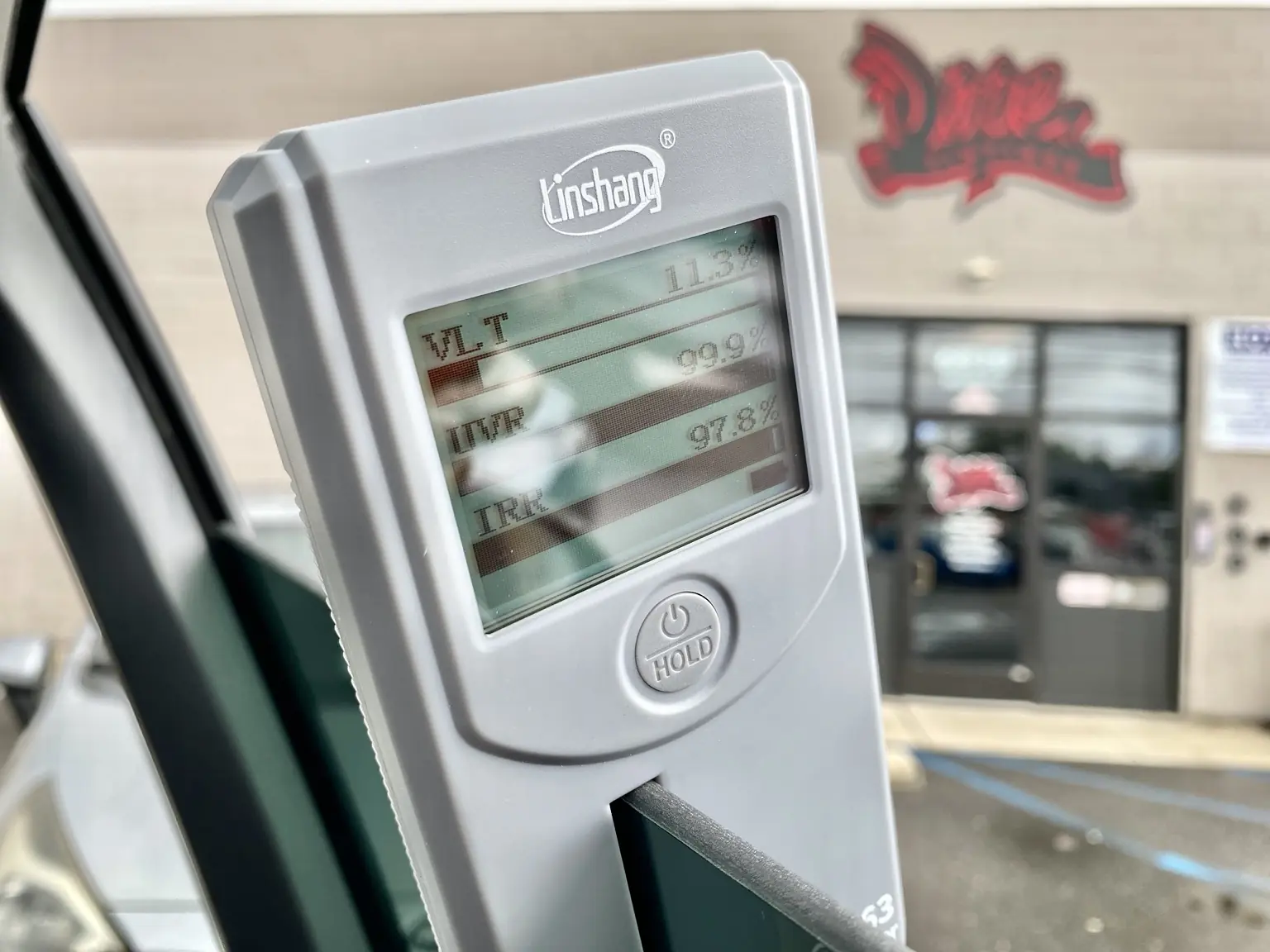
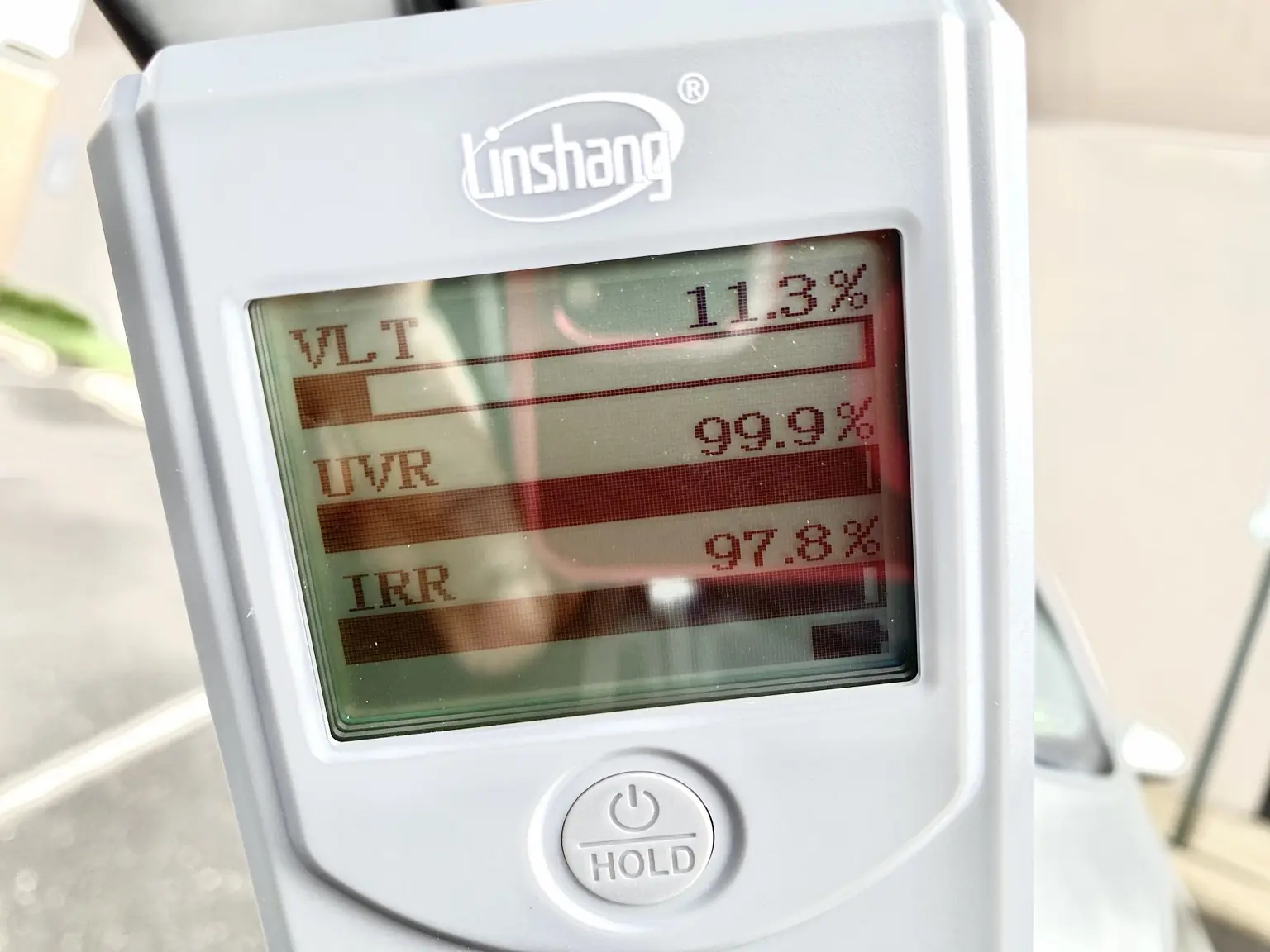
After installation, we tested one of the completed front-door windows.
The completed glass-and-film results were:
| Measurement | Completed-window reading |
|---|---|
| Visible-light transmission | 11.3% |
| Ultraviolet rejection | 99.9% |
| Infrared rejection | 97.8% |
The clamp-style meter could test the side window but could not be positioned around the vehicle’s full windshield. Therefore, the photographs and readings in this article apply to the loose 15% film sample and the completed front-door glass.
The BMW’s appearance, windshield installation and complete sides-and-rear installation will be covered separately so this guide can remain focused on helping customers verify Ceramic performance before buying.
Why Did 15% Film Measure 11.3% After Installation?
The loose Ceramic film measured exactly 15.0% VLT, while the finished window measured 11.3% VLT.
That difference is expected because the completed-window test includes both:
- The aftermarket film
- The BMW’s factory glass
Factory glass is not perfectly clear. It already reduces a portion of the visible light passing through it.
Once the 15% film was installed over that glass, the combined window measured darker than the loose film by itself.
This is why a film labeled 15% does not necessarily produce an exact 15.0% reading after installation on every vehicle.
Why Did IR Rejection Increase After Installation?
The loose Ceramic film measured 83.9% IRR. The completed glass-and-film combination measured 97.8% IRR.
The completed result was higher because the meter was measuring the combined performance of the nano-ceramic film and BMW factory glass.
The correct interpretation is:
- 83.9% IRR: Performance of the loose Ceramic film on this meter
- 97.8% IRR: Combined performance of the Ceramic film and factory door glass on this meter
We are not claiming that the film by itself measured 97.8%.
Showing both readings gives customers a much clearer explanation of what the film does independently and what the completed window delivered after installation.
Does a High IRR Reading Prove the Film Is Ceramic?
A high infrared-rejection reading provides strong evidence that the film is delivering the premium heat-rejection performance associated with Ceramic tint.
For this installation, verification included:
- Testing the 15% film before installation
- Measuring 83.9% IRR from the loose film
- Testing the completed side window
- Measuring 97.8% IRR from the finished glass
- Identifying the Ceramic package on the customer’s receipt
- Recording the installed percentage
- Providing applicable warranty coverage
Together, those steps confirm what the customer purchased and document the performance delivered.
Customers should still avoid treating one universal IRR number as the definition of every Ceramic film. Film manufacturers, product series, shades, meters and testing methods can produce different specifications.
The most reliable comparison uses:
- The same meter
- The same testing method
- The film manufacturer’s specifications
- Proper product documentation
- A receipt identifying what was installed
For Dope Tintings’ film lineup, our Standard and Carbon products produce lower infrared-rejection performance than the Ceramic film shown here. That measurable difference is why Ceramic costs more.
Should Every Tint Shop Be Able to Meter Its Ceramic Film?
If a shop is charging premium Ceramic prices, it should be able to explain the product’s performance.
That explanation may include:
- A physical film sample
- A transmission-meter demonstration
- Manufacturer specifications
- The exact product or film series
- A written receipt
- Warranty documentation
A shop not owning the exact same meter shown in our photographs does not automatically mean it is dishonest.
However, customers should become cautious when a shop cannot provide any measurable specifications, product identification, receipt details or warranty information.
Statements such as these are not enough by themselves:
- “Trust us, it’s Ceramic.”
- “You can tell because it looks darker.”
- “Ceramic is clearer from inside.”
- “Nano-Ceramic is completely different from Ceramic.”
- “Every Ceramic film performs the same.”
- “The darkness proves it blocks heat.”
Customers paying for Ceramic should receive a better explanation than marketing language.
What Should Be Written on Your Receipt?
Your receipt should identify enough information to establish what you purchased.
At a minimum, request documentation showing:
- Film package
- Installed percentage
- Windows covered
- Vehicle information
- Warranty coverage
- Film manufacturer or product series when applicable
At Dope Tintings, the customer receives a receipt documenting the film and percentage installed.
That written record matters because a meter demonstrates performance, while the receipt establishes what the shop represented and sold.
What Should You Ask Before Buying Ceramic Tint?
Before scheduling Ceramic window tinting in South Jersey, ask the shop these questions:
- What Ceramic film are you installing?
- Is Ceramic and nano-ceramic the same category in your lineup?
- What is the film’s infrared-rejection rating?
- Is that rating for the film or for film installed on glass?
- Can you meter a loose sample before installation?
- Can you meter a completed side window afterward?
- Will the receipt identify Ceramic and the installed percentage?
- What warranty comes with the film?
- Is Ceramic necessary for my goals?
- Which untreated windows will continue allowing heat into the vehicle?
A professional shop should be able to answer these questions without becoming defensive or relying on vague promises.
Is Ceramic Tint Always the Best Choice?
No. Ceramic is not automatically necessary for every customer.
If your only priorities are appearance and privacy, Standard or Carbon may provide better value.
Ceramic makes the most sense when you care about:
- Maximum heat rejection
- Cabin comfort
- A full windshield installation
- A sunroof or panoramic roof
- Protecting passengers from intense sunlight
- Long daily commutes
- Heat sensitivity
- Premium performance
Treating only two side windows with Ceramic can improve performance through those windows, but heat will continue entering through the untreated windshield, rear glass and roof.
That is why we ask customers what they are actually trying to accomplish before automatically recommending the most expensive package.
You can compare the options in our Carbon vs. Ceramic Window Tint guide.
What Are the Warning Signs of a Misleading Ceramic Sale?
Be cautious if a shop:
- Cannot identify the film being installed
- Refuses to document Ceramic on the receipt
- Claims darkness alone proves heat rejection
- Says Ceramic is automatically clearer at night
- Treats “Nano-Ceramic” as a mysterious upgrade without explaining the specifications
- Cannot provide manufacturer performance information
- Offers no written warranty information
- Avoids questions about IR rejection
- Uses the same explanation for every film package
- Pressures you into Ceramic when heat rejection is not your priority
Price alone does not establish whether a shop is trustworthy.
A low price does not automatically mean the film is fake, and a high price does not automatically prove that it is Ceramic.
Verification comes from measurable performance, product documentation and accountability after the sale.
How Do You Know Dope Tintings Installed Ceramic?
For the BMW example in this article, we documented the Ceramic installation in several ways.
The customer received the selected Ceramic package and percentages on the receipt. We photographed the 15% film being tested separately, and we photographed the completed door glass being tested after installation.
The results showed:
- 15.0% VLT from the loose 15% film
- 83.9% IRR from the loose film
- 11.3% VLT from the completed front window
- 97.8% IRR from the completed glass-and-film combination
That gives the customer more than our word. It provides visual evidence, measurable performance and written documentation.
Ceramic Window Tinting Near Me in South Jersey
Dope Tintings provides Ceramic and nano-ceramic window tinting from our Pennsauken, NJ shop.
We work with drivers from:
- Pennsauken
- Cherry Hill
- Camden
- Maple Shade
- Cinnaminson
- Delran
- Collingswood
- Haddonfield
- Moorestown
- Mount Laurel
- Marlton
- Palmyra
- Camden County
- Burlington County
- Throughout South Jersey
Customers comparing ceramic window tinting near them are welcome to ask what film we are installing, what performance it provides and what documentation they will receive.
We do not believe customers should pay Ceramic prices based entirely on a sales pitch.
Review our Ceramic Window Tint Cost in New Jersey guide for pricing factors, or contact Dope Tintings with your vehicle’s year, make and model for an exact quote.
Dope Tintings
6830 North Crescent Boulevard
Pennsauken, NJ 08110
Call 856-577-4119