
How Much Does Ceramic Window Tint Cost in New Jersey?
Ceramic window tint at Dope Tintings in Pennsauken, NJ starts at $424.99 for the sides and rear of many two-door coupes and four-door sedans. Learn what affects ceramic tint prices, what the windshield and panoramic roof cost, and when ceramic is actually worth the extra money.
How Much Does Ceramic Window Tint Cost in New Jersey?
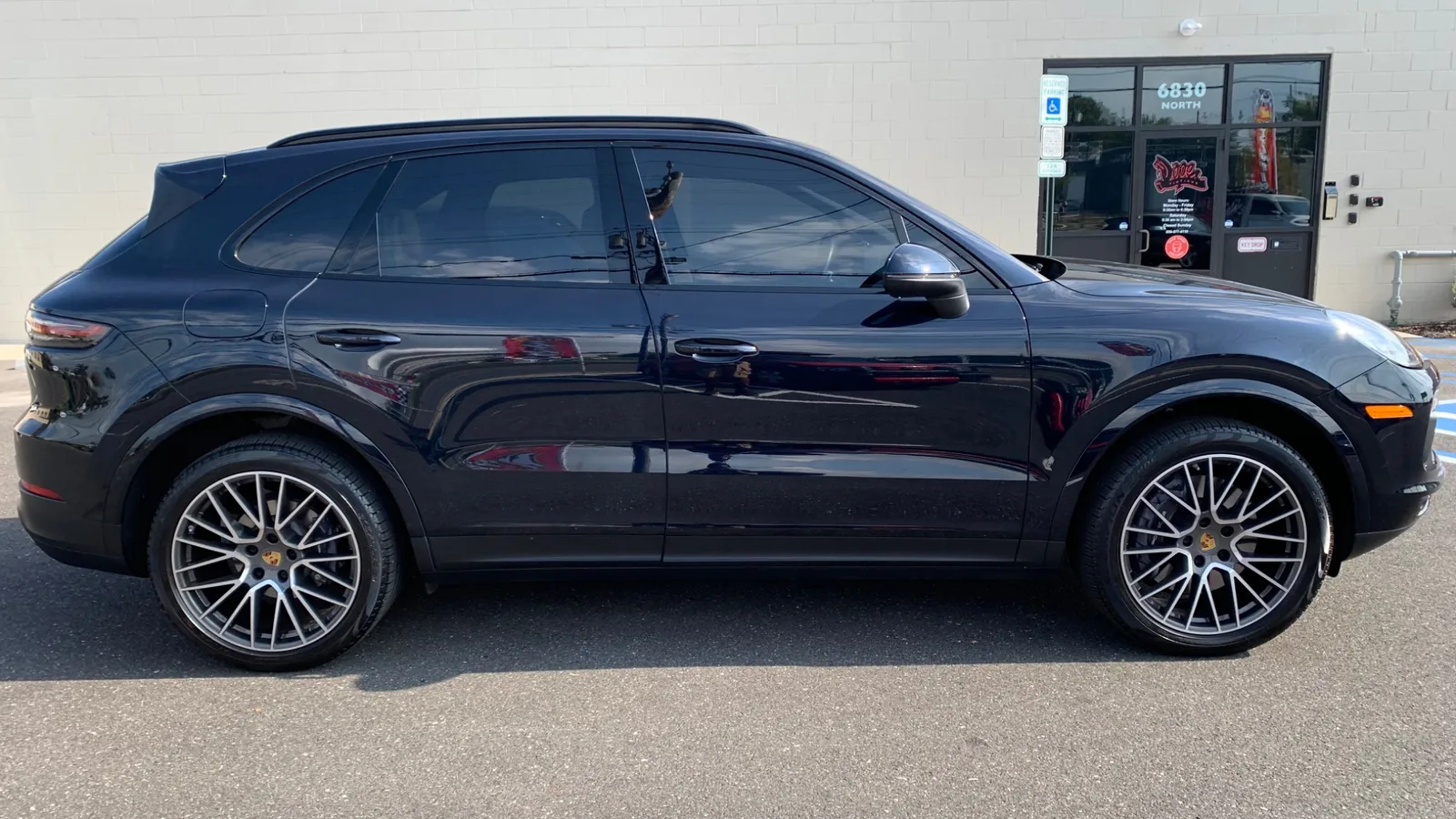
Ceramic window tint in New Jersey can vary significantly by vehicle and which windows are being tinted. At Dope Tintings in Pennsauken, NJ, our ceramic window tint currently starts at $424.99 for the side and rear windows on many two-door coupes and four-door sedans. A ceramic full windshield starts at $224.99 and is priced separately.
But there is something more important than simply asking:
"How much does ceramic tint cost?"
You should first ask:
"What do I actually want ceramic tint to do for my vehicle?"
After more than 20 years in the window tint industry, we've seen customers spend extra money on ceramic film for the right reasons—and we've also seen customers buy ceramic for reasons that have absolutely nothing to do with what ceramic film is designed to do.
Ceramic window tint is primarily about heat rejection.
If you don't care about heat rejection and simply want dark windows for privacy or appearance, you may not need ceramic at all.
This guide explains what ceramic window tint costs in New Jersey, what makes the price increase, whether ceramic is worth the extra money, and some of the biggest misconceptions we hear from customers every day.
How Much Does Ceramic Window Tint Cost in New Jersey?
At Dope Tintings in Pennsauken, New Jersey, our current ceramic window tint pricing starts at:
| Ceramic Tint Service | Starting Price |
|---|---|
| Side + rear windows on many coupes/sedans | $424.99 |
| Full front windshield | $224.99 |
| Sunroof | $74.99 |
| Panoramic roof | About $149.99+ |
| Existing full-vehicle tint removal | $149.99+ |
These are starting prices, not guaranteed prices for every vehicle.
The exact cost depends on:
- Year, make and model
- Number of windows
- Size of the glass
- Installation difficulty
- Vehicle electronics
- Preparation requirements
- Windshield
- Sunroof or panoramic roof
- Existing window tint that must be removed
That's why the first question we ask when someone calls for a ceramic tint quote is:
"What's the year, make and model?"
Then we ask:
"Which windows are you looking to get done?"
Those two answers give us the information we need to begin determining the correct price.
For a broader comparison of basic, standard, carbon and ceramic pricing, read our How Much Does Window Tinting Cost in South Jersey? guide.
What Does the $424.99 Ceramic Tint Starting Price Include?
Our $424.99 ceramic starting price generally covers the side and rear windows on many qualifying/common:
- Two-door coupes
- Four-door sedans
For a typical four-door sedan, that generally means the side windows and rear glass.
For a two-door coupe, it generally means the side glass and rear glass.
The front windshield is not included in the $424.99 starting price.
A sunroof or panoramic roof is also separate.
Some vehicles cost more because they have:
- Additional windows
- Larger glass
- Difficult rear glass
- Complicated door panels
- Sensitive electronics
- More difficult gaskets
- Additional installation preparation
This is why we don't believe in quoting every vehicle the same ceramic tint price.
Why Does Ceramic Window Tint Cost More on Some Vehicles?
More film isn't the only reason one vehicle may cost more than another.
Labor and installation difficulty matter.
A straightforward four-door sedan may require considerably less preparation than a luxury vehicle, large SUV, truck or Tesla.
Some vehicles require us to spend additional time protecting:
- Door panels
- Interior materials
- Gaskets
- Computers
- Electronic modules
- Wiring
- Other areas that shouldn't be exposed to installation solution
The more complicated the vehicle, the more time and care may be required.
That additional labor can increase the price.
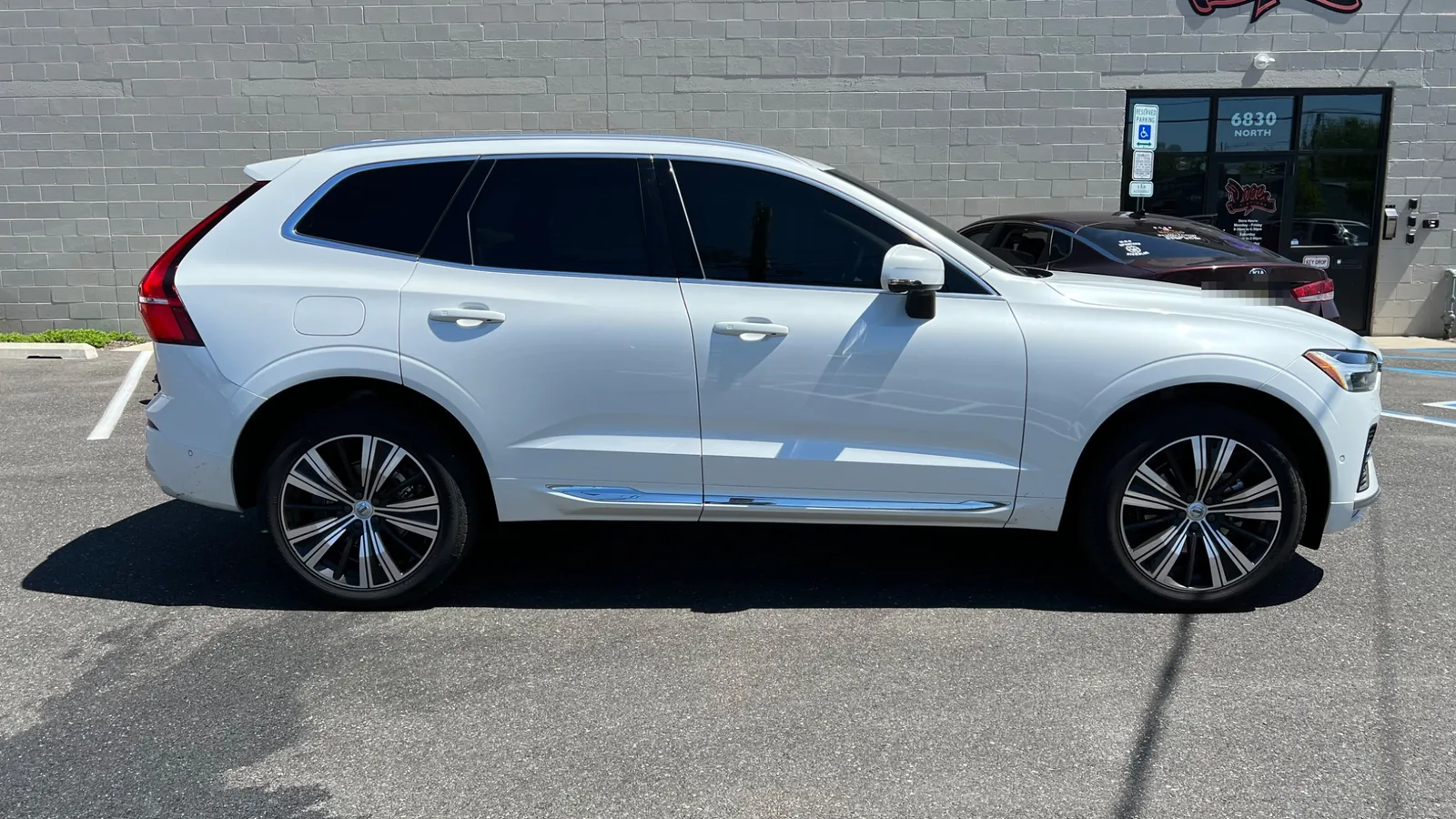
Does Ceramic Tint Cost More on an SUV?
Usually, yes.
SUVs can have:
- More glass
- Larger windows
- Additional quarter windows
- Larger rear glass
- More interior area requiring protection
Some SUVs also already have factory privacy glass on the rear portion of the vehicle.
Customers sometimes assume that means they only need ceramic on the two front windows.
If maximum heat rejection is the goal, however, ceramic on only two front windows isn't going to provide the same whole-vehicle result as treating all of the vehicle's glass.
We'll explain why later in this guide.
Does Ceramic Tint Cost More on a Truck?
It can.
Truck pricing depends on the specific vehicle, cab configuration, number of windows and installation requirements.
A pickup truck isn't automatically priced the same as a four-door sedan simply because both may have four doors.
We price based on the actual vehicle and the work involved.
That's why we need the:
Year + Make + Model
before providing an accurate quote.
Why Can Ceramic Tint Cost More on Luxury Vehicles?
Luxury vehicles can require additional preparation.
It's not simply:
"The car costs more, so we're charging more."
The issue is what we need to do to protect the vehicle during installation.
Certain luxury vehicles may have:
- More complicated door panels
- Sensitive electronics
- Modules inside or near the doors
- Specialized trim
- Difficult gaskets
- Additional areas requiring protection
If we need to spend additional time preparing and protecting the vehicle, that labor is reflected in the price.
Why Does Ceramic Tint Cost More on a Tesla?
Teslas can require additional preparation and attention during window tint installation.
The vehicle has electronics and components that we need to be aware of before introducing installation solution around the glass.
Preparation matters.
We want to know:
- What needs to be covered
- Where electronic modules are located
- Where installation solution could travel
- What areas require additional protection
That additional preparation is one reason a Tesla may cost more to tint than a straightforward four-door sedan.
The glass itself can also affect pricing.
For example, certain Tesla rear glass installations can require additional film size and installation work depending on how the customer wants the glass completed.
Is the Windshield Included in a $424.99 Ceramic Tint Package?
No.
At Dope Tintings, the $424.99 starting ceramic price covers the side and rear glass on many coupes and sedans.
The full windshield is separate.
Our current ceramic windshield tint starts at:
$224.99
and can increase depending on the vehicle.
This distinction is extremely important because customers sometimes hear "$424.99 ceramic tint" and assume that means every piece of glass on the vehicle.
It doesn't.
For more information about windshield pricing, read our How Much Does It Cost to Tint a Car Windshield? guide.
How Much Does a Ceramic Windshield Cost in New Jersey?
At Dope Tintings, ceramic full-windshield tint currently starts at $224.99.
Certain vehicles can cost more depending on:
- Windshield size
- Vehicle design
- Cameras
- Sensors
- Electronics
- Preparation requirements
Windshield preparation is extremely important on modern vehicles because there can be sensitive electronics around and underneath the windshield.
When we're working around those components, we're not going to rush the preparation just to save a few minutes.
How Much Does It Cost to Ceramic Tint a Sunroof?
At Dope Tintings, ceramic tint for a traditional sunroof currently starts around $74.99.
The price can increase depending on the size and design of the glass.
The sunroof is not included in our $424.99 sides-and-rear ceramic starting price.
How Much Does It Cost to Ceramic Tint a Panoramic Roof?
A panoramic roof generally costs more because there is considerably more glass.
At Dope Tintings, panoramic-roof ceramic tint can start around $149.99, depending on the size, number of glass panels and vehicle.
Some panoramic roofs are enormous.
That matters when calculating:
- Film usage
- Installation difficulty
- Labor
- Heat forming
- Overall installation time
If your goal is maximum heat rejection, the panoramic roof is also something you shouldn't automatically ignore.
Why Do We Recommend Ceramic Tint on the Windshield Too?
Because the windshield is one of the largest pieces of glass on your vehicle.
Think about what happens when you're driving directly toward the sun.
You can install premium heat-rejecting ceramic film on:
- Driver door
- Passenger door
- Rear doors
- Quarter windows
- Rear glass
but still have a massive untreated windshield in front of you.
That's why when someone tells us:
"Heat is my biggest problem."
one of our first questions is:
"Are you planning on doing the windshield?"
If the answer is yes, then we can help them build a more complete heat-rejection package.
Customers should also understand the legal considerations surrounding windshield tint in New Jersey. Read our New Jersey Window Tint Laws: Complete 2026 Guide before making that decision.
Do You Need to Ceramic Tint the Entire Car at Once?
No.
This is something we explain to customers who want ceramic but don't necessarily have the budget to do everything at once.
Suppose you have a four-door sedan.
If budget is an issue, we may recommend starting with:
Sides + rear glass
Then you can return later and add:
- Full windshield
- Sunroof
- Panoramic roof
You don't necessarily need to spend all of the money on the same day.
But there is an important distinction:
Starting with the sides and rear is fine. Stopping there and expecting maximum whole-vehicle heat rejection is different.
If maximum heat rejection is the goal, eventually addressing the other major glass areas can make sense.
Is Ceramic Window Tint Worth the Extra Money?
Yes—ceramic window tint can be worth the extra money when heat rejection is actually what you want.
That's the key.
When ceramic is used as part of a properly planned heat-rejection setup, it can significantly improve the comfort of the vehicle during hot weather.
During South Jersey summers, reducing the solar heat entering through the vehicle's glass can help your air-conditioning system cool the cabin more effectively.
Customers may notice that once the vehicle reaches a comfortable temperature, the air conditioner doesn't need to work as aggressively to maintain it.
But ceramic isn't automatically worth the money for every customer.
Who Should Buy Ceramic Window Tint?
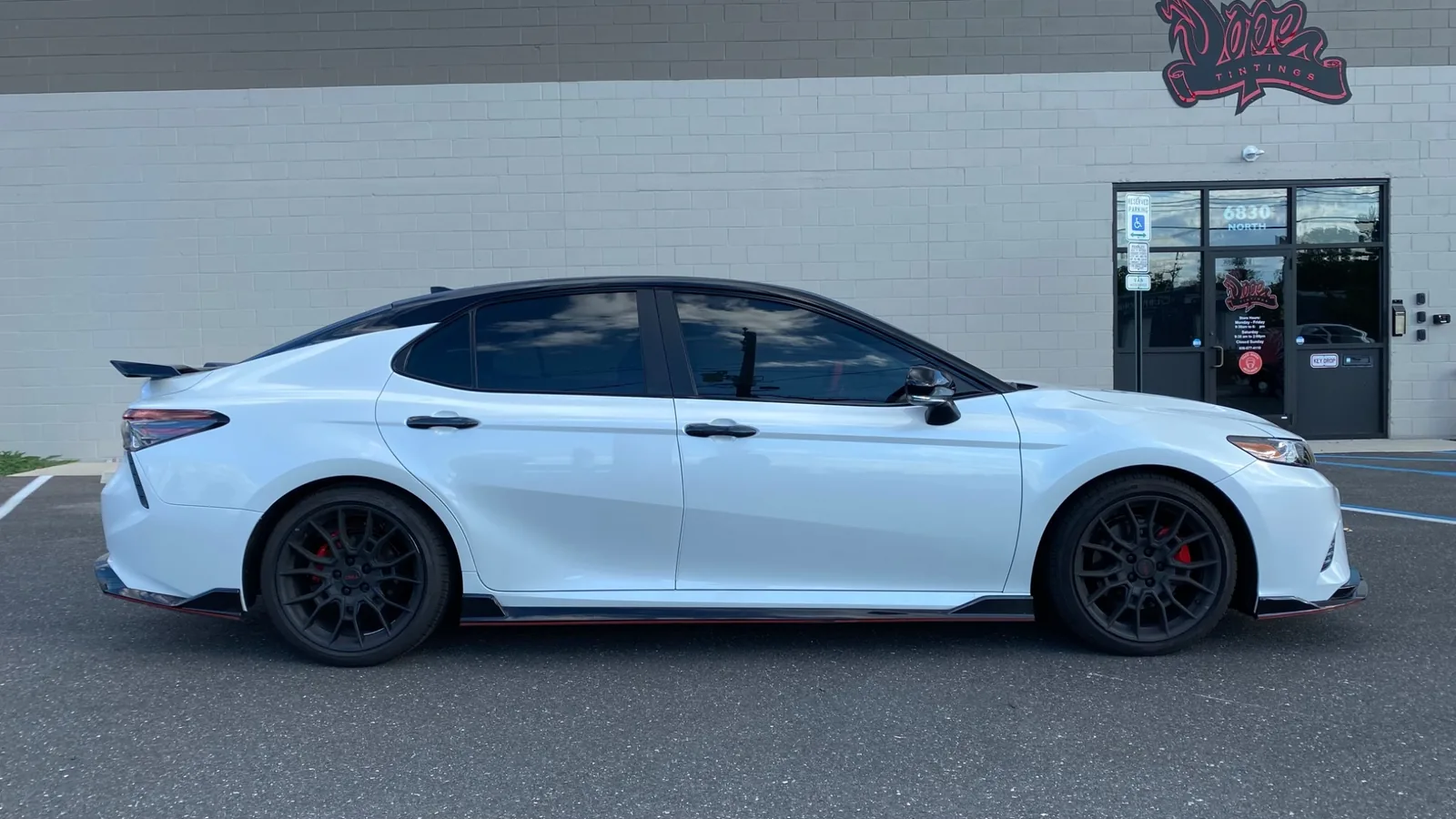
Ceramic makes the most sense for customers whose priorities include:
- High heat rejection
- Better summer comfort
- Reducing solar heat entering through the glass
- Premium film performance
- Treating multiple areas of the vehicle for heat
If your first statement to us is:
"My car gets ridiculously hot and I want the best heat rejection I can get,"
then we're going to discuss ceramic.
That's what the film is designed to address.
Who Doesn't Need Ceramic Window Tint?
If you tell us:
"I just want my windows dark. I don't care about heat."
we're probably going to tell you:
Save your money.
You don't necessarily need ceramic.
Standard or carbon film may make much more sense depending on what you're trying to accomplish.
If your priorities are primarily:
- Appearance
- Privacy
- Darker windows
then paying ceramic prices solely because ceramic is considered a premium product may be unnecessary.
We're a business.
Of course we need to make money.
But we're not interested in selling customers the most expensive film by convincing them it does something they don't actually need.
We'd rather match the film to the customer's objective.
Ceramic vs Carbon Tint: Which Is Better?
Neither answer is automatically correct for everyone.
The better question is:
What do you want the film to do?
Carbon can be an excellent choice for customers looking for:
- Good heat rejection
- Privacy
- Appearance
- A lower price than ceramic
Ceramic is the stronger choice when the customer is prioritizing:
Higher heat rejection
That's why carbon is one of the most popular choices among our everyday customers.
It can provide a very good balance between price and performance.
Ceramic is the upgrade when maximum heat-rejection performance is worth the additional investment to the customer.
Ceramic vs Standard Tint: What's the Difference?
Standard film is primarily appropriate for customers focused on:
- Appearance
- Privacy
- Darker windows
- Affordable professional window tint
Ceramic is primarily an upgrade in heat-rejection performance.
This is one of the most important things customers should understand.
Don't buy ceramic simply because somebody told you:
"Ceramic is better."
Better at what?
If you don't care about the primary performance advantage you're paying for, you may be wasting money.
Does Ceramic Tint Make It Easier to See at Night?
No. Ceramic tint does not magically make extremely dark window tint easier to see through at night.
This is one of the biggest ceramic tint misconceptions we hear.
Customers sometimes tell us:
"I want ceramic because I heard it looks really dark from outside but you can see perfectly through it at night."
That's not how tint percentage works.
If you're using 5% tint, it's still 5% tint.
It doesn't matter whether that 5% film is:
- Standard
- Carbon
- Ceramic
- Another professional film technology
The VLT percentage still matters.
A 5% film is designed to allow only a very small percentage of visible light through.
Ceramic technology does not turn 5% into a light film when you're sitting inside the vehicle at night.
Is 5% Ceramic Easier to See Through Than 5% Standard Tint?
Customers should not choose 5% ceramic expecting it to behave like a much lighter VLT at night.
Here's how we explain it.
Imagine three identical Honda Accords.
Honda Accord #1: 5% standard film
Honda Accord #2: 5% carbon film
Honda Accord #3: 5% ceramic film
If you're comparing the darkness from inside those vehicles, ceramic doesn't magically make the 5% film behave like 20% or 35%.
The primary performance difference you're paying for with ceramic is heat rejection.
With appropriate heat-rejection testing or real-world solar exposure, that's where the performance differences between the film technologies become meaningful.
Where Did the "Ceramic Is Clearer" Claim Come From?
Some of the confusion involves discussions about optical clarity and lighter ceramic films.
Ceramic technology is available in relatively light VLT options that can be used when customers want heat rejection without making the glass appear extremely dark.
Film manufacturers have also improved ceramic-film construction and optical clarity significantly over the years.
But that should not be transformed into:
"You can put 5% ceramic everywhere and see perfectly at night."
Those are completely different claims.
Film clarity and visible light transmittance are not the same thing.
A quality film should have good optical clarity.
But a very dark VLT remains very dark.
Does Ceramic Tint Look Darker From the Outside but Clearer Inside?
Window tint can appear darker from outside while being easier to see through from inside because of differences in lighting.
That isn't a ceramic-only feature.
Professional standard, carbon and ceramic films can all create that effect.
During daylight, the environment outside the vehicle is often much brighter than the cabin.
That difference in lighting affects how the windows appear.
So if a tint shop tells you:
"You need ceramic because it's the only film that lets you see out while people can't see in,"
we recommend asking more questions.
Ceramic's major selling point should be its heat-rejection performance, not a claim that it somehow changes the basic physics of extremely dark VLT.
Does Darker Ceramic Tint Block More Heat?
Don't assume the darkest film automatically provides the best heat rejection.
Tint darkness and heat-rejection technology are not the same thing.
A customer may think:
"If 5% is darker than 35%, then 5% must automatically be the better heat-blocking film."
That's an oversimplification.
Film construction and performance matter.
If heat rejection is your goal, compare the actual performance characteristics of the film rather than choosing a percentage based solely on darkness.
Choose the tint percentage based on factors such as:
- Desired privacy
- Appearance
- Daytime visibility
- Nighttime visibility
Choose the film technology based on what you want the film to accomplish.
Why Extremely Dark Ceramic Tint Can Still Be Hard to See Through at Night
We've seen customers choose very dark ceramic film elsewhere because they were told ceramic would allow them to see clearly at night.
Some eventually discovered:
5% is still extremely dark.
We've had customers come to us wanting dark film removed after discovering that the nighttime visibility wasn't what they expected.
That's why we explain this before taking someone's money.
Ceramic doesn't eliminate the visibility tradeoff of extremely dark tint.
If you're considering very dark percentages, read our What Is the Darkest Legal Tint in NJ? 2026 Guide.
You can also compare two popular percentages in our 20% vs. 35% Window Tint Guide.
What Is the Biggest Mistake Customers Make When Buying Ceramic Tint?
There isn't just one.
We regularly see three major mistakes:
- Buying ceramic because of social-media hype
- Leaving major glass untreated but expecting maximum whole-vehicle heat rejection
- Choosing extremely dark film because they think darker automatically means better heat rejection
All three come back to the same problem:
The customer wasn't properly educated about what ceramic film actually does.
Ceramic is a high heat-rejection film.
Start there.
Then determine whether that benefit is worth paying for based on what you actually want from your vehicle.
Should You Put Ceramic Tint Only on the Two Front Windows of an SUV?
You can, but don't expect two pieces of ceramic film to cool the entire SUV the same way a more complete heat-rejection setup would.
We've dealt with this exact situation.
A customer came to us asking about ceramic.
We explained that putting ceramic only on the two front windows wasn't going to create maximum whole-vehicle heat rejection.
The customer went somewhere else and had ceramic installed on only those two windows.
Later, they contacted us because they didn't feel the vehicle was staying as cool as expected.
The problem wasn't necessarily that ceramic didn't work.
The problem was expecting two treated windows to control heat entering through all the other untreated glass.
The customer eventually returned to us to address the vehicle more completely.
That's why we ask what you're trying to accomplish before recommending a package.
Can a Tint Shop Sell You "Ceramic" That Isn't Actually Ceramic?
Consumers should research the shop and film they're purchasing.
We've encountered a situation where a customer went elsewhere after discussing ceramic with us.
They were sold what they believed was ceramic film.
Later, they came back to us and asked us to evaluate it.
Based on the heat-performance testing we performed, the installed film did not demonstrate the ceramic heat-rejection performance the customer expected from what they had been sold.
That experience is one reason we recommend asking a tint shop:
- What brand of film are you installing?
- What film line is it?
- Is it carbon or ceramic?
- What performance should I expect?
- What warranty does it include?
Don't buy something solely because somebody puts the word "ceramic" on an invoice.
How Can You Tell If Ceramic Tint Is Actually Ceramic?
For the average customer, identifying film technology just by looking through the window can be difficult.
That's part of the problem.
If three identical vehicles have the same VLT but different film technologies, you're not necessarily going to identify the ceramic vehicle simply by looking through the glass.
Professional heat-rejection testing can help demonstrate differences in film performance.
Customers should also work with established shops using known professional film products and ask exactly what film is being installed.
At Dope Tintings, we work with professional film brands including SunTek and XPEL, along with another professional film line we use internally.
How Should You Spend Your Money If Maximum Heat Rejection Is the Goal?
If heat is your primary concern, think of the vehicle's glass as a complete system.
Heat can enter through:
- Windshield
- Front doors
- Rear doors
- Quarter windows
- Rear glass
- Sunroof
- Panoramic roof
The best ceramic strategy depends on your vehicle and budget.
If you have the budget to treat all of the relevant glass at once, that's the most complete approach.
If you don't, that's okay.
For a typical sedan, we'd generally recommend starting with:
Sides + rear
Then adding:
Windshield
and, if applicable:
Sunroof or panoramic roof
You can build the system over time.
Is Carbon Sides and Ceramic Windshield Better Than Ceramic Sides Without a Windshield?
There isn't one universal answer because it depends on the film specifications, vehicle and customer's priorities.
But this question illustrates an important point:
Don't ignore the windshield when heat rejection is your primary objective.
The windshield represents a huge amount of exposed glass.
Rather than automatically spending your entire budget upgrading one section of the vehicle, talk to your tint shop about how your budget can be distributed across the vehicle to accomplish your heat-rejection goal.
At Dope Tintings, we'd rather discuss the complete plan with you than simply sell the most expensive film we can on whatever windows you initially mention.
Does Ceramic Tint Keep Your Car Cold?
Ceramic tint can help reduce solar heat entering through the treated glass, which can make the cabin more comfortable and help the air-conditioning system manage the interior temperature more effectively.
But we don't like describing ceramic as magic.
Ceramic tint doesn't turn a parked vehicle into a refrigerator.
Your vehicle can still become hot.
Outside temperature, direct sunlight, vehicle color, interior materials, glass area and untreated windows all matter.
The benefit is reducing the amount of solar heat entering through glass treated with the appropriate film.
That's why the amount of glass you treat matters when you're trying to maximize the result.
Does Ceramic Tint Help Your Air Conditioner?
Reducing solar heat entering through the glass can make it easier for the vehicle's air-conditioning system to cool and maintain the cabin temperature.
This is one of the benefits customers can notice during hot New Jersey summers.
Once the interior cools down, customers may find that they don't need the air conditioning working as aggressively to maintain comfort.
Again, the more complete the heat-rejection setup, the better positioned you are to reduce solar heat entering through multiple glass surfaces.
Is Ceramic Tint Worth It in New Jersey?
For customers concerned about summer heat, ceramic tint can absolutely be worth considering in New Jersey.
South Jersey summers can mean:
- Hot parked vehicles
- Strong direct sunlight
- Long commutes
- Heat entering through large windshields
- Panoramic roofs allowing additional solar energy into the cabin
If heat rejection isn't important to you, ceramic may not be worth the additional money.
That's why our answer isn't:
"Everybody should buy ceramic."
Our answer is:
Buy ceramic when its heat-rejection performance solves a problem you actually care about.
Should You Choose Ceramic Tint Based on Price Alone?
No.
This applies to every type of window tint.
When comparing ceramic prices, look at:
- Film brand
- Film line
- Installation quality
- Installer experience
- Vehicle preparation
- Warranty
- Heat-rejection performance
- Which windows are included
- Whether windshield or roof glass costs extra
A shop quoting $400 and another quoting $700 may not be quoting the same thing.
One price may cover only sides and rear.
Another may include additional glass.
One may use a different ceramic film.
One vehicle may require significantly more labor.
Ask:
"What exactly is included in this price?"
For a deeper explanation of how professional tint prices are calculated, read our South Jersey Window Tint Cost Guide.
Does Existing Window Tint Increase the Cost of Ceramic Tint?
Yes.
Professional window film should not simply be installed over existing aftermarket tint as a shortcut.
The existing film needs to be removed and the glass properly prepared before the new installation.
At Dope Tintings, full-vehicle tint removal currently starts at $149.99.
The price can increase depending on:
- Age of existing film
- Condition of film
- Adhesive condition
- Rear defroster
- Difficulty of removal
- Amount of glass
Some old film comes off relatively cleanly.
Other film can require considerably more labor.
That's why removal is quoted separately from the ceramic installation.
How Much Would a Complete Ceramic Tint Setup Cost?
There isn't one universal price because a "complete" setup can mean different things on different vehicles.
For example, a sedan might have:
- Side windows
- Rear glass
- Windshield
- Traditional sunroof
Another vehicle might have:
- More side windows
- Rear glass
- Large windshield
- Two-piece panoramic roof
Those aren't equivalent jobs.
Using our current starting prices, customers can see how different glass areas build on the base ceramic package:
- Sides + rear: $424.99+
- Ceramic windshield: $224.99+
- Sunroof: $74.99+
- Panoramic roof: approximately $149.99+
The final quote depends on the actual vehicle.
How Much Does Ceramic Tint Cost in Pennsauken NJ?
At Dope Tintings in Pennsauken, our ceramic tint currently starts at $424.99 for the sides and rear on many two-door coupes and four-door sedans.
Additional ceramic glass currently starts around:
- Full windshield: $224.99
- Sunroof: $74.99
- Panoramic roof: approximately $149.99
Existing full-vehicle tint removal starts at $149.99 when required.
SUVs, trucks, Teslas, luxury vehicles, vehicles with additional windows and vehicles requiring additional preparation may cost more.
For an accurate ceramic quote, contact us with your:
Year + Make + Model
and tell us which windows you're interested in tinting.
Ceramic Window Tint in South Jersey
Dope Tintings is located in Pennsauken, NJ, serving customers throughout Camden County, Burlington County and surrounding South Jersey communities.
Customers visit us from:
- Pennsauken
- Camden
- Cherry Hill
- Maple Shade
- Cinnaminson
- Delran
- Collingswood
- Haddonfield
- Marlton
- Mount Laurel
- Moorestown
- Palmyra
- Throughout South Jersey
If you're comparing ceramic tint prices in South Jersey, we'll explain what each film option actually does before recommending a package.
We don't believe in automatically putting every customer into the most expensive film.
Frequently Asked Questions About Ceramic Window Tint Cost
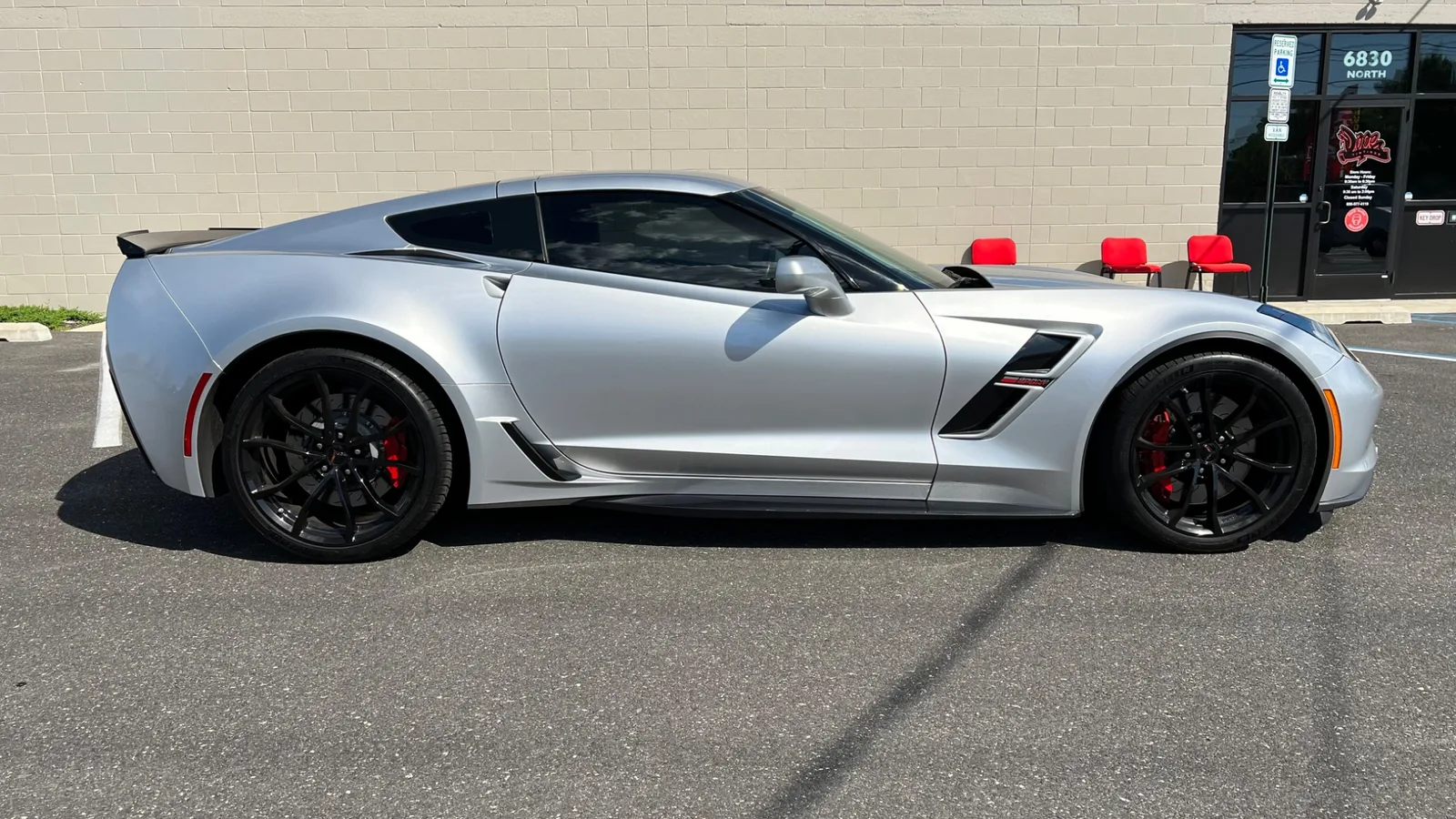
How much does ceramic window tint cost in New Jersey?
At Dope Tintings in Pennsauken, NJ, ceramic window tint currently starts at $424.99 for the sides and rear windows on many two-door coupes and four-door sedans. SUVs, trucks, luxury vehicles, Teslas and more difficult vehicles may cost more.
How much does ceramic tint cost for a whole car?
The price depends on what you consider the whole car. Our $424.99 ceramic starting price covers the sides and rear on many coupes and sedans. A ceramic windshield starts at $224.99, while sunroofs and panoramic roofs are priced separately.
Is the windshield included with ceramic tint?
No. At Dope Tintings, the windshield is separate from our $424.99 sides-and-rear ceramic starting price. Ceramic windshield tint currently starts at $224.99.
How much does ceramic windshield tint cost?
At Dope Tintings, a full ceramic windshield currently starts at $224.99. Certain vehicles may cost more because of windshield size, electronics, cameras, sensors and additional preparation requirements.
How much does ceramic sunroof tint cost?
Ceramic sunroof tint currently starts around $74.99 at Dope Tintings. Larger or more difficult glass can cost more.
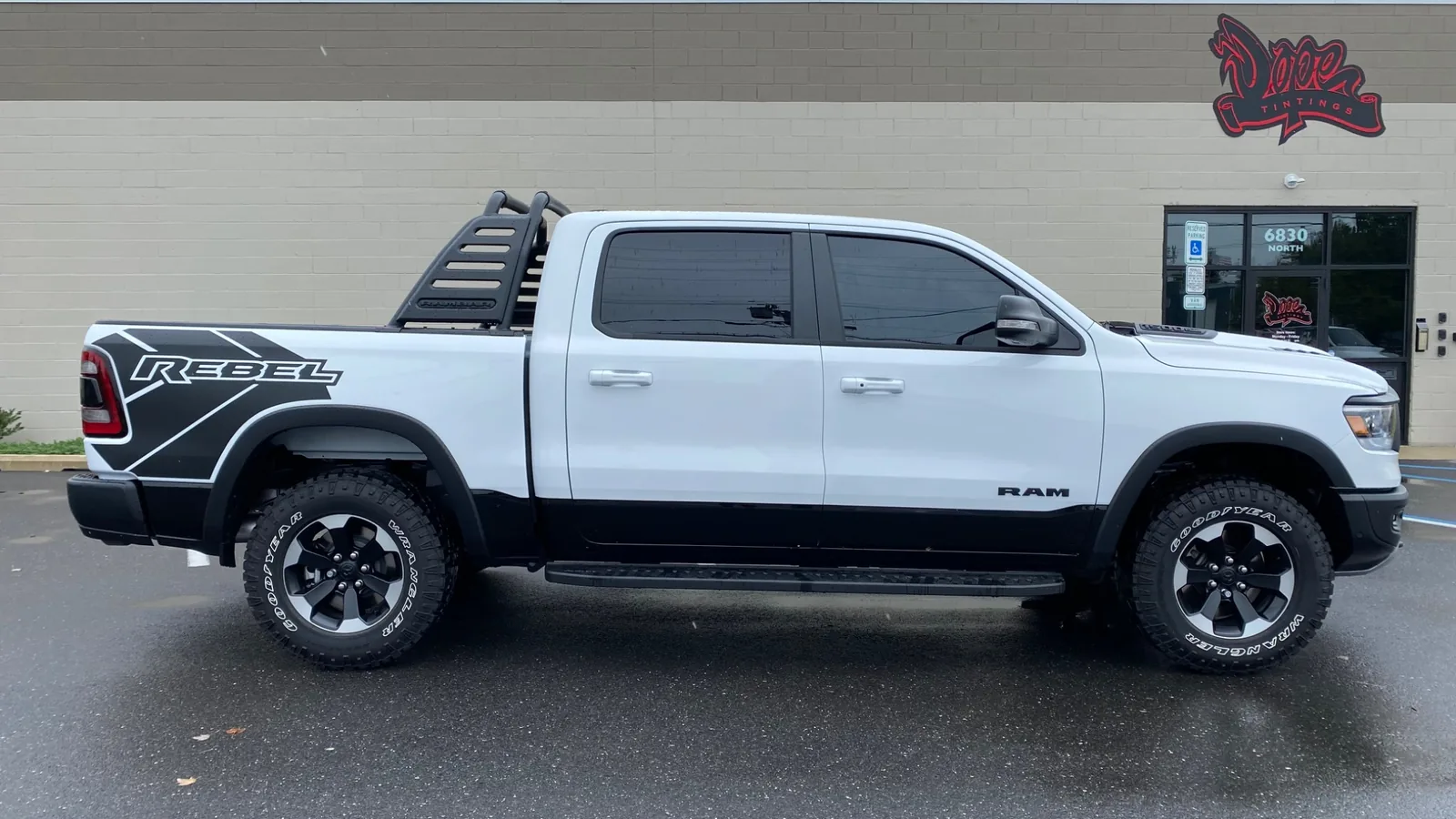
How much does ceramic panoramic roof tint cost?
Ceramic tint for a panoramic roof can start around $149.99 at Dope Tintings, depending on the vehicle, glass size and configuration.
Is ceramic tint worth the extra money?
Ceramic can be worth the additional cost when heat rejection is a major priority. If you only want dark windows for privacy or appearance and don't care about heat rejection, standard or carbon film may provide better value for your needs.
Is ceramic tint better than carbon?
Ceramic generally makes more sense when maximum heat rejection is the goal. Carbon can be an excellent middle option for customers who want good heat rejection without paying ceramic prices.
Does ceramic tint make it easier to see at night?
Ceramic film does not make an extremely dark VLT behave like a lighter tint at night. A 5% ceramic film is still extremely dark. Ceramic's major advantage is heat-rejection performance, not eliminating the nighttime-visibility effects of dark tint.
Is 5% ceramic easier to see through than 5% regular tint?
Customers should not choose 5% ceramic expecting it to provide the nighttime visibility of a much lighter percentage. VLT still determines how much visible light passes through the glass and film.
Does darker ceramic tint block more heat?
Don't choose ceramic solely by darkness. Film technology and performance matter. A darker VLT doesn't automatically tell you everything about a film's heat-rejection capability.
Do I need ceramic on my windshield?
If maximum heat rejection is your goal, the windshield is important because it represents a large amount of glass exposed to sunlight. However, New Jersey drivers should understand applicable windshield-tint restrictions before deciding to install aftermarket windshield film.
Do I need ceramic on my sunroof or panoramic roof?
If you're trying to create a more complete heat-rejection setup, roof glass is worth considering. Large panoramic roofs represent a significant amount of glass and can allow solar energy into the cabin.
Can I ceramic tint my car in stages?
Yes. If budget is an issue, customers can start with ceramic on the sides and rear and return later for the windshield and sunroof or panoramic roof. You don't necessarily have to complete every glass surface in one appointment.
How much does tint removal cost before ceramic tint?
At Dope Tintings, full-vehicle tint removal currently starts at $149.99. The final price depends on the condition of the existing film and how difficult it is to remove.
What should I ask before buying ceramic window tint?
Ask what film is being installed, which windows are included, what warranty comes with it, what heat-rejection performance to expect and whether the windshield, sunroof or panoramic roof costs extra.
Final Answer: How Much Does Ceramic Window Tint Cost in New Jersey?
At Dope Tintings in Pennsauken, NJ, ceramic window tint currently starts at $424.99 for the side and rear windows on many two-door coupes and four-door sedans.
Our current additional starting prices include:
- Ceramic windshield: $224.99
- Sunroof: $74.99
- Panoramic roof: approximately $149.99
- Existing full-vehicle tint removal: $149.99
SUVs, trucks, luxury vehicles, Teslas and vehicles requiring additional labor or preparation may cost more.
But don't choose ceramic simply because somebody told you it's the "best tint."
Choose ceramic because heat rejection is important to you.
If you only want dark windows and don't care about heat, standard or carbon may save you money while accomplishing what you actually want.
And don't believe the claim that extremely dark ceramic magically becomes easy to see through at night.
5% is still 5%.
Ceramic's biggest reason for costing more is its heat-rejection performance.
If maximum heat rejection is your goal, think beyond only the four doors and rear glass. Consider the windshield and, when applicable, the sunroof or panoramic roof as part of your overall plan.
You don't have to do everything at once.
You can start with the sides and rear and add the remaining glass later as your budget allows.
For a complete comparison of our other tint options and prices, read How Much Does Window Tinting Cost in South Jersey?.
Dope Tintings
6830 N Crescent Blvd
Pennsauken, NJ 08110
Call now for a ceramic window tint quote: 856-577-4119
Have your year, make and model ready so we can determine the correct price for your vehicle.