Does Factory Tint Block Heat?
Does factory tint block heat? Learn what factory privacy glass actually does, how it differs from Carbon and Ceramic window film, and when adding film over factory-tinted SUV, truck or van glass makes sense.
Does Factory Tint Block Heat?
No! Factory privacy glass should not be treated as heat-rejection window tint. It is primarily darkened or shaded glass designed to provide privacy and appearance, and its dark look does not tell you how much solar heat it rejects. If heat rejection is your goal, an aftermarket performance film such as Carbon or Ceramic can be installed over factory privacy glass.
At Dope Tintings in Pennsauken, NJ, we explain this to SUV, pickup truck, crossover and van owners all the time.
Customers look at their dark rear windows and assume:
"They're already tinted, so they must already be blocking heat."
That's not necessarily what that darkness means.
After more than 20 years of tinting vehicles, one of the biggest things we want customers to understand is:
Darkness, UV protection and heat rejection are three different things.
What Is Factory Tint on an SUV or Truck?
What customers commonly call "factory tint" on the rear of an SUV, pickup, crossover or van is usually factory privacy glass.
It isn't necessarily a piece of window-tint film that was installed at the factory.
The darker appearance is manufactured into the glass itself.
That's why we prefer calling it:
Factory privacy glass
or
factory-darkened glass.
Its most obvious purposes are privacy and appearance.
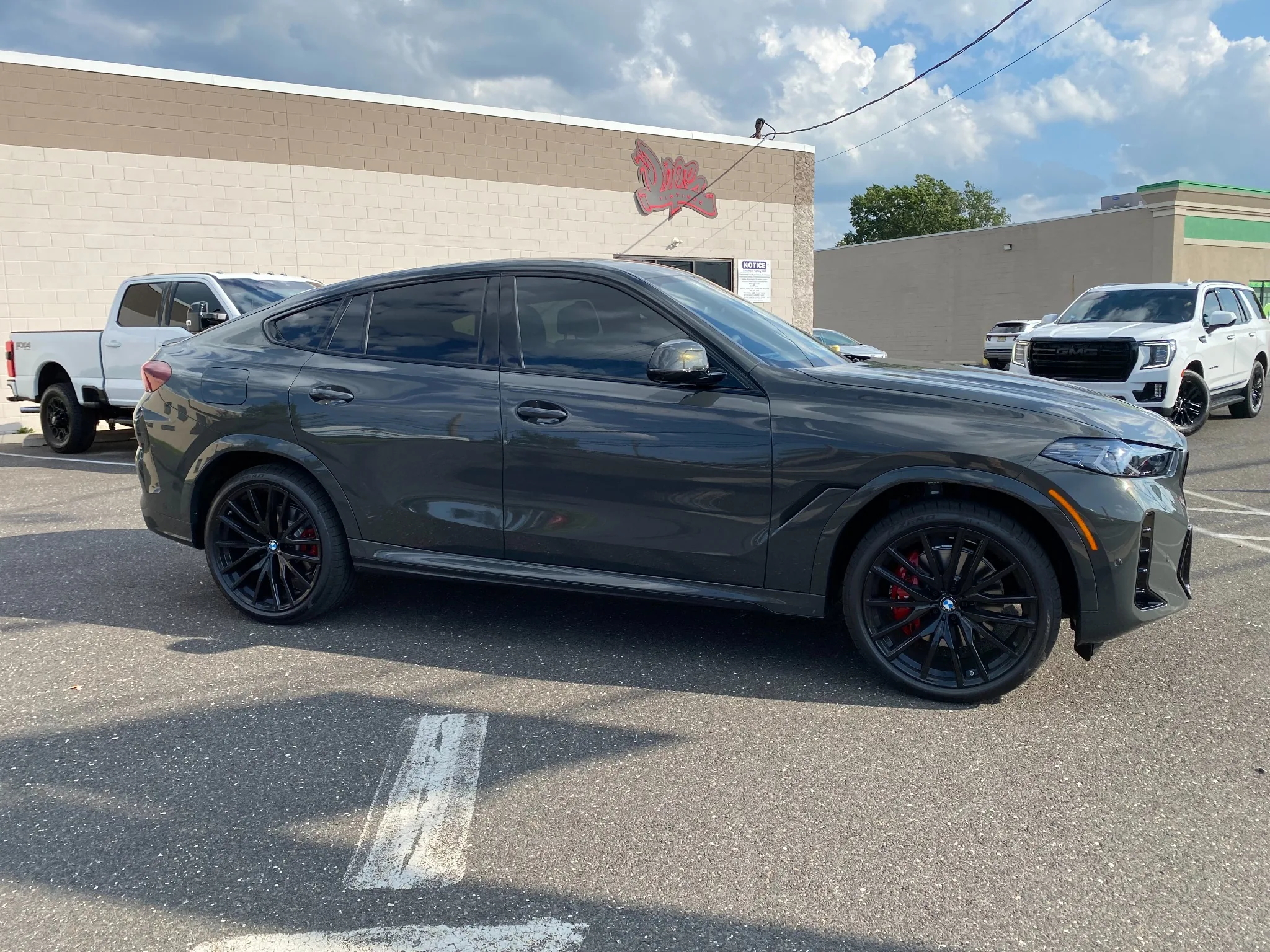
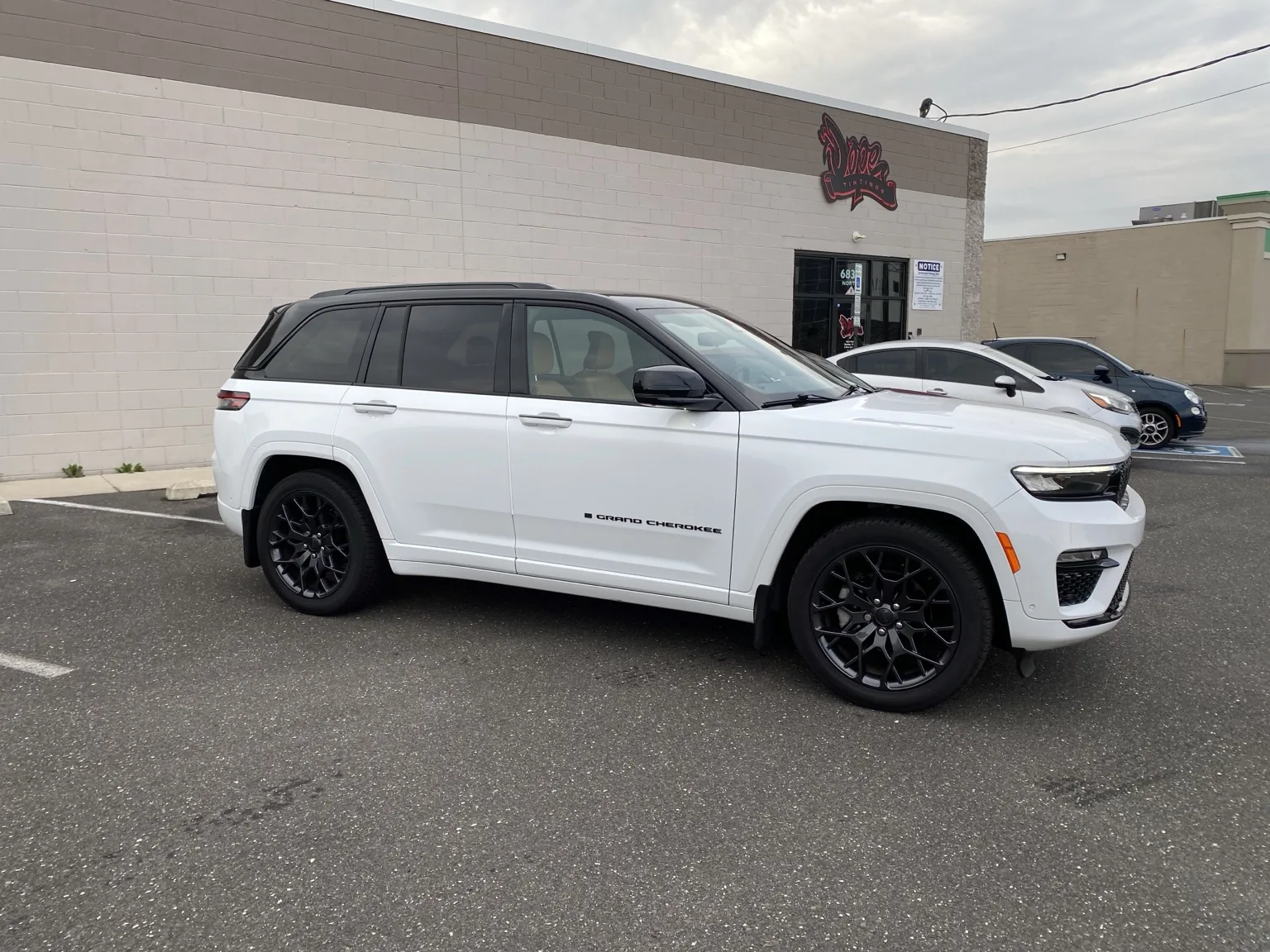
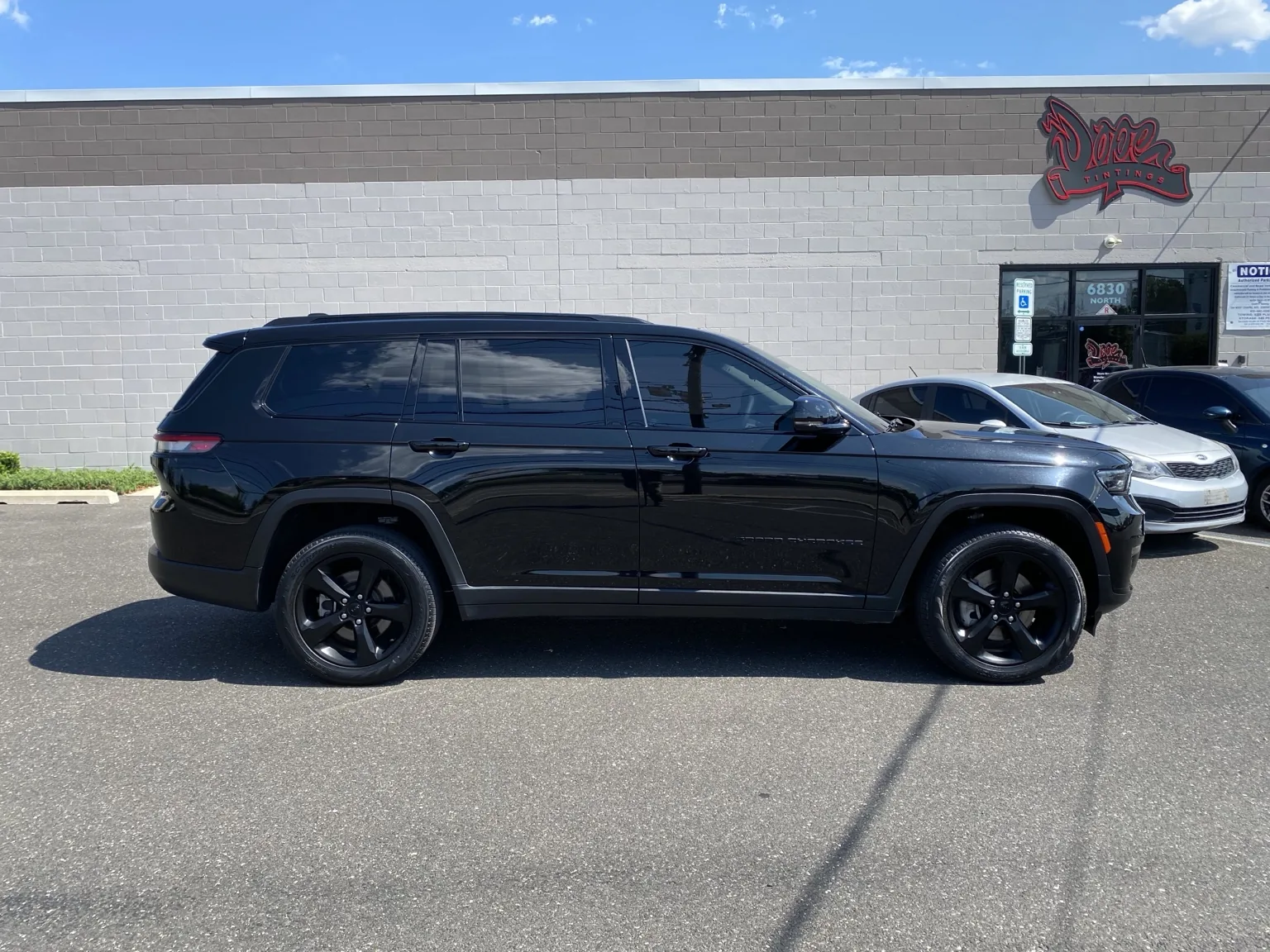
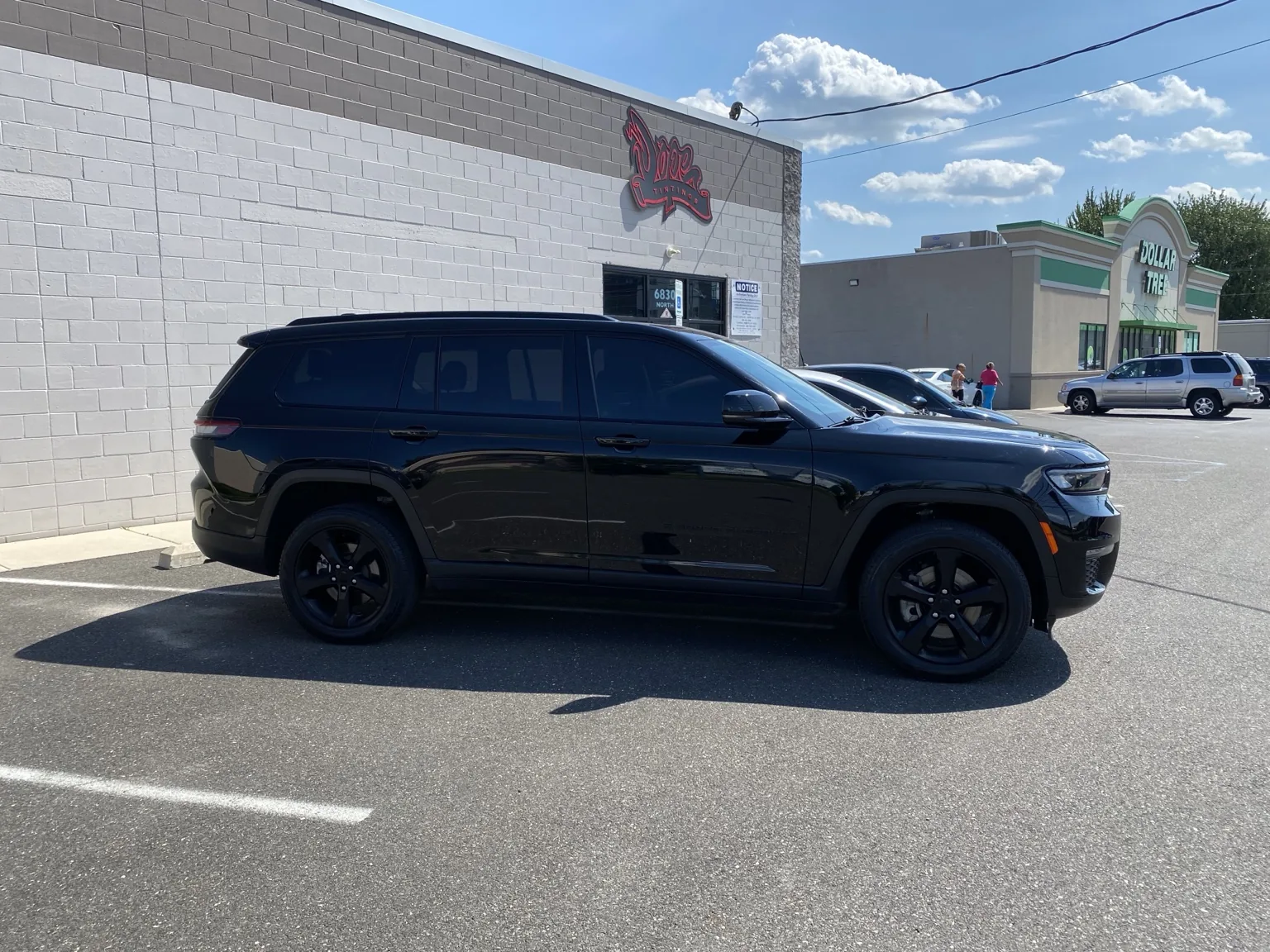
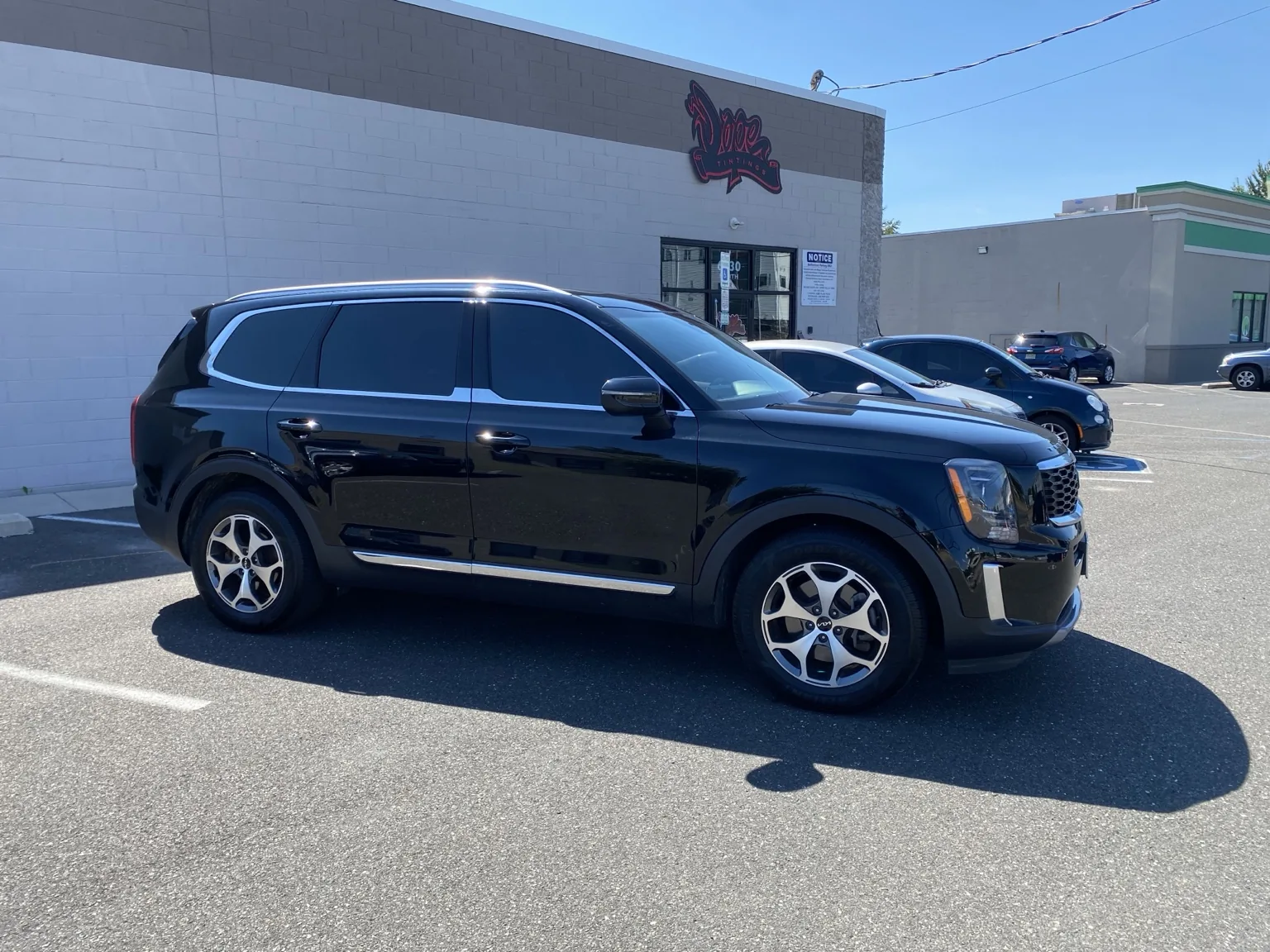
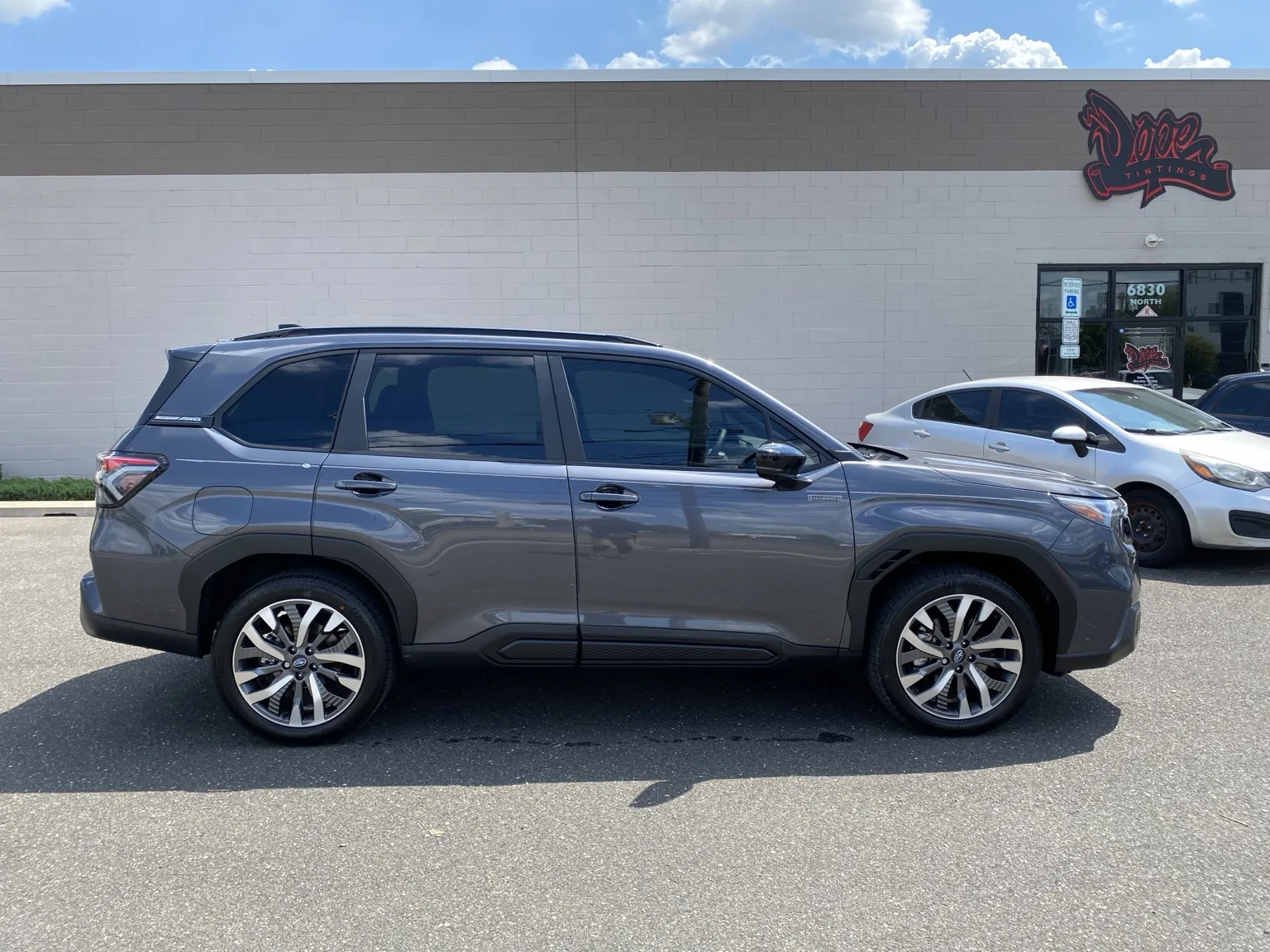
If you look at many SUVs from the side, you'll see relatively clear-looking front doors and much darker glass beginning behind the driver.
That dark rear glass can look similar to aftermarket window tint, but the two products are not the same.
How Dark Is Factory Privacy Glass?
This is where our tint meter gives customers a better answer than guessing by eye.
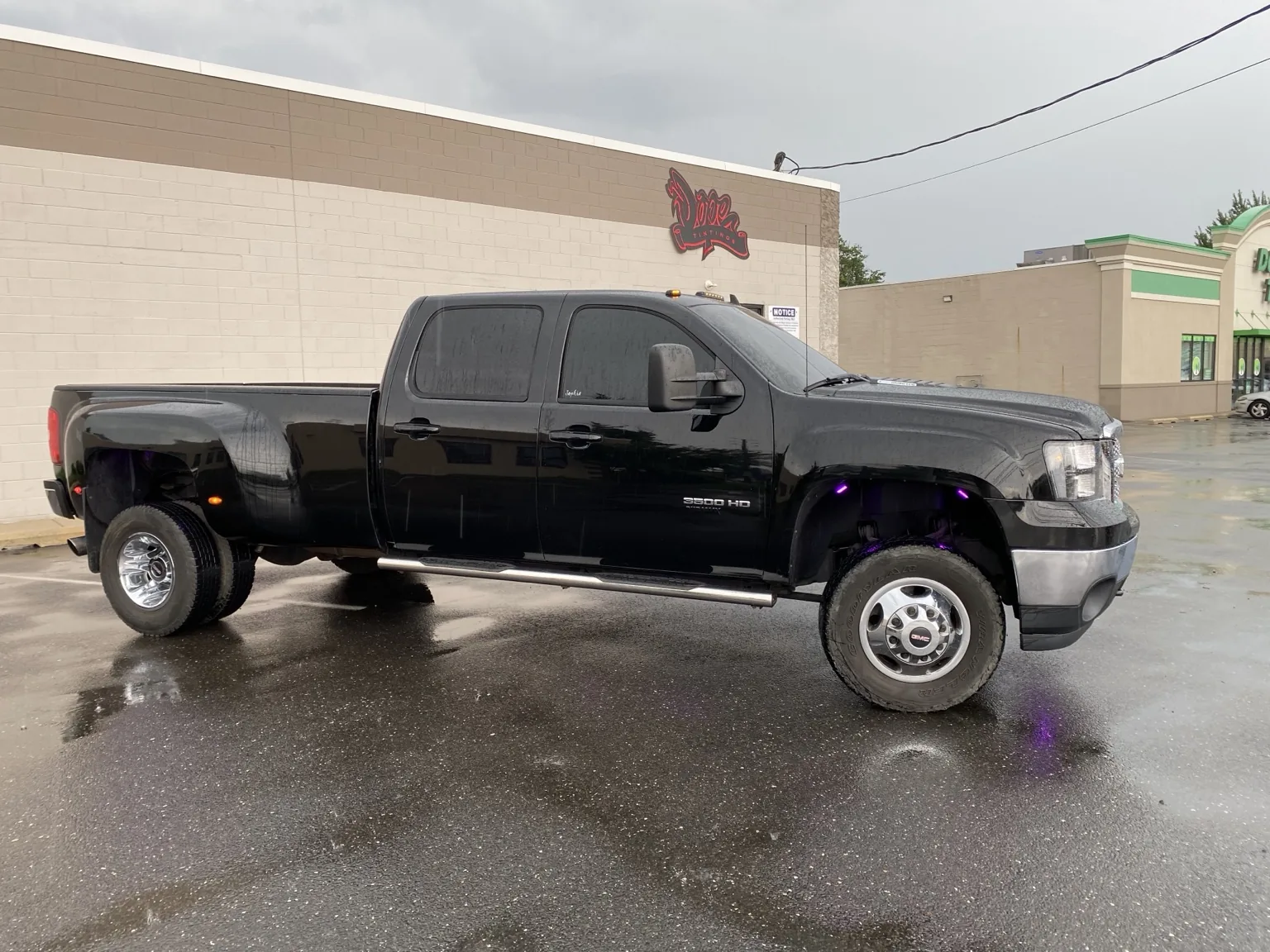
At Dope Tintings, we've measured factory privacy glass on thousands of SUVs, pickups, vans and similar vehicles.
A common range we see is approximately:
18% to 25% VLT.
VLT means Visible Light Transmission.
So if a rear window meters around 20%, approximately 20% of visible light is passing through that glass.
We've had individual vehicles meter around:
- 18%
- 20%
- 22%
- 23%
- 24%
- 25%
The exact reading varies by vehicle.
That's why we don't tell every SUV owner:
"Your factory tint is exactly 20%."
We meter the actual glass when the exact number matters.
Does 20% Factory Glass Mean It Blocks 80% of the Heat?
No.
This is one of the most important misconceptions in this entire article.
If your factory privacy glass meters approximately 20% VLT, that does not mean:
"My glass blocks 80% of the heat."
The 20% number is describing visible-light transmission.
It is not a heat-rejection percentage.
A window can look very dark while still allowing substantial solar energy to affect the cabin.
That's why choosing window film solely by how dark it looks can be misleading.
Does Factory Privacy Glass Block UV Rays?
Factory automotive glass can provide some UV filtering, but the amount varies depending on the glass and vehicle.
We don't tell customers that factory privacy glass provides literally zero UV protection.
We also don't assume that because the glass looks dark, it provides the same UV performance as a professional aftermarket window film with a published UV-rejection specification.
The professional films we install at Dope Tintings are rated for up to 99.9% UV rejection, depending on the specific product.
So if UV protection is one of your main concerns—especially for children riding in the rear or for protecting the vehicle's interior—that's a legitimate reason to discuss adding aftermarket film over factory privacy glass.
Why Can You Still Feel the Sun Through Dark Factory Glass?
Because visible darkness and solar-heat performance aren't the same thing.
A customer may sit in the back of an SUV and think:
"These windows are pretty dark. Why can I still feel the sun on my arm?"
The answer is that the factory glass's appearance alone doesn't tell you its complete solar-performance characteristics.
This is particularly noticeable when:
- Children regularly ride in the rear
- The vehicle spends a lot of time in direct sunlight
- You're driving during hot summer afternoons
- Sunlight is hitting one side of the vehicle for an extended period
That's where an aftermarket performance film can serve a different purpose than factory privacy glass.
Can You Put Window Tint Over Factory Privacy Glass?
Yes.
This is a normal installation.
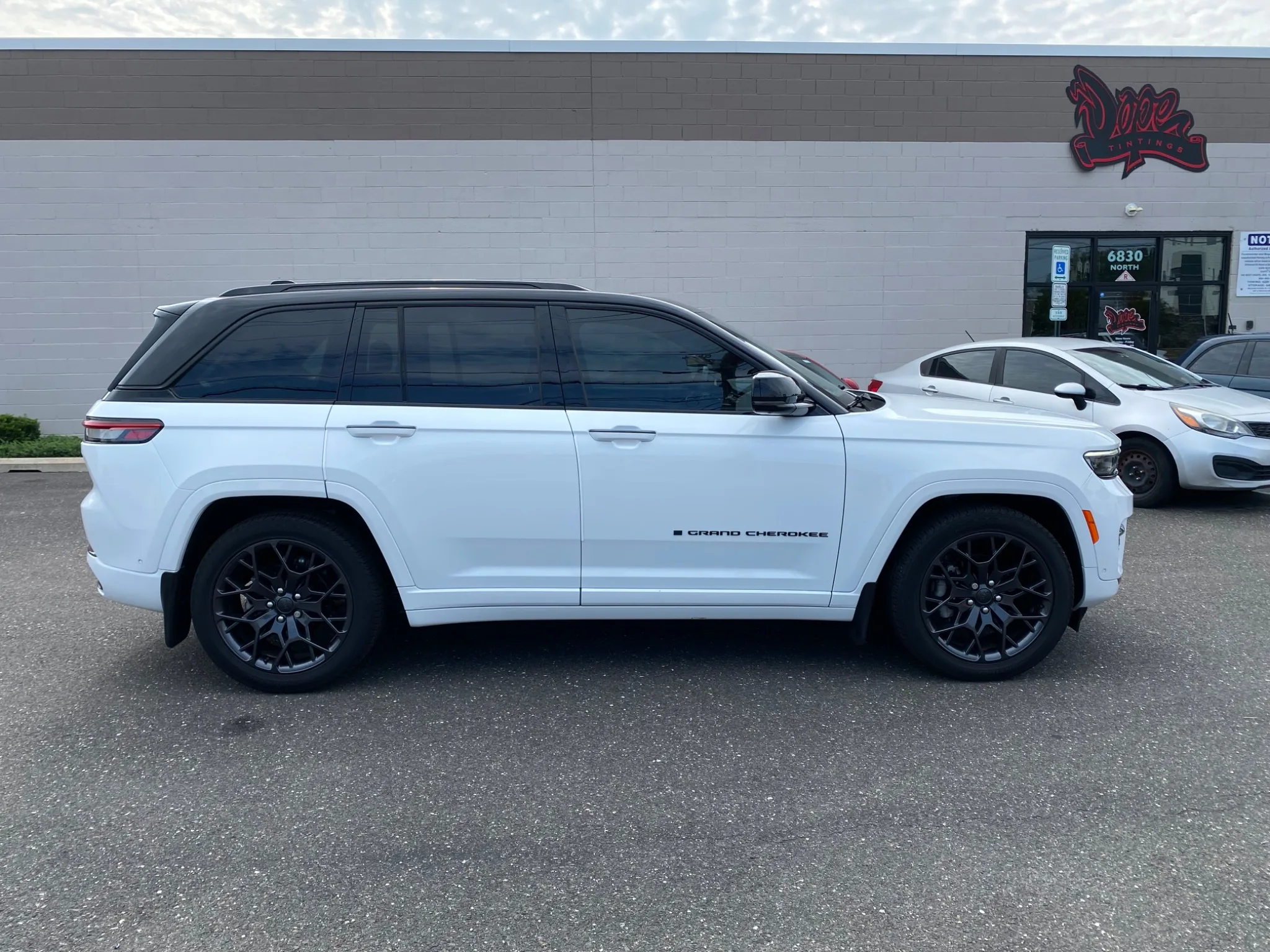
Factory privacy glass is part of the glass itself, so aftermarket window film can be installed over it.
Customers commonly do this because they want:
- Additional UV protection
- Better heat rejection
- More privacy
- A darker appearance
- Additional protection for children
- More protection for the interior
The right film depends on which of those goals matters most.
Will Adding Film Make Factory Privacy Glass Darker?
Yes, but how much darker depends on the film you choose.
Remember that the factory glass may already be somewhere around the 18–25% range.
If you install another dark film over it, the finished window can become substantially darker.
That's great for somebody who wants maximum privacy.
It's not ideal for someone who says:
"I like the factory darkness. I just want better heat and UV performance."
For that customer, we'd normally discuss a much lighter performance film.
What If I Want Heat Rejection Without Making My Rear Windows Much Darker?
This is a common situation.
A customer may tell us:
"I like how my SUV looks from the factory. I don't want the rear windows much darker. I just want better protection."
That's when we start discussing lighter Carbon or Ceramic options.
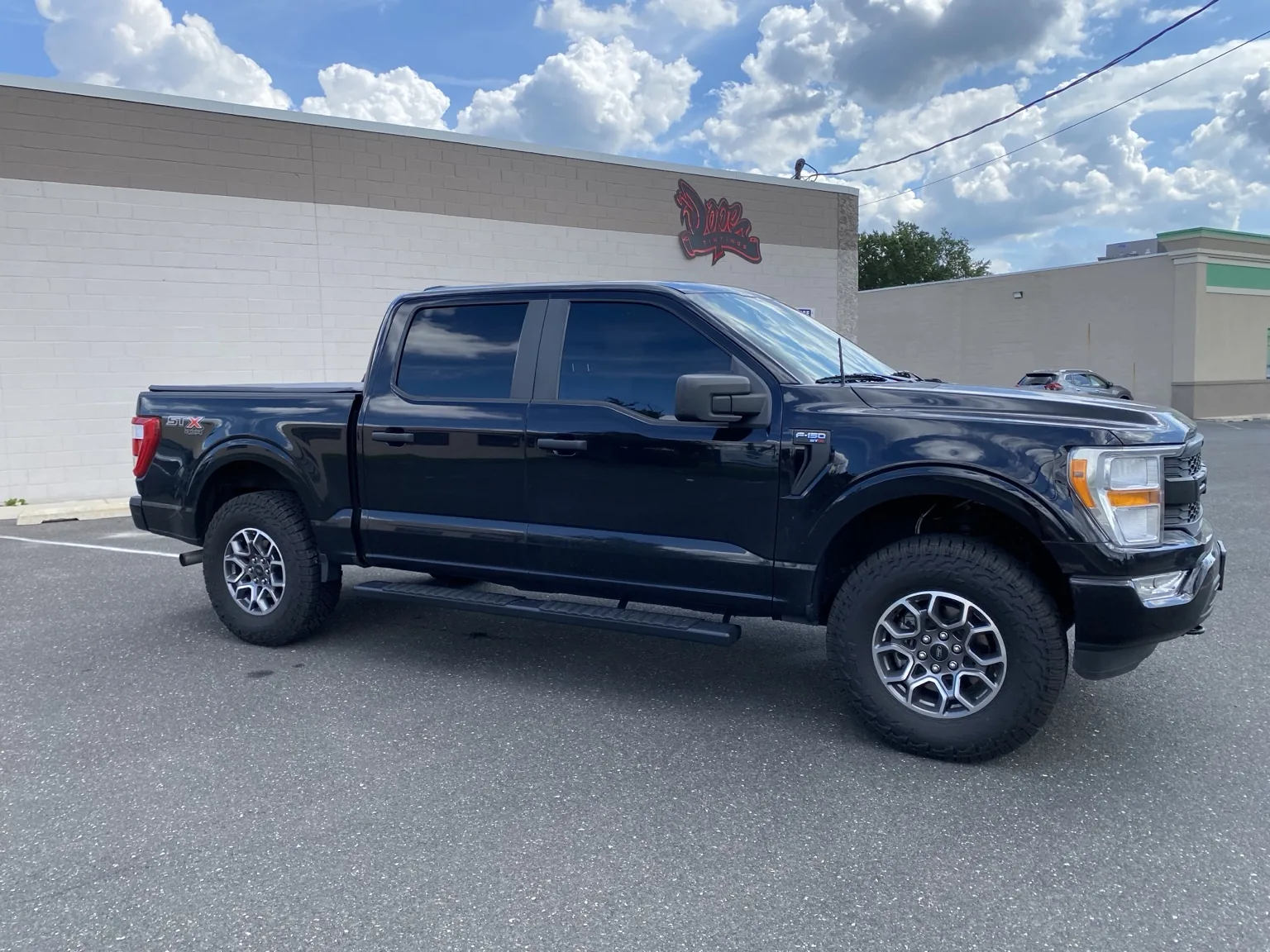
Our current lightest options include:
50% Carbon
and
70% Ceramic.
Because the factory glass is already dark, adding one of these lighter films can provide additional film performance without creating the same dramatic darkness you'd get from stacking something like 15% or 20% over the factory glass.
The exact finished appearance will still depend on the vehicle and factory glass.
What Would We Recommend for Parents With Factory Privacy Glass?
Let's say a parent comes into Dope Tintings with an SUV.
The factory rear glass meters somewhere around 18–25%.
They tell us:
"I have kids in the back. I don't need the windows ridiculously dark. I mainly want better UV protection and some heat rejection."
For that particular customer, my first recommendation would usually be:
50% Carbon over the factory privacy glass.
Why Carbon?
Because if they're only treating the rear passenger area, Carbon provides a strong balance of:
- Heat rejection
- UV performance
- Price
- Minimal additional darkness compared with using a much darker film
I wouldn't automatically push that customer into Ceramic simply because Ceramic costs more.
When Would 70% Ceramic Make Sense Over Factory Glass?
If the customer specifically wants Ceramic and their budget supports it, 70% Ceramic can make sense.
It's particularly useful when the customer wants to add performance while changing the appearance of the already-dark factory glass as little as possible.
But we still ask:
"What are you trying to accomplish?"
If they're only treating the factory rear glass and want good performance at a better value, I generally prefer Carbon.
If maximum heat rejection is their goal, then the conversation needs to expand beyond the rear glass.
Does Rear-Only Ceramic Give You Maximum Heat Rejection?
No.
Ceramic installed over the factory rear windows will provide its performance benefits through those treated pieces of glass.
But that does not mean the entire cabin is now receiving maximum heat rejection.
Think about all of the other glass on an SUV:
- Windshield
- Driver window
- Front passenger window
- Sunroof
- Panoramic roof
If those areas remain untreated, solar heat can still enter through them.
That's why we don't promise someone:
"Put Ceramic over your factory rear glass and your entire SUV will suddenly stay cool."
That's not a realistic expectation.
What If Maximum Heat Rejection Is My Goal?
Then we talk about the entire vehicle.
For maximum heat-rejection performance, you have to consider all of the major glass areas.
That may include:
- Side windows
- Rear glass
- Windshield
- Sunroof or panoramic roof
The exact configuration also needs to comply with the applicable window-tint laws where the vehicle is registered and driven.
This is different from the customer who only wants some additional rear-seat protection.
The goal determines the recommendation.
For a deeper explanation of when paying for Ceramic makes sense, read Is Ceramic Tint Really Worth the Extra Money?.
Will My SUV Still Get Hot After Adding Carbon or Ceramic?
Yes.
Window film does not make a vehicle immune to heat.
If you leave an SUV parked in direct summer sunlight for several hours, the cabin will still get hot.
That applies to:
- Standard film
- Carbon film
- Ceramic film
- Factory privacy glass
Performance film is designed to reduce solar energy passing through the treated glass.
It doesn't eliminate every source of cabin heat.
And if you only treated the rear factory privacy glass while leaving the front doors, windshield and panoramic roof untreated, don't expect the whole vehicle to behave like every piece of glass has been treated.
Will Rear-Only Heat-Rejection Film Make My SUV Cool Down Faster?
Not necessarily in a dramatic whole-cabin way.
If Carbon or Ceramic is installed only over the rear privacy glass, it's improving the performance of those windows.
But the A/C is still fighting solar heat entering through untreated glass elsewhere in the vehicle.
That's why we separate:
"I want better protection for my kids in the rear."
from:
"I want maximum heat rejection for the entire SUV."
Those are two different goals and may require two different installations.
Can Factory Tint Be Removed?
No—not if you're talking about factory privacy glass itself.
This is another question we've heard many times.
Customers have asked us:
"Can you remove the factory tint and make the windows clear?"
or:
"Can you take the factory tint off and put darker tint on instead?"
If the darkness is manufactured into the glass, there isn't a tint-film layer for us to peel off.
The dark appearance is part of the glass.
Can You Make Factory Privacy Glass Lighter?
Not by removing tint film, because there may be no film there to remove.
If somebody truly wants the factory-darkened glass to become substantially lighter, they would generally need to replace that glass with a different piece of glass having the desired characteristics.
Most customers don't want to do that.
Usually they choose one of two options:
Leave the factory privacy glass exactly as it is.
or:
Add aftermarket film over it for additional performance or darkness.
Should Everyone Add Tint Over Factory Privacy Glass?
No.
If you're happy with the factory appearance and don't need additional UV, heat-rejection or privacy performance, you don't have to add anything.
We're not going to tell every SUV owner:
"You need tint because your factory glass isn't good enough."
But if you tell us:
"My children sit in the back and I want additional protection from sun exposure,"
or:
"I want better heat rejection through those rear windows,"
then adding an appropriate aftermarket film becomes worth discussing.
That's when the film is solving an actual problem instead of simply adding another product to the vehicle.
Factory Privacy Glass vs. Standard, Carbon and Ceramic Tint
Factory privacy glass, Standard film, Carbon film and Ceramic film shouldn't be treated as four versions of the same product.
They serve different purposes.
Here's the simplest way we explain them at Dope Tintings:
| Option | Primary Reason to Choose It |
|---|---|
| Factory privacy glass | Factory appearance and privacy |
| Standard film | Additional darkness and privacy |
| Carbon film | Privacy plus better heat rejection |
| Ceramic film | Highest heat-rejection performance in our lineup |
This is why a customer can have factory rear glass that looks dark but still decide to add Carbon or Ceramic over it.
They're not necessarily adding film because the factory glass isn't dark enough.
They may be adding film because they want performance that darkness alone doesn't tell you about.
Is Standard Tint Worth Adding Over Factory Privacy Glass?
It can be if the customer's main goal is additional darkness or privacy.
For example, someone may have factory privacy glass measuring around 20% but still tell us:
"I want people to have a much harder time seeing into the back."
That customer may not care about maximum heat rejection.
They simply want darker rear glass.
In that situation, Standard may accomplish exactly what they're looking for without paying for performance they don't need.
Is Carbon Tint the Best Value Over Factory Privacy Glass?
For many customers, yes.
Carbon is especially useful for the SUV owner who says:
"I already like how dark my rear windows are. I just want better UV and heat performance."
For the average parent treating only the factory rear passenger area, my recommendation is usually 50% Carbon.
That's based on the conversations we actually have with customers at our Pennsauken shop.
We're not automatically recommending the most expensive product.
We're trying to match the film to what the customer told us they want.
Carbon gives that customer meaningful heat-rejection performance while allowing us to use a relatively light film over glass that's already dark.
When Is Ceramic Better Than Carbon Over Factory Glass?
Ceramic makes more sense when the customer places a higher priority on heat rejection and is willing to pay for our highest-performing option.
If someone says:
"I want the best heat rejection you offer, and I don't want my factory rear glass much darker,"
then 70% Ceramic becomes an option worth discussing.
But if they're only treating the rear passenger area, we'll still explain that Ceramic on the rear doesn't magically provide maximum heat rejection for the entire vehicle.
The untreated glass still matters.
That's why the decision between Carbon and Ceramic should be based on the customer's actual goal rather than simply assuming:
"Ceramic costs more, so I need Ceramic."
For the complete buying decision, read Is Ceramic Tint Really Worth the Extra Money?.
For a direct comparison of the two film technologies, read Carbon vs. Ceramic Window Tint.
Does Adding Clear Film Over Factory Privacy Glass Still Help?
Yes, if you're choosing a performance film for what it does rather than how dark it looks.
This is something customers sometimes don't understand at first.
They'll ask:
"Why would I put 50% or 70% over glass that's already around 20%?"
Because we're not necessarily trying to make the window dramatically darker.
We're adding another product with its own performance characteristics.
That's why 50% Carbon over factory privacy glass can make sense for one customer while a much darker film makes sense for another.
One wants performance without dramatically changing the appearance.
The other wants additional privacy.
Same factory glass.
Different goals.
Different recommendations.
Does Adding Tint Over Factory Glass Change the Final Percentage?
Yes.
The final VLT is affected by both the factory glass and the aftermarket film.
So if your factory privacy glass meters approximately 20%, adding a film labeled 50% does not make the finished window 50%.
The finished glass will meter darker because visible light now has to pass through both the factory glass and the aftermarket film.
The exact result can vary because:
- Factory glass varies
- Film VLT varies slightly by product
- Vehicle glass varies
- Tint-meter readings can vary
That's why we prefer measuring the actual vehicle rather than promising an exact finished number based solely on what's printed on a film box.
Why Do Some Customers Make Factory Privacy Glass Much Darker?
Heat rejection isn't everybody's priority.
Some customers simply want privacy.
We've had SUV, pickup and van owners tell us:
"I don't want anybody seeing into the back."
Parents may want additional privacy for children.
SUV owners may want cargo hidden from view.
Work-truck and van owners may want tools or equipment less visible.
Other customers simply like the appearance of extremely dark rear glass.
Those customers may choose a substantially darker aftermarket film over their factory privacy glass.
That's a different goal from the customer choosing 50% Carbon solely for additional performance.
Does Factory Privacy Glass Protect Your Interior From the Sun?
Factory automotive glass can provide some protection from solar exposure, but we don't tell customers that a dark-looking factory rear window automatically provides the same performance as an aftermarket film specifically designed and rated for UV and heat rejection.
If protecting the interior is important to you, look at the specifications of the actual aftermarket film you're considering.
That can matter for:
- Leather
- Upholstery
- Interior plastics
- Trim
- Items regularly left in the vehicle
Again, don't use darkness alone as your performance measurement.
What Should You Ask a Tint Shop Before Adding Film Over Factory Glass?
Don't start by asking:
"What's your darkest tint?"
Start by explaining what you're trying to accomplish.
Tell the tint shop whether your priority is:
- Privacy
- Heat rejection
- UV protection
- Protecting children
- Interior protection
- Appearance
- Maximum darkness
- Keeping the factory appearance
At Dope Tintings, that's how we decide what to recommend.
If you tell us you like the factory darkness and only want additional rear-seat protection, we're not going to recommend the same film we'd recommend to someone who wants the back of the SUV almost impossible to see into.
The more specific you are about the goal, the better the recommendation can be.
Frequently Asked Questions About Factory Tint and Heat
Does factory tint actually block heat?
Factory privacy glass should not be treated as heat-rejection window film. Its dark appearance primarily provides privacy and does not tell you how much solar heat the glass rejects.
Should I tint over factory privacy glass if I have kids?
If additional UV protection and reduced solar heat through the rear passenger glass are important to you, adding an appropriate aftermarket performance film can make sense. For a rear-only installation, we commonly recommend discussing Carbon before automatically jumping to Ceramic.
What tint should I put over factory privacy glass without making it much darker?
At Dope Tintings, 50% Carbon is one of our first recommendations for customers who want better rear-window performance without dramatically darkening factory privacy glass. 70% Ceramic can also be considered when the customer specifically wants our higher heat-rejection option.
Can factory tint be removed?
If you're talking about factory privacy glass, no. The darker appearance is manufactured into the glass rather than being a removable sheet of aftermarket tint film.
Do I need Ceramic over factory tint to block heat?
Not necessarily. Carbon can be a strong value for someone treating only the factory rear glass and wanting better heat rejection. Ceramic becomes more relevant when maximum heat rejection is the customer's priority.
Factory Privacy Glass and Window Tint in Pennsauken and South Jersey
At Dope Tintings in Pennsauken, we regularly work with SUVs, pickups, crossovers and vans that already have factory privacy glass behind the driver.
One advantage of seeing these vehicles every day is that we don't have to guess what factory privacy glass normally looks like or how dark it may meter.
In our experience, factory-darkened rear glass commonly measures approximately 18%–25% VLT.
But the meter reading isn't the only thing that matters.
When a customer comes to us from Pennsauken or elsewhere in South Jersey, one of the first things we ask is:
"What are you trying to accomplish?"
A parent trying to reduce sun exposure through the rear passenger windows needs a different recommendation from someone who simply wants maximum privacy.
A customer who wants some additional heat rejection needs a different recommendation from someone whose goal is maximum whole-vehicle heat rejection.
And someone who likes the factory darkness but wants additional performance doesn't necessarily need the same film as somebody who wants the rear windows extremely dark.
That's why we don't automatically recommend the same film to every customer.
Which Window Tint Package Should You Choose?
If your vehicle already has factory privacy glass, choose your film based on what you want it to do.
Standard makes sense when your main goal is additional darkness or privacy.
Carbon is our usual value recommendation when you want better heat rejection without automatically paying for our highest-performing option.
Ceramic is for customers who place a higher priority on maximum heat-rejection performance.
You can compare our current Window Tint Packages before deciding which option makes the most sense for your vehicle.
If you're still deciding whether the Ceramic upgrade is worth paying for, read Is Ceramic Tint Really Worth the Extra Money?.
For a direct comparison between our heat-rejection options, read Carbon vs. Ceramic Window Tint.
Final Answer: Does Factory Tint Block Heat?
Factory privacy glass should not be treated as heat-rejection window tint. Its dark appearance primarily provides privacy, and the VLT percentage tells you how much visible light passes through the glass—not how much solar heat it rejects.
At Dope Tintings, factory privacy glass on SUVs, pickups and vans commonly meters approximately 18%–25% VLT.
That does not mean a window measuring 20% VLT is rejecting 80% of the heat.
Those are two different measurements.
Factory automotive glass can provide some UV and solar filtering depending on the specific glass, but we don't assume its dark appearance provides the same performance as an aftermarket Carbon or Ceramic film designed and rated for UV and heat rejection.
So what should you do?
If you're happy with your factory privacy glass and don't need anything else from it:
Leave it alone.
If you mainly want additional darkness and privacy:
Standard film may be enough.
If you're only treating the factory rear glass and want additional UV and heat-rejection performance without making the windows dramatically darker:
50% Carbon is our typical best-value recommendation.
If you specifically want our higher heat-rejection option and your budget supports it:
70% Ceramic is worth discussing.
And if your actual goal is maximum whole-vehicle heat rejection, don't focus exclusively on the factory rear windows.
The windshield, front side glass and sunroof or panoramic roof can all affect how much solar heat enters the cabin. Any aftermarket film on those areas also needs to be considered under the applicable window-tint laws where the vehicle is registered and driven.
The most useful question isn't:
"Are my factory windows already dark?"
It's:
"What do I want my windows to do that they're not doing now?"
That's the question we use to help customers choose the right film.
Get Help Choosing Film for Your Factory Privacy Glass
If you're unsure whether you need Standard, Carbon or Ceramic over your factory privacy glass, you don't have to figure it out from percentages alone.
Tell us:
- Your year, make and model
- Whether the vehicle already has factory privacy glass
- Whether you're concerned about heat, UV exposure, privacy or appearance
- Whether children regularly ride in the rear
- Whether you want to keep the factory appearance or make the glass darker
We'll use that information to recommend an option based on what you're actually trying to accomplish.
You can review our Window Tint Packages or contact Dope Tintings for a window tint quote.
Dope Tintings
6830 N Crescent Blvd
Pennsauken NJ 08110
Call: 856-577-4119