2015–2020 Chevy Tahoe Window Tint Guide: Prices, Tint Percentages & Factory Match
Looking for the best window tint for a 2015–2020 Chevy Tahoe? See what tint percentage matches the factory rear glass, current pricing, carbon vs. ceramic options, installation times, nighttime visibility, and recommendations from an experienced South Jersey window tint installer.
2015–2020 Chevy Tahoe Window Tint Guide: Prices, Tint Percentages & Factory Match
If you own a 2015, 2016, 2017, 2018, 2019, or 2020 Chevy Tahoe and you're thinking about window tint, one of the first questions you're probably going to ask is:
What tint percentage matches the factory rear windows on a Chevy Tahoe?
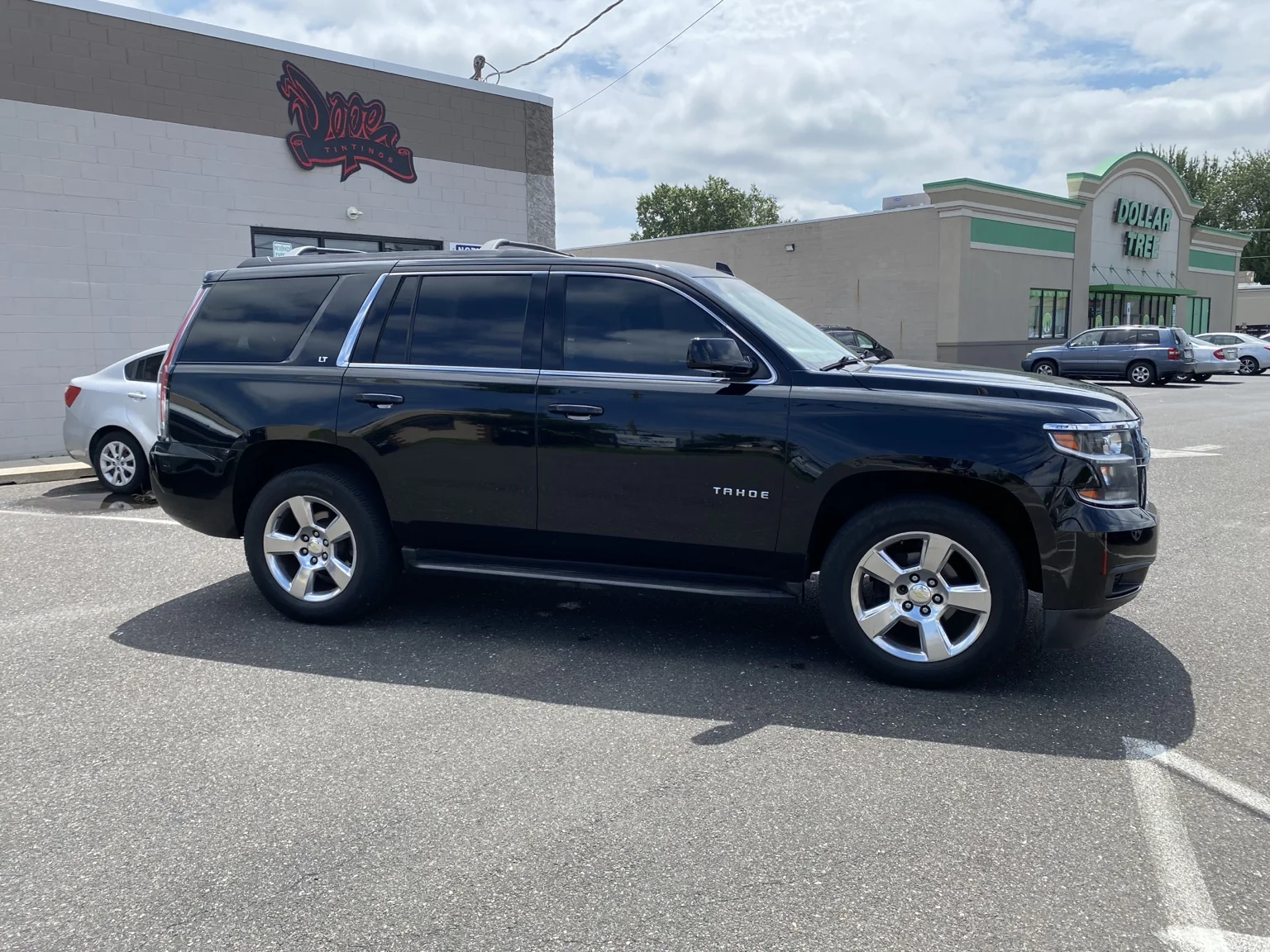
For this generation Tahoe, 20% is our go-to recommendation for the two front doors when the goal is matching the appearance of the factory privacy glass in the rear.
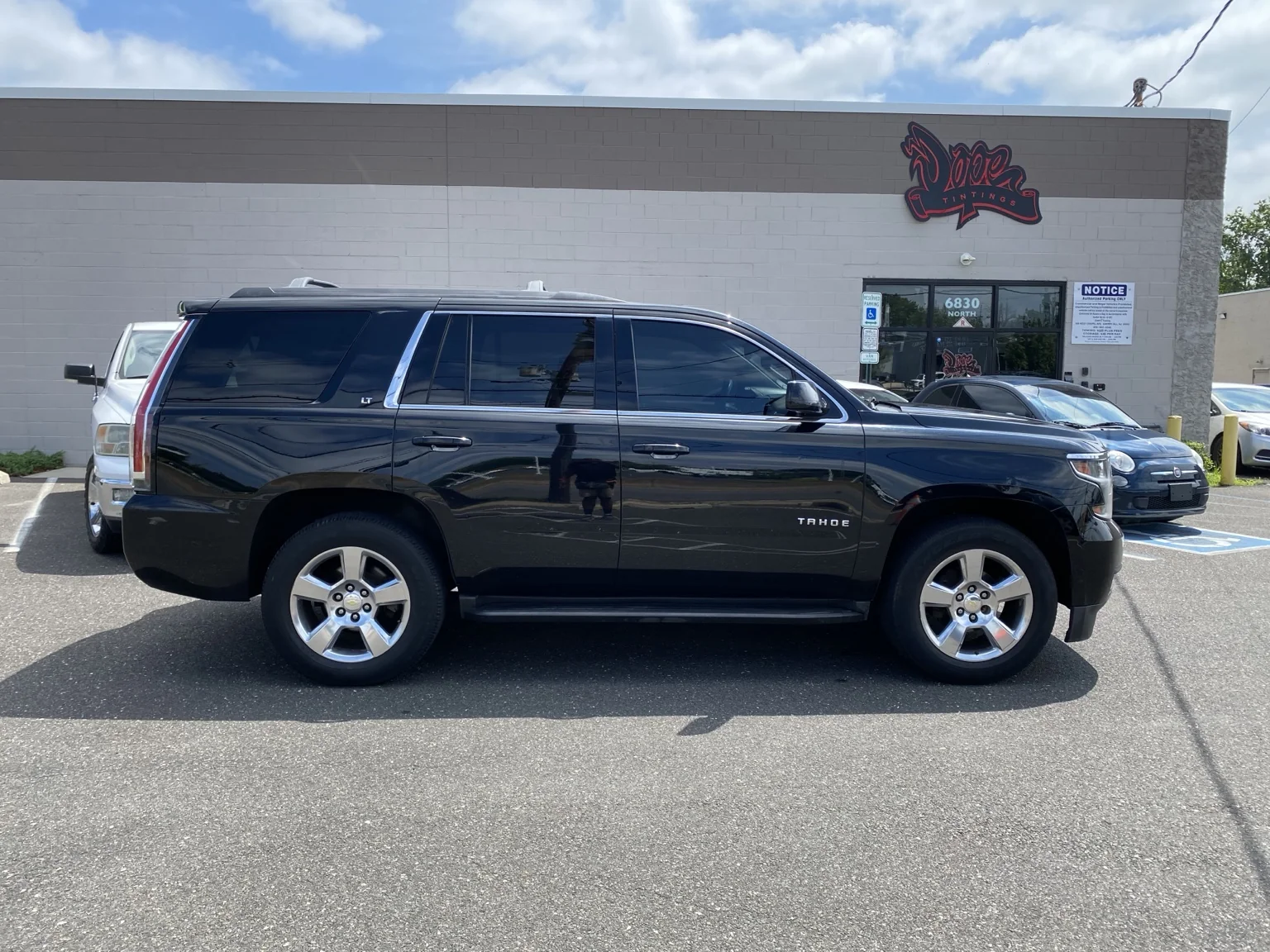
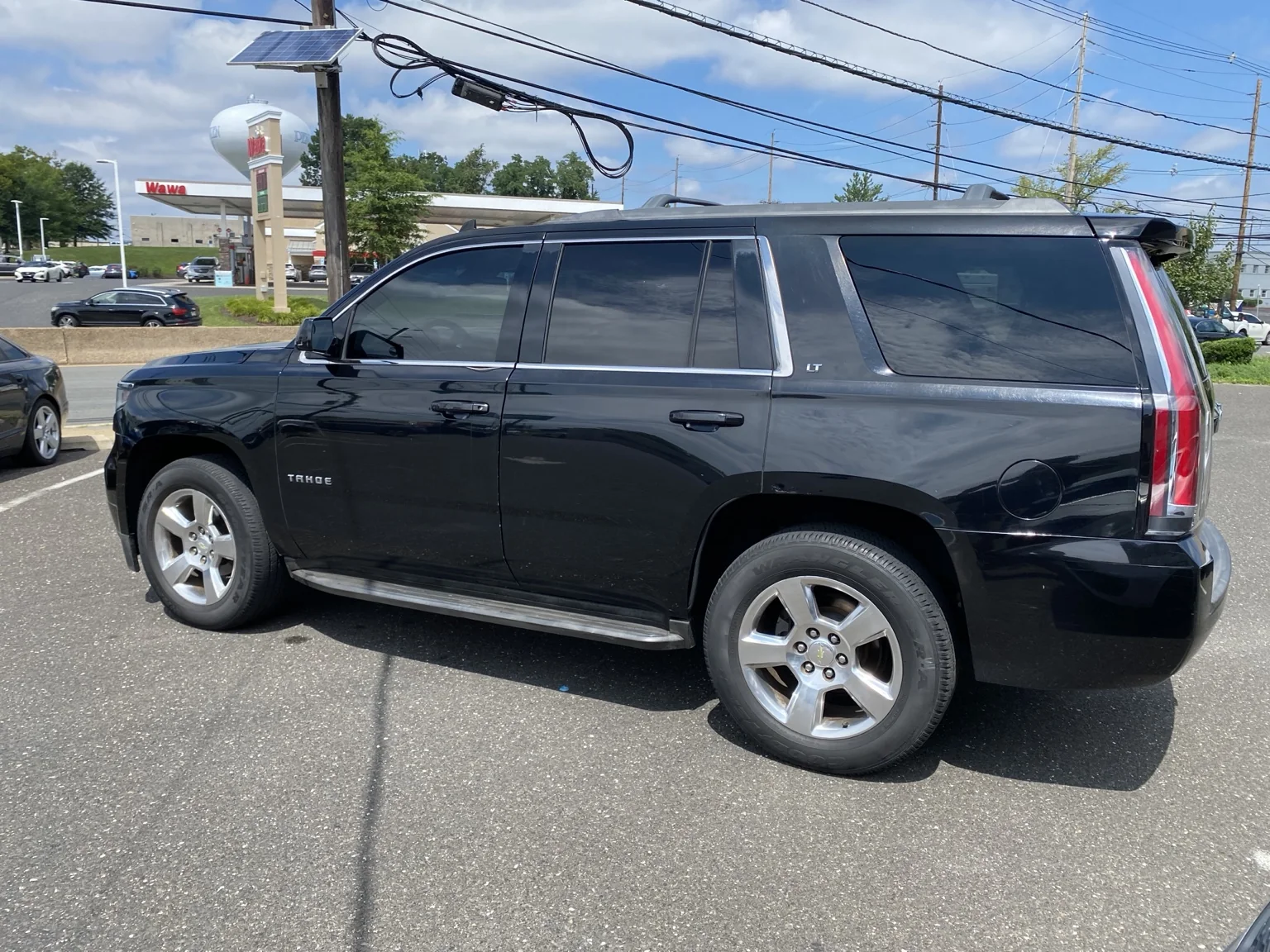
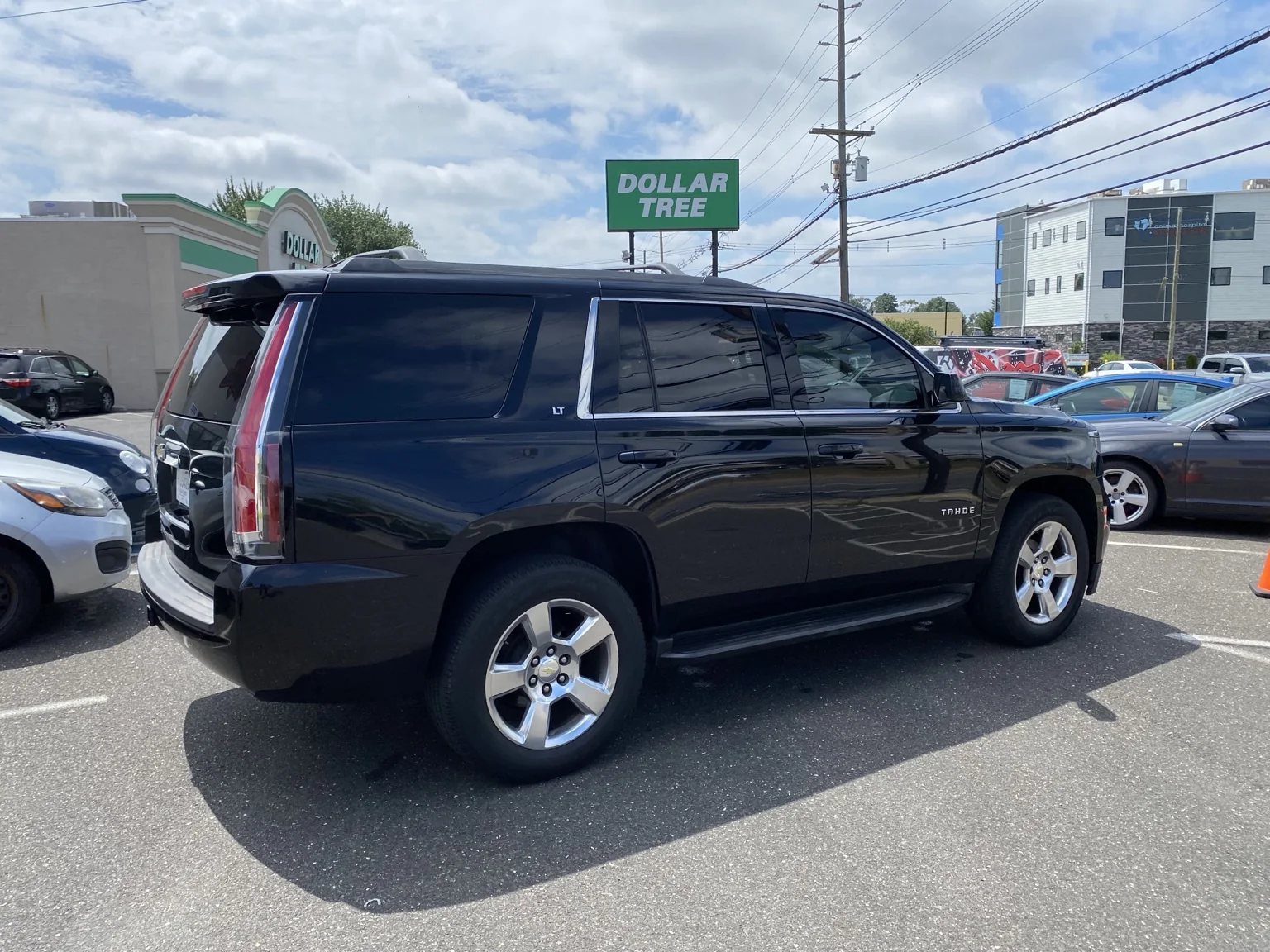
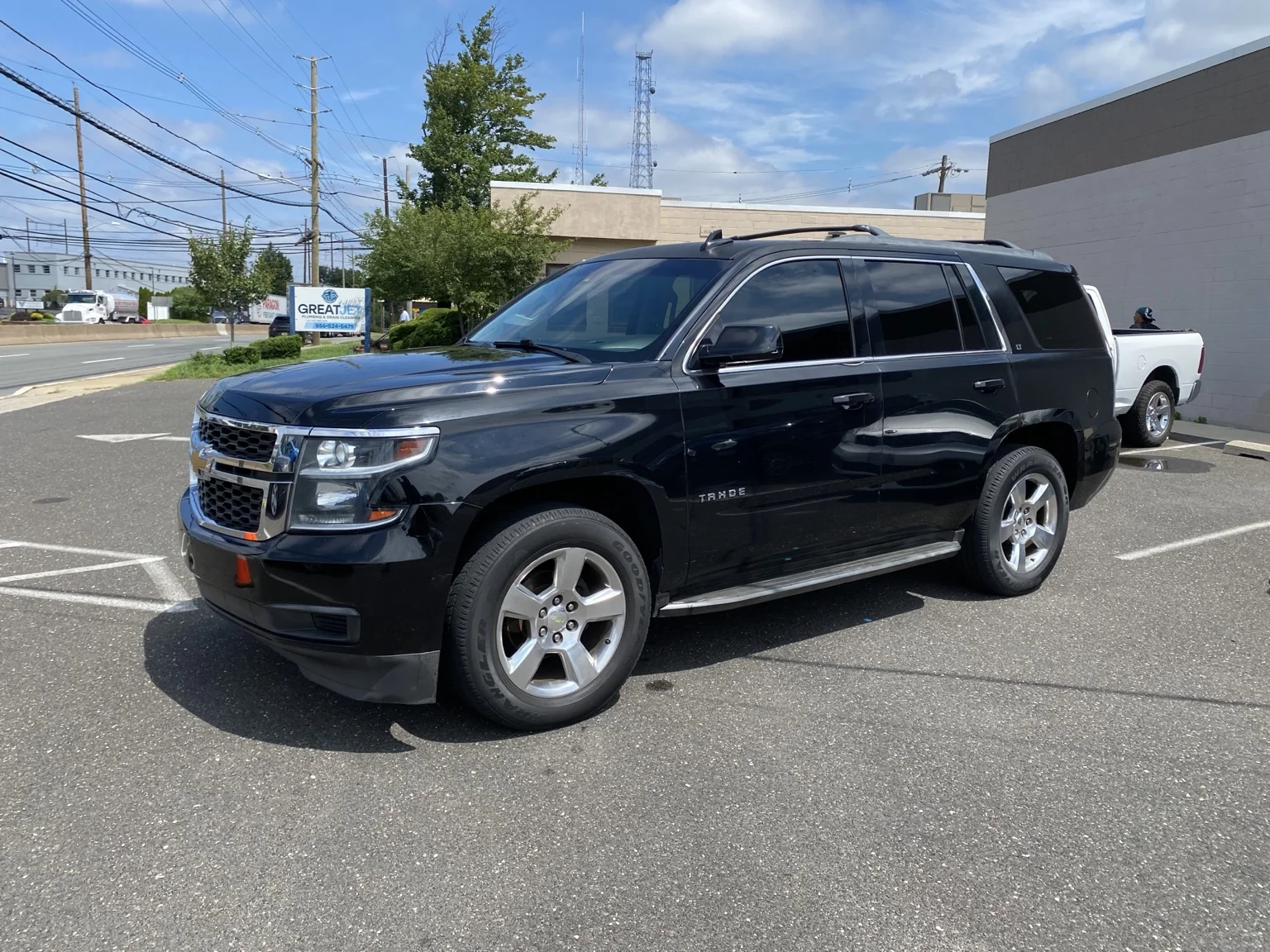
That's exactly what we did on the Tahoe shown in our photos.
This customer wasn't trying to make the SUV extremely dark. His main goal was getting rid of the noticeably lighter front windows and creating a more uniform appearance from the front doors to the factory rear glass.
We installed 20% carbon window tint on the two front doors.
Carbon made sense because he wanted the factory-matched appearance while also getting better heat rejection for himself and his wife.
But matching the factory rear windows is only one option.
Some Tahoe owners want privacy. Others want maximum heat rejection. Some want the entire SUV darker. Others don't care how dark the windows look and simply want to reduce the amount of heat entering the cabin.
Those goals can require completely different tint setups.
This guide breaks down what we've learned tinting the 2015–2020 Chevrolet Tahoe, including pricing, percentages, factory privacy glass, carbon and ceramic tint, installation difficulty, nighttime visibility and what we recommend depending on what you're trying to accomplish.
What Tint Percentage Matches Factory Chevy Tahoe Windows?
For the 2015–2020 Chevy Tahoe, we generally recommend 20% window tint on the two front doors when the customer's goal is to visually match the factory rear privacy glass.
Factory glass can vary somewhat in appearance, so no aftermarket film percentage should be treated as a guaranteed laboratory-perfect match.
But visually, 20% is the percentage we confidently recommend for this generation Tahoe.
Once installed, it creates a much more uniform appearance across the side of the SUV.
Instead of having light front windows followed by dark factory rear windows, the vehicle looks much more consistent from front to back.
That is exactly what this customer wanted.
Why Does 20% Tint Look Different on the Vehicle Than on a Tint Board?
This is something we explain to customers regularly.
When you're looking at a single piece of 20% tint on our tint percentage board, it may appear lighter than you expected.
That's partly because you're looking at one piece of glass against a light or white background.
Put that same percentage on an actual vehicle and the appearance changes.
You're now looking through multiple pieces of tinted glass into an interior that receives substantially less light.
Because the entire cabin is darker, 20% can visually appear darker once it's installed on the vehicle than it did when you looked at one sample on a tint board.
That's why we don't recommend choosing a tint percentage solely from how a sample looks by itself.
You should also consider how that percentage is going to look across the complete vehicle.
Is 20% Tint Good for a Chevy Tahoe?
For many Tahoe owners, 20% is an excellent balance between appearance, privacy and visibility.
It's noticeably darker than something like 35%, but it's nowhere near as difficult to see through at night as 5% can be.
During the daytime, 20% gives the Tahoe a dark factory-style appearance.
At night, visibility will depend heavily on the driver.
Some customers can see through 20% without much difficulty. Others may find themselves rolling the windows down when parallel parking, making certain turns or driving through areas with very little outside lighting.
Your eyesight matters.
If nighttime visibility is a major concern, tell us before choosing your percentage.
Is 20% Better Than 5% on the Front Doors?
For the average driver, we consider 20% much more manageable than 5%.
A 5% film blocks approximately 95% of visible light, which creates considerably more privacy but also makes nighttime visibility much more challenging.
We've had plenty of customers who love extremely dark tint.
That doesn't mean it's right for everyone.
If someone tells us they want their Tahoe dark but they also drive frequently at night, we'll discuss that tradeoff before installing the film.
For someone primarily interested in matching the Tahoe's factory rear appearance, there usually isn't a reason to jump straight to 5% on the front doors.
Twenty percent generally accomplishes the factory-match look without going that extreme.
Factory Privacy Glass vs. Window Tint on a Chevy Tahoe
The rear windows of a Chevy Tahoe already appear dark because the glass itself contains factory privacy glass.
That isn't the same thing as applying aftermarket carbon or ceramic window film.
Factory privacy glass primarily provides darkness and privacy.
When customers come to us specifically looking for improved heat rejection, we can apply an aftermarket heat-rejecting film over that factory glass.
This allows a Tahoe owner to keep a similar appearance while upgrading the performance of the rear windows.
Can You Put Ceramic Tint Over Factory Privacy Glass?
Yes.
This is an important option for SUV owners who want maximum heat rejection.
Just because the rear glass already looks dark doesn't mean we have to leave it untouched.
For example, one possible heat-rejection setup would be:
20% ceramic on the two front doors combined with 70% ceramic over the factory rear glass.
The 70% film is much lighter, so the goal isn't necessarily to dramatically darken the already-dark factory glass.
The purpose is adding the performance characteristics of ceramic film.
Darkness and heat rejection aren't the same thing.
What Is the Best Ceramic Tint Setup for a Chevy Tahoe?
If maximum heat rejection is the customer's primary goal, we first ask what they want the Tahoe to look like.
Do they want the front windows to match the rear?
Do they want the front windows relatively light?
Do they want the entire SUV darker?
Once we know that, we can build the ceramic package around their preference.
One possible setup is:
20% ceramic on the two front doors + 70% ceramic over the factory rear windows and rear glass.
For even greater overall coverage, we can add a light ceramic film to the windshield and cover the sunroof when equipped.
Another customer might choose 35% ceramic on the front doors.
Someone more interested in keeping the glass relatively light could choose 70% ceramic.
There isn't one percentage combination that works for everybody.
The important part is understanding that if you're paying for ceramic specifically because you want maximum cabin heat reduction, covering more of the vehicle's glass makes a major difference.
Why We Don't Recommend Ceramic Only Because It's More Expensive
Ceramic isn't automatically our recommendation for every Tahoe.
We want the film choice to match what the customer is actually trying to accomplish.
If you're only tinting the two front doors because you want them to match the factory rear glass, carbon is often a very good choice.
That's what we used on this customer's Tahoe.
He got the 20% appearance he wanted while upgrading to a film with better heat rejection.
If someone tells us:
"I want the maximum heat rejection possible."
That's a different conversation.
That's when ceramic across the vehicle makes much more sense.
Covering only two pieces of glass with ceramic while leaving the windshield, rear glass and other large pieces of glass untreated won't provide the same overall benefit as a more complete ceramic setup.
2015–2020 Chevy Tahoe Window Tint Prices
Pricing depends on how much of the Tahoe you're tinting and which film you select.
For the two front doors only, our pricing currently starts at:
- Basic film — $99.99
- Carbon film — $149.99
- Ceramic film — $174.99
The standard film is not available for this two-front-door package.
For this particular Tahoe, the customer chose 20% carbon film at $149.99.
How Much Does It Cost to Tint All Four Doors and Rear Window?
For the 2015–2020 Chevy Tahoe four doors and rear glass, our current pricing starts at:
- Carbon window tint — $349.99
- Ceramic window tint — $474.99
The standard film isn't offered as the starting full-vehicle option on this Tahoe.
The Tahoe is a larger SUV and requires more film and installation time than a typical sedan.
Does the Chevy Tahoe Qualify for the $99 or $149 Tint Special?
No.
The Chevy Tahoe does not qualify for our promotional $99 or $149 full-vehicle specials.
Those specials are limited to qualifying two-door coupes and four-door sedans.
Because the Tahoe is an SUV, it is automatically excluded.
However, don't confuse that with our two-front-door pricing.
Tinting only the two front doors can still start at $99.99 depending on the film selected.
That's completely separate from our qualifying full-vehicle specials.
How Long Does It Take to Tint Two Chevy Tahoe Front Windows?
We normally allow approximately one hour for the two front doors.
That gives us enough time to properly prepare the glass, protect the interior, install the film and finish the installation without unnecessarily rushing the job.
This generation Tahoe is relatively straightforward from an installation standpoint.
How Long Does It Take to Tint an Entire 2015–2020 Tahoe?
For the four doors and rear glass, expect approximately:
2½ to 3 hours.
Actual installation time can vary depending on the condition of the vehicle and glass.
We would rather allow enough time to properly complete the installation than rush a large SUV simply to get it out of the shop faster.
How Difficult Is a 2015–2020 Chevy Tahoe to Tint?
From an experienced installer's perspective, the 2015–2020 Tahoe is a straightforward vehicle to tint.
There aren't any unusual problems with the front door glass.
The gaskets aren't excessively tight, and the door panels don't need to be completely removed just to perform a normal installation.
The rear doors are similarly straightforward.
The rear quarter glass doesn't present us with any major problems either.
The rear hatch glass is also relatively simple, although there is one area where experience becomes particularly important as these vehicles get older.
Do the Chevy Tahoe Door Panels Have to Come Off for Tint?
For a normal installation on this generation Tahoe, we don't need to remove the entire door panel.
That's one reason these front windows are relatively easy for an experienced installer.
We still protect the interior and make sure installation solution isn't unnecessarily getting into areas where it shouldn't.
"Easy vehicle to tint" doesn't mean preparation doesn't matter.
The quality of the finished installation still depends heavily on cleaning, preparation and technique.
What About the Window Sweeps and Gaskets?
The gaskets on this Tahoe aren't unusually tight, which makes film positioning relatively straightforward.
Proper preparation still matters because contamination around the bottom of a window can get pulled into the film during installation.
The goal isn't simply getting tint onto the glass.
The goal is getting a clean installation with the least amount of contamination possible.
That's where installer experience becomes noticeable.
Why We Take Extra Care Around the Tahoe Rear Defroster
This becomes increasingly important as a Tahoe ages.
The rear glass contains the defroster system, including electrical connections attached to the glass.
As vehicles get older, we've found that these components can become more fragile.
An installer needs to be careful when cleaning and preparing the rear glass so they don't damage a defroster connection.
Something that may have been relatively strong when the SUV was new can become easier to damage after years of heat cycles, cold weather and normal vehicle aging.
A 2015 Tahoe is now more than a decade old.
That's something an experienced installer should consider before treating the rear glass exactly like the rear glass on a brand-new vehicle.
Can an Inexperienced Installer Damage a Tahoe?
Any vehicle can be damaged if someone doesn't take the proper precautions.
Even though we consider the 2015–2020 Tahoe relatively easy to tint, that doesn't make it impossible to make mistakes.
Potential problems include:
- Creasing the window film
- Poorly cleaning the glass
- Leaving excessive contamination beneath the film
- Scratching glass
- Damaging interior trim
- Allowing unnecessary installation solution into electronics
- Damaging rear defroster components
- Leaving poor edges around roll-down windows
The difficulty rating of the vehicle doesn't replace installer experience.
A straightforward vehicle can still receive a bad tint job.
Why This Tahoe Customer Chose Carbon Tint
The owner of the Tahoe shown here had a simple goal:
Match the front windows to the factory rear windows.
We recommended 20% for the appearance.
But we also discussed film type.
Because heat rejection mattered to him and his wife, we moved him into our carbon film rather than simply choosing the least expensive option.
That gave him the dark factory-style appearance he wanted while providing better heat-rejection performance.
This is a good example of why we ask customers what they're trying to accomplish instead of immediately recommending the most expensive film.
Basic vs. Carbon vs. Ceramic for Tahoe Front Windows
For two front windows, your decision should primarily come down to your goals.
Basic film makes sense when the main priority is price and appearance.
Carbon film is our strong middle option for customers who want the appearance plus better heat rejection.
Ceramic film is our highest heat-rejection option.
But if you're considering ceramic specifically for maximum heat reduction, that's when we recommend discussing the rest of the Tahoe's glass too.
Otherwise you're improving two relatively small windows while sunlight is still entering through the windshield, rear windows, hatch glass and potentially the sunroof.
Does Darker Tint Mean Better Heat Rejection?
Not necessarily.
This is one of the biggest misunderstandings customers have about window tint.
A darker percentage tells you primarily how much visible light passes through the film.
It does not, by itself, tell you how well that film rejects heat.
That's why someone interested in heat rejection shouldn't automatically assume:
5% is better than 20%, 20% is better than 35%, or 35% is better than 70% for heat rejection.
Film technology matters.
A lighter ceramic film can be chosen primarily for heat rejection without turning every piece of glass extremely dark.
That's especially useful on an SUV like the Tahoe.
What Tint Percentage Should I Choose for My Tahoe?
There isn't one percentage we recommend to every owner.
If your goal is matching the factory rear glass, our go-to is:
20% on the two front doors.
If you want something lighter and easier to see through at night, consider 35%.
If you're primarily interested in heat rejection while maintaining relatively light glass, we can discuss lighter ceramic percentages such as 70%.
If maximum privacy is your priority, darker percentages such as 5% may appeal to you, but nighttime visibility becomes a much bigger consideration.
The best percentage depends on what matters most to you.
Is 5% Tint Too Dark for a Chevy Tahoe?
That depends on the driver, but we want customers to understand what they're choosing.
Five-percent tint is extremely dark.
It can look great during the day and provide substantial privacy, but nighttime driving is where customers notice the biggest drawback.
Dark roads, parking lots, rain and poorly illuminated intersections can make visibility significantly more difficult.
If you've never driven a vehicle with 5% tint before, we wouldn't recommend choosing it simply because you like how it looks in a photograph.
Twenty percent is generally a much more balanced choice for someone trying to make a Tahoe darker without going to that extreme.
Can I Tint My Chevy Tahoe Windshield?
Windshield tint is another option customers ask us about, particularly when heat rejection is the goal.
From a performance standpoint, the windshield is extremely important because it's one of the largest pieces of glass exposed directly to sunlight.
A lighter ceramic film can provide heat-rejection benefits without creating the appearance of an extremely dark windshield.
However, New Jersey window tint laws place restrictions on windshield and front-side-window tint, so customers should understand the legal considerations before choosing a setup.
For a deeper explanation, read our New Jersey Window Tint Laws: Complete 2026 Guide.
Is 20% Tint Legal on the Front Windows of a Chevy Tahoe in New Jersey?
For a standard passenger vehicle in New Jersey, the fact that 20% visually matches the Tahoe's rear privacy glass does not mean 20% is legal on the front side windows.
That's an important distinction.
We're discussing 20% as an appearance recommendation, not calling it a legal front-window percentage in New Jersey.
Customers considering front-window tint should understand NJ's rules and potential enforcement before deciding.
Read our Can Cops Pull You Over for Just Window Tint in New Jersey? 2026 Guide for more information.
Should You Tint Over the Tahoe's Rear Factory Glass?
It depends on your goal.
If you're satisfied with the factory rear appearance and your primary goal is simply making the front windows match, you may only need the two front doors.
That's what this customer chose.
If you're looking for increased heat rejection throughout the cabin, applying carbon or ceramic film over the factory rear privacy glass becomes much more worthwhile.
If you're looking for substantially more privacy, adding darker film over the factory glass will make the final result considerably darker.
Remember that the final visible-light transmission is affected by both pieces of glass and film together.
Putting 20% film over glass that's already around 20% doesn't create a 20% final result. It becomes much darker.
What Happens When Tint Is Installed Over Factory Privacy Glass?
Percentages compound.
For a simplified example, if the factory glass transmitted approximately 20% of visible light and you applied a film transmitting approximately 20%, the combined transmission would be roughly:
0.20 × 0.20 = 0.04
That's approximately 4% visible-light transmission before accounting for real-world differences in the glass and film.
That's why putting 20% tint over factory privacy glass can create something visually similar to a very dark 5% appearance.
This is also why we ask customers whether they want to match the factory glass or darken the factory glass.
Those are two completely different requests.
Can I Get a 5% Look on My Tahoe Without Using 5% Everywhere?
Yes.
Because the rear Tahoe glass is already dark from the factory, adding aftermarket tint over those rear windows can make them considerably darker.
You could use a darker film on the front doors and layer a different percentage over the factory privacy glass to create a more uniform dark appearance.
But we strongly recommend thinking about nighttime visibility before building an extremely dark setup.
Privacy during the daytime is only one part of owning dark tint.
You still have to drive the vehicle after sunset.
What About a Tahoe With a Sunroof?
If your Tahoe is equipped with a sunroof and your main concern is maximum heat rejection, don't ignore it.
Glass above your head is still part of the vehicle's glass area.
If you're investing in ceramic specifically because you want to reduce heat entering the cabin, we can discuss adding ceramic to the sunroof along with the doors, rear glass and windshield.
This is why our maximum heat-rejection recommendation isn't simply:
"Buy ceramic for the front doors."
We look at the entire glass area of the SUV.
Best Tahoe Tint Setup for Factory Appearance
For someone who walks into our Pennsauken shop with a 2015–2020 Tahoe and says:
"I just want the fronts to look like the back."
Our recommendation is straightforward:
20% on the two front doors.
Carbon is a particularly good option if you also want better heat rejection without moving all the way into a complete ceramic package.
That's essentially the setup shown in these photos.
Best Tahoe Tint Setup for Maximum Heat Rejection
If the customer instead tells us:
"I don't care about maximum privacy. I want maximum heat rejection."
Our recommendation changes.
We'd discuss a ceramic setup covering as much glass as practical.
One possible combination would be:
- 20% ceramic on the front doors
- 70% ceramic over the factory rear glass
- 70% ceramic on the windshield
- 70% ceramic on the sunroof when equipped
That's only one possible configuration.
You could choose 35% or even a lighter ceramic film on the front doors depending on the appearance and visibility you want.
The important part is complete coverage, not simply choosing the darkest percentage available.
Best Tahoe Tint Setup for Privacy
If privacy is the priority, we'll start by determining how dark you're actually comfortable driving with.
A Tahoe already has dark rear privacy glass, so adding film over those rear windows can produce an extremely dark result quickly.
The front doors can then be selected based on how uniform you want the exterior appearance.
Just remember:
Maximum privacy and maximum nighttime visibility work against each other.
We want you to understand that tradeoff before the film goes onto the vehicle.
2015–2020 Chevy Tahoe Window Tint FAQ
What Tint Matches Factory Chevy Tahoe Windows?
For the 2015–2020 Chevy Tahoe, we generally recommend 20% tint on the two front doors when the goal is visually matching the factory rear privacy glass.
How Much Does It Cost to Tint Two Chevy Tahoe Front Windows?
Our current two-front-window pricing starts at $99.99 for basic, $149.99 for carbon and $174.99 for ceramic.
How Much Does It Cost to Tint a Full Chevy Tahoe?
For the four doors and rear glass on this generation Tahoe, our current pricing starts at $349.99 for carbon and $474.99 for ceramic.
How Long Does It Take to Tint Two Tahoe Front Windows?
We normally allow approximately one hour for the two front doors.
How Long Does a Full Tahoe Tint Job Take?
Approximately 2½ to 3 hours for the four doors and rear glass under normal conditions.
Is the 2015–2020 Tahoe Difficult to Tint?
No. From an experienced installer's standpoint, it's a relatively straightforward vehicle. The front and rear doors, quarter glass and hatch glass don't present us with major installation problems.
Do the Tahoe Door Panels Have to Be Removed?
For a normal installation, we don't need to completely remove the door panels on this generation Tahoe.
Can Ceramic Tint Go Over Tahoe Factory Privacy Glass?
Yes. A lighter ceramic film can be installed over factory privacy glass when the customer wants additional heat rejection without dramatically changing the appearance.
Does Factory Privacy Glass Already Reject Heat?
Factory privacy glass provides darkness and privacy, but it shouldn't automatically be treated as equivalent to a quality aftermarket carbon or ceramic heat-rejecting window film.
Is 20% Tint Hard to See Through at Night?
It depends on the driver's eyesight and lighting conditions. Most people find 20% substantially easier to manage than 5%, although some drivers may still roll their windows down when parking or making certain turns in very dark areas.
Is 5% Better for Privacy?
Yes. Five-percent tint provides substantially more privacy, but it also significantly reduces nighttime visibility.
Does 20% Look Darker After It's Installed?
It can. A tint sample viewed against a light tint board doesn't always represent how dark that same film will appear after it's installed across a vehicle with a darker interior and multiple tinted windows.
Does the Chevy Tahoe Qualify for Dope Tintings' $99 or $149 Full-Car Special?
No. The Tahoe is an SUV and is excluded from those qualifying full-vehicle specials.
Two-front-door pricing is separate and can still start at $99.99.
Chevy Tahoe Window Tinting in Pennsauken, NJ
At Dope Tintings Automotive Window Tint in Pennsauken, New Jersey, we've been tinting vehicles for more than 20 years.
The advantage of that experience isn't simply knowing how to put film onto glass.
It's knowing what questions to ask before we start.
When a Tahoe owner comes in, we want to know:
- Do you want to match the factory rear windows?
- Are you primarily looking for privacy?
- Is heat rejection the priority?
- Do you drive frequently at night?
- Are you considering tinting only the front doors or the entire SUV?
- Are you interested in the windshield or sunroof?
Those answers determine what we're going to recommend.
A customer looking for the factory-matched appearance doesn't necessarily need the same package as someone trying to achieve maximum heat rejection.
And someone wanting maximum privacy shouldn't automatically receive the same recommendation as a customer concerned about nighttime visibility.
That's why we don't believe there is one "best tint" for every Chevy Tahoe.
There is a best setup for what you're trying to accomplish.
If you're in Pennsauken, Cherry Hill, Camden, Maple Shade, Cinnaminson, Delran, Collingswood, Mount Laurel or elsewhere in South Jersey, contact Dope Tintings for pricing and help choosing the right film and percentage for your Tahoe.
Call now for a quote and tell us whether you're looking to match your factory glass, increase privacy or improve heat rejection.